October 8, 2026
What would it take to build a food system that could withstand the disruptions we know are coming—and the ones we can't yet imagine? In Vermont, the past five years have offered plenty of reminders of how vulnerable our current system can be. Drought, flooding, COVID-19, and an economic system that often fails to support small-scale agriculture have all strained farmers and communities across the region.
In response, many farmers are experimenting with more resilient and just ways of stewarding the land and feeding one another, focusing on strategies that are more ecologically diverse, resilient, and rooted in place. One of these approaches is agroforestry: the intentional integration of trees, livestock, and crops into productive, biodiverse agricultural systems.
Agroforestry is not a new idea. Indigenous peoples across the Northeast have long stewarded landscapes in ways that integrated perennial plants, food-producing trees, and other forms of agriculture. European colonization forcibly displaced these longstanding perennial foodways and imposed Western agricultural systems, disrupting generations of ecological knowledge along with the foods and landscapes that knowledge sustained. Today, farmers across the region are working to rediscover and reimagine these perennial approaches for the farms and food systems of the present, developing systems for growing crops and raising livestock under tree canopies, and cultivating the genetic resources, infrastructure, and markets needed to make these tree-based systems viable farm enterprises.
To support this farmer-led movement, NOFA-VT has organized and facilitated a farmer agroforestry cohort, beginning in the spring of 2025. Through this cohort, a group of 15 farms from across the state has come together to form a dynamic learning community working to strengthen their shared knowledge of temperate agroforestry systems, while also fostering a network of peer support, mutual aid, and social connection. This cohort gathers monthly on farms across Vermont, exploring topics ranging from plant propagation to cooperative marketing.
This model has quickly demonstrated the power of community-led, farmer-to-farmer learning spaces. What began as an educational program has evolved into a vehicle for expanding Vermont’s capacity to support agroforestry. The cohort now facilitates farm-to-farm coordination, collective sourcing of planting stock and farm supplies, and efforts to establish hubs for specialized equipment sharing. The group is also exploring opportunities for shared marketing and working to build a stronger voice for advocating for state and local policies that support a perennial food system.
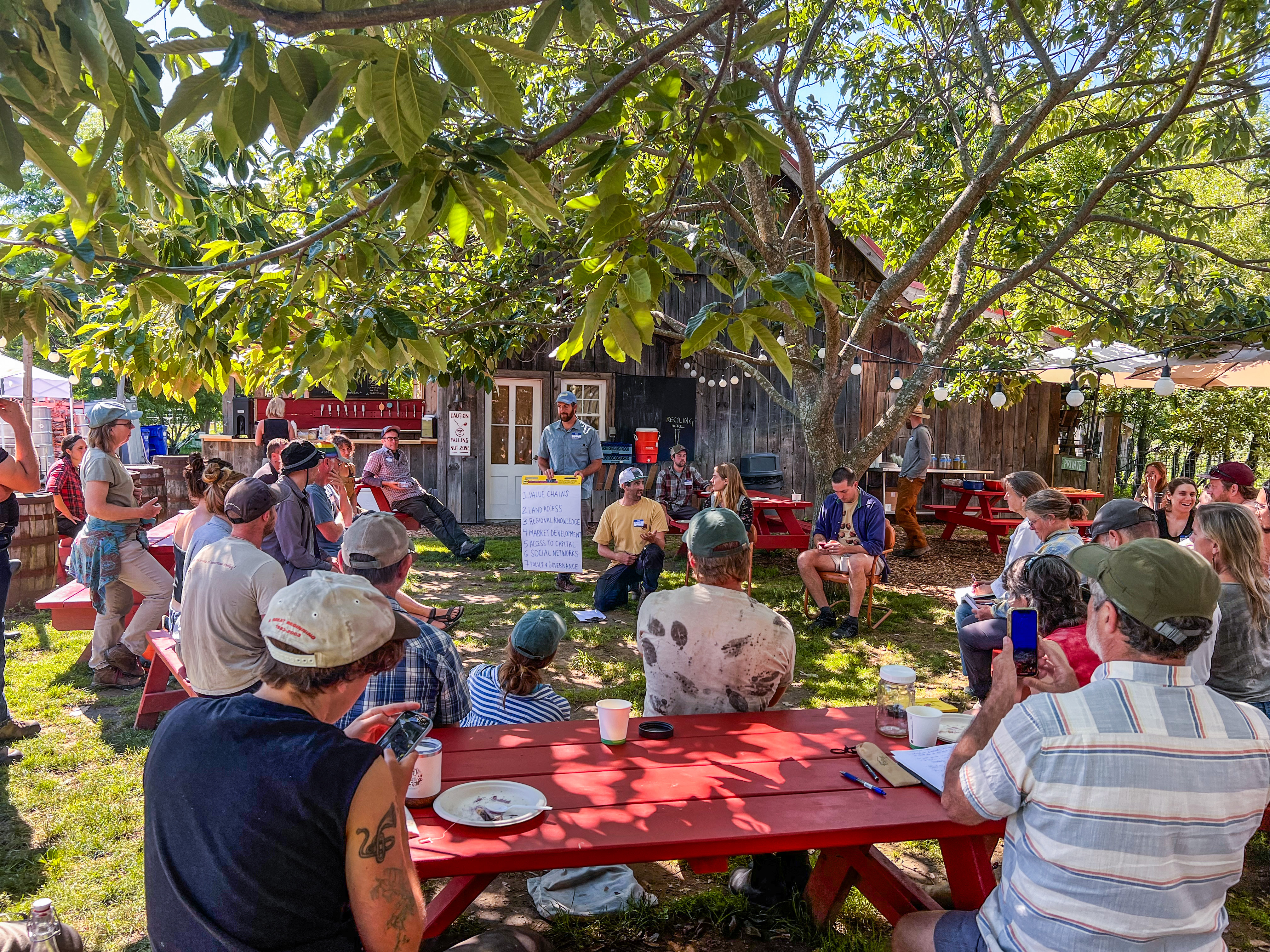
The emergence of grassroots agroforestry groups like Vermont’s farmer agroforestry cohort is not unique. Throughout the Northeast, producers are coming together to form local groups, share knowledge, and collaborate to advance the agroforestry movement. From western Massachusetts to the Hudson Valley to Lancaster County in Pennsylvania, these farmer-led networks have been instrumental in building momentum for agroforestry across the region. But realizing the transformative potential of a perennial food system will require collaboration beyond state lines. To strengthen food security, build resilient agricultural economies, and care for both working lands and natural resources, farmers and organizers must connect across state and bioregional boundaries and work together toward a shared vision. With this in mind, NOFA-VT hosted a regional agroforestry gathering in the summer of 2026, bringing farmers from across the Northeast to western Massachusetts to strengthen the region’s farmer-led knowledge base, cultivate relationships across state lines, and collectively strategize about how to build a tree-based food system that nourishes our communities and our region.
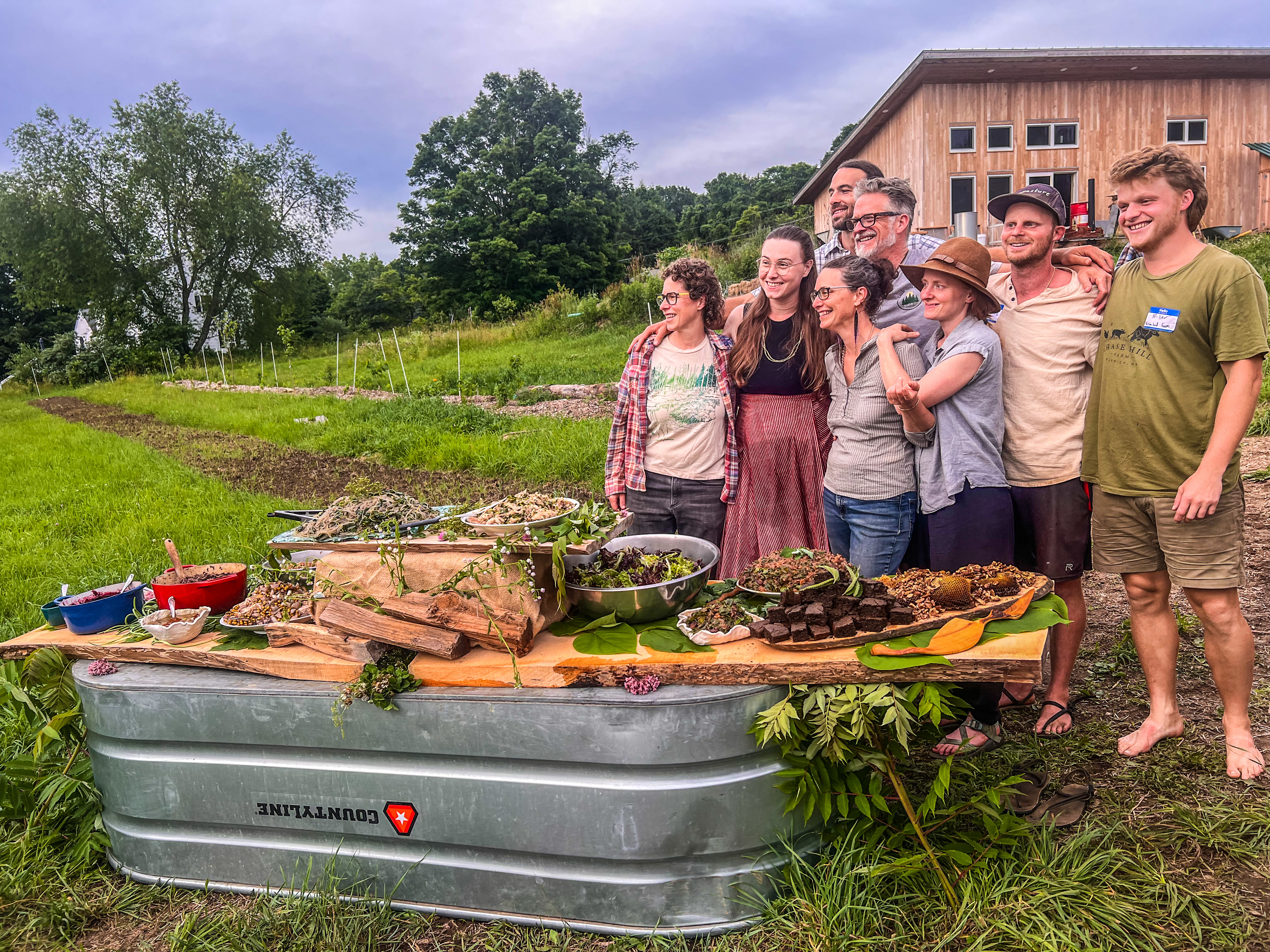
This two-day gathering began with an afternoon touring Yellowbud Farm. Together, the group of 70 farmers walked the alley-cropped tree nursery and learned how Yellowbud propagates high-quality oak, chestnut, hickory, mulberry, persimmon, and honeylocust seedlings and how these trees intersect with regional food security to provide a delicious, regionally appropriate, and nutrient-dense foundation for a new foodway. As the tour ended, the group settled at picnic tables and on blankets to share an incredible meal of forest foods as the sun set over the farm.
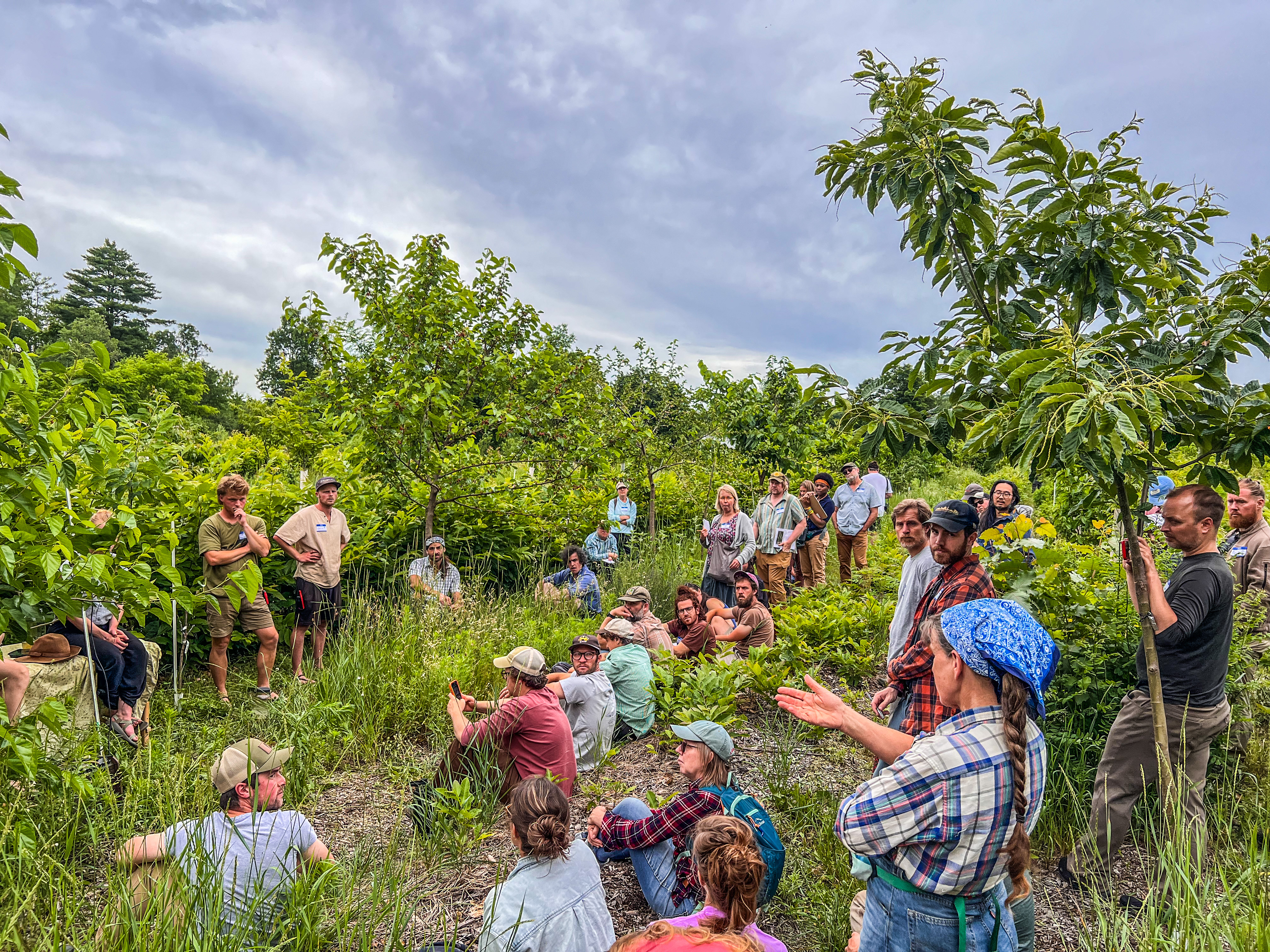
The next morning, the group came back together in the shade of a chestnut tree at Carr’s Ciderhouse, where Elspeth Hay, author of Feed Us with Trees, and Russell Wallack of Breadtree Farms shared guiding principles for building a food system that challenges conventions, de-commodifies land and food, centers humans as keystone species, and does not recreate a system born to fail. Building on this vision, the group spent the morning in small, facilitated working groups exploring some of the practical challenges facing the agroforestry movement, from access to land and planting stock to developing viable markets and regional knowledge-sharing networks. Throughout the cider garden, conversations turned toward alternative models for land access, strategies for building value chains, and ways to strengthen collaboration and knowledge sharing across the region.
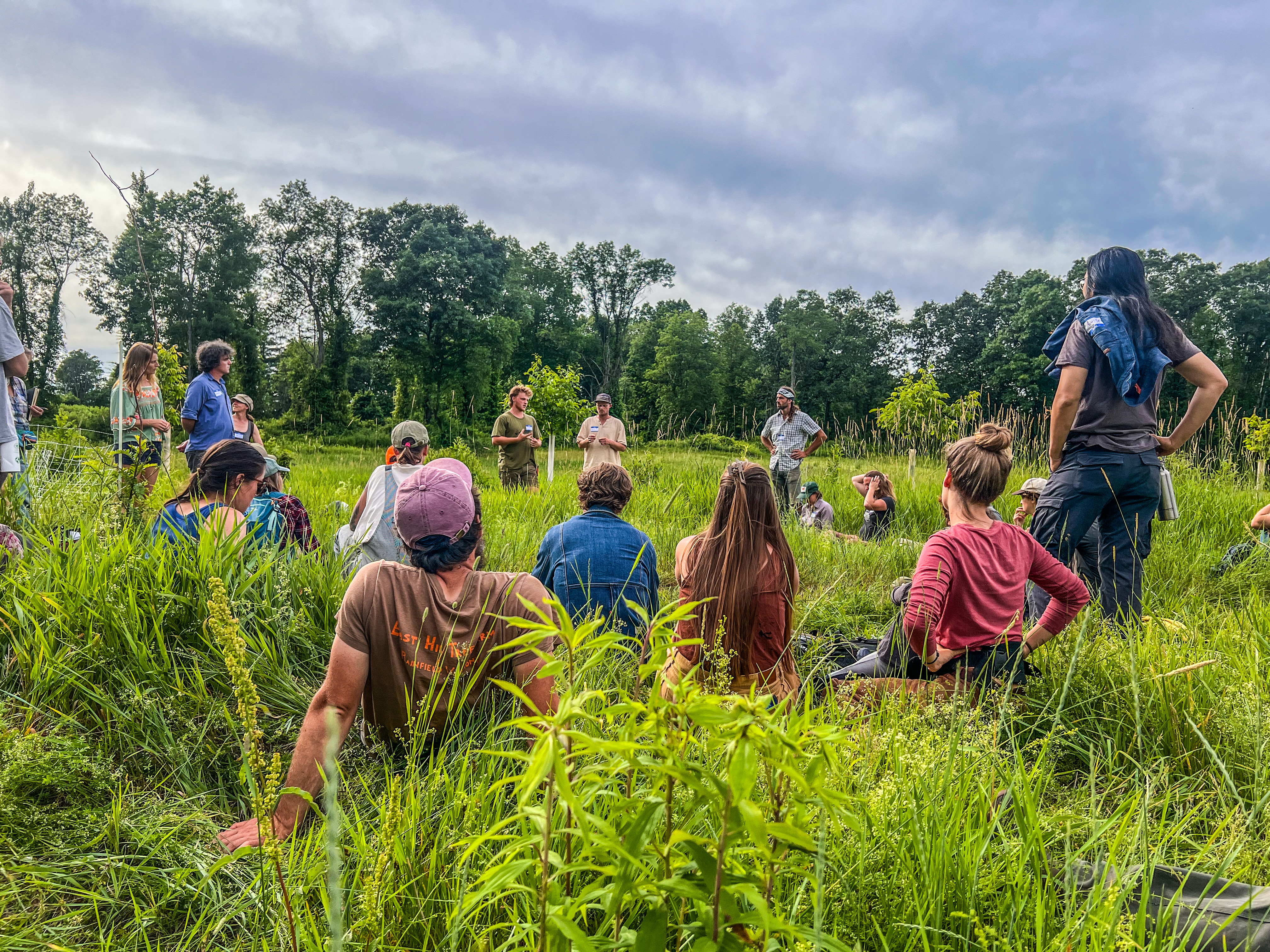
In the afternoon, the group left the cider garden to visit nearby agroforestry operations and see some of these ideas taking shape on the ground. At Preservation Farm and Orchard and Meadowfed Lamb, farmers led us through a mosaicked landscape of chestnuts, apples, lamb, and vegetables, demonstrating how their collective farm is reimagining what it means to manage a complex agroecosystem while building a viable farm business. Later, gathered in the chestnut processing center at Big River Chestnuts, Jono Neiger shared how he is building the value chains, processing infrastructure, and markets needed to establish a future chestnut economy in the Northeast.
From farmer groups like the NOFA-VT agroforestry cohort to regional gatherings of farmers committed to cooperation and coordination, the foundations of a perennial food system in the Northeast are already taking shape. And, in a way that only a meal of acorn noodles, silvo-pastured lamb, and chestnut-maple-bacon “brownies” shared in community can show us, this food system is not theoretical or some distant vision of the future. It is here, now, taking root all around us.