January 7, 2026
As Vermont faces the escalating impacts of climate change, farmers and the broader agricultural community are confronting a growing list of challenges, including drought, excessive precipitation, flooding, and other extreme weather events. In the past two consecutive summers of flooding, producers across the state suffered over $80 million in documented losses, along with long-lasting damage to soils and pastures. These direct impacts ripple throughout Vermont’s food system, disrupting supply chains, damaging critical municipal infrastructure, threatening food security, and straining community mental health. They also deeply impact the working landscapes that sustain rural livelihoods. Building a vibrant, just, and climate-resilient food system will require broad, systems-oriented adaptation planning and investments that not only move food from farm to table, but also honors the interconnected and diverse nature of Vermont’s foodways.
In the late spring of 2024, NOFA-VT partnered with Iowa State University Extension and Outreach’s Food Systems team to pilot a multi-phase, community-scaled food system resilience planning process in Vermont. Originally developed between 2020 and 2022 to understand the impacts of the COVID-19 pandemic and natural disasters on local and regional food systems, the program was re-designed to bring together diverse stakeholders in a community-led process to reimagine community food systems in the face of climate-related disasters. The process has two interconnected phases: the first focuses on research and coalition-building, bringing together communities to identify shared goals, assess strengths and vulnerabilities, and develop a prioritized action plan. The second phase translates these priorities into action, guiding communities to implement projects to strengthen food system resilience through collective, locally driven efforts.
This unique planning process complements NOFA-VT’s Organic Practices Program (OPP) team’s ongoing farm-focused adaptation planning efforts, and the OPP team was excited to collaborate as a community partner with Iowa State’s team to pilot the program for the first time in the Northeast.
Rooting the Project in the Northeast Kingdom
To pilot this place-based initiative, NOFA-VT and the Iowa State team wanted to find an agricultural community where the process and resulting project could have a significant impact and where there were already strong local organizations that could augment and sustain the collaboration beyond our pilot process. Considering the impacts of recent flooding, the region’s significant agricultural heritage, and deep cultural connection to grassroots organizing, the Northeast Kingdom (NEK) was an ideal fit. In the late summer of 2024, the OPP team began collaborating with community partners across the NEK’s three counties to bring this project to life.
Phase 1: Food System Analysis and Action Planning
Informed by conversations with local farmers, NEK Conservation Districts, the Center for an Agricultural Economy, Salvation Farms, Green Mountain Farm-to-School, and Farm to Plate, NOFA-VT and Iowa State’s team launched the first phase of community planning in December 2024. Through two rounds of facilitated meetings, the team worked with farmers, food businesses, nonprofits, and state and local officials to map the local food system, assess strengths and vulnerabilities to climate-related disturbances, and develop regional priority projects that would enhance long-term food system resilience.
In the first round of meetings across Caledonia, Essex, and Orleans counties, participants engaged in two activities. The first was a tabletop scenario simulating stakeholder responses to natural disasters, helping develop a regional understanding of the current level of preparedness and response to system shocks. This was followed by focus group discussions of recovery efforts and mitigation strategies. The meeting results were analyzed to understand how the agricultural community’s socioeconomic characteristics and existing structural elements (farms, markets, distribution channels, etc.) of the local food system influence the region’s capacity to withstand disruptions while maintaining community food security. Based on this analysis, Iowa State developed a list of potential priority projects that would enhance the region’s capacity. On the list of potential projects were aggregation systems, local food awareness campaigns, emergency preparedness planning, and policy initiatives.
In the second round of meetings, priority projects were presented to the community, and participants went through a guided prioritization process. Through multiple rounds of discussion and voting, attendees identified three key initiatives to advance during the second phase of the project: increasing farm financial resilience, strengthening community connectivity, and supporting skill-building for NEK farmers.
Phase 2: NEK Farmer Resilience Cohort
As the project transitioned from winter planning into implementation, the three community priorities—increasing farm financial resilience, strengthening community connectivity, and supporting farmers through skill development— began to shape the Northeast Kingdom’s resilience project. To address all three goals, the OPP team, Iowa State, and participating farmers developed a summer farmer-to-farmer learning cohort, providing NEK farms a space to explore multiple dimensions of community resilience.
To support this new NEK Farmer Resilience Cohort, NOFA-VT staff drew on best practices developed through the Jack Lazor Soil Stewards and Farmer Agroforestry Cohorts, while grounding the program in agroecological, action-oriented principles. The three-part series brought farmers together to build collective power, explore holistic resilience—financial, social, and ecological— and prepare the group to carry forward a community initiative beyond the formal cohort program.
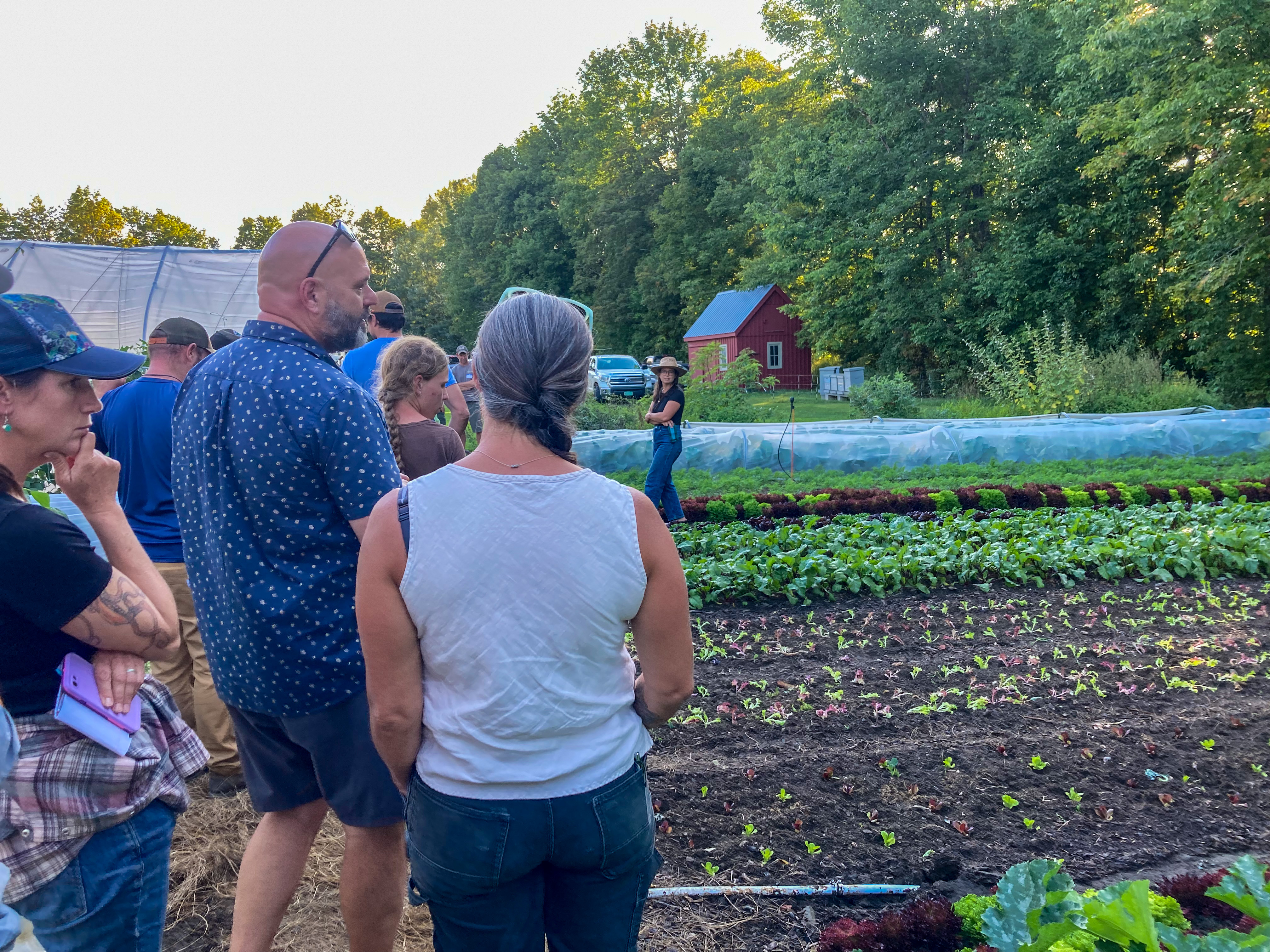
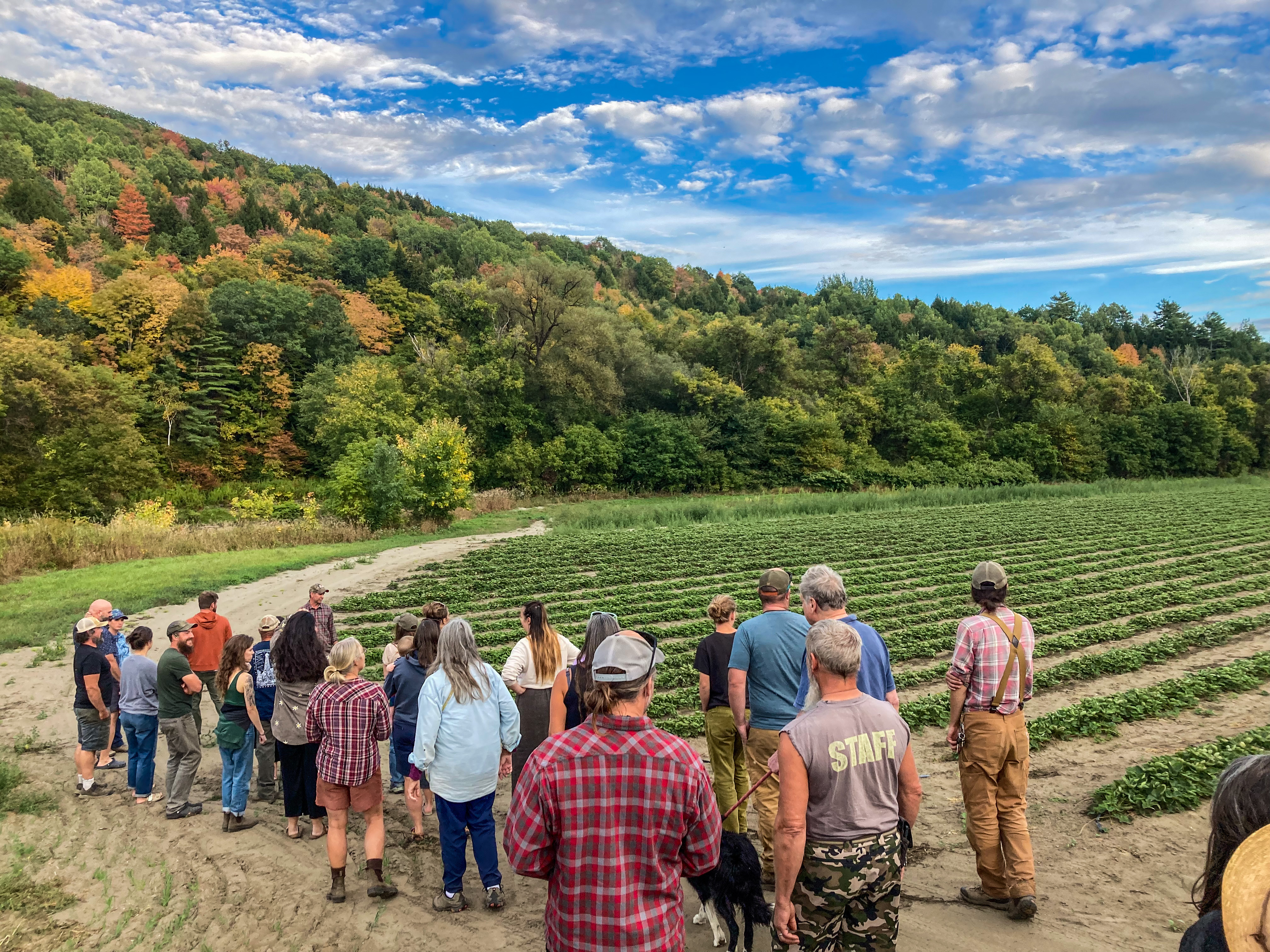
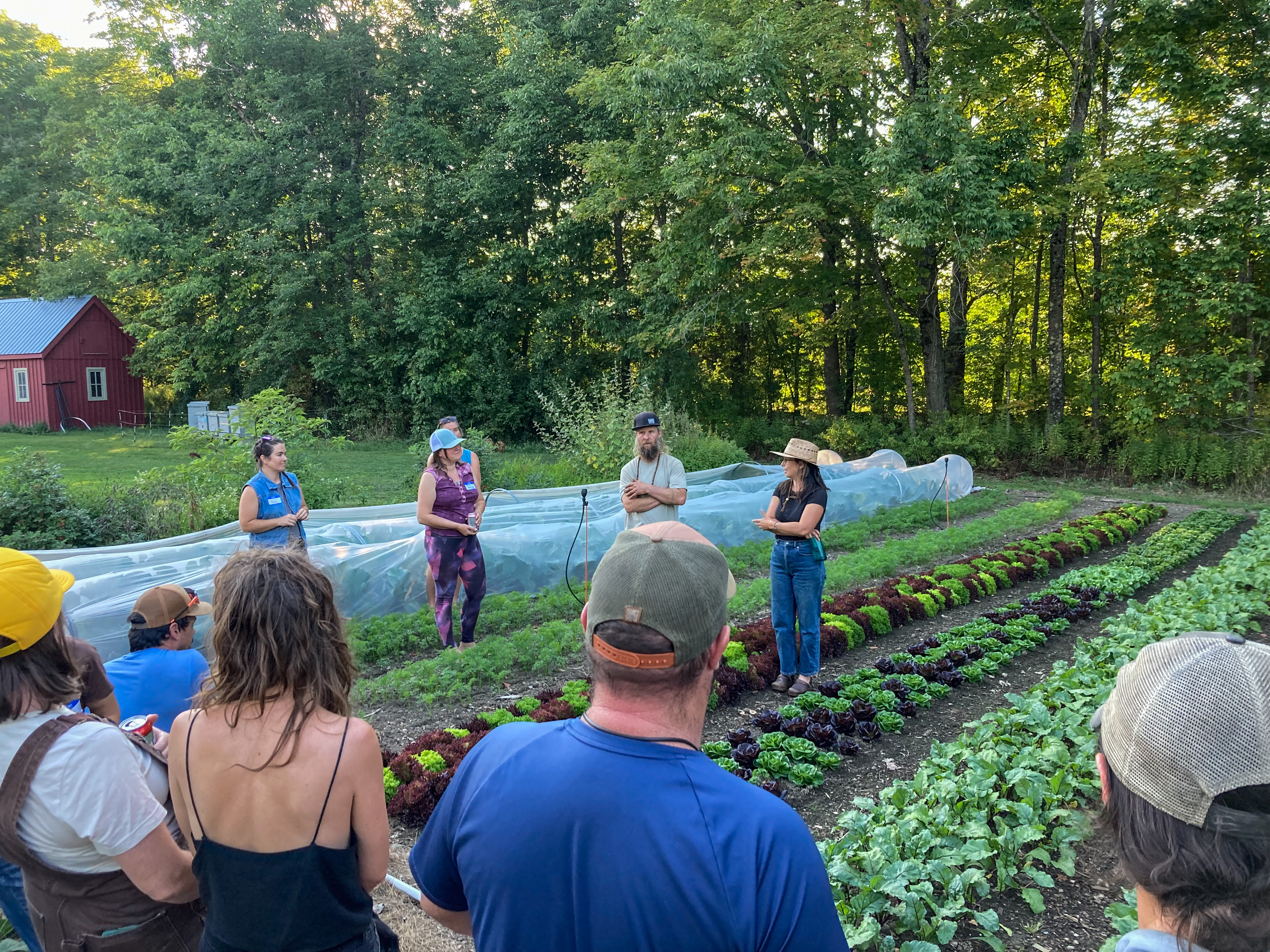
Twenty-six farms from across the Northeast Kingdom participated in the cohort, including vegetable growers, livestock producers, sugar makers, new farmers, and long-standing pillars of the agricultural community in a truly inspirational collaborative learning environment. When it launched in August 2025 at Sweet Rowen Farmstead in West Glover, participants gathered in a circle to share openly about financial challenges facing the farming community and their visions for the region’s agricultural future. Through small group discussions, participants explored strategies for embedding resilience into business plans, markets, and supply chains. As the sun set over the farm’s rolling pastures, the conversations turned to the role that communities and state institutions must play in helping small farms achieve financial security and a dignified quality of life for farmers and their employees.
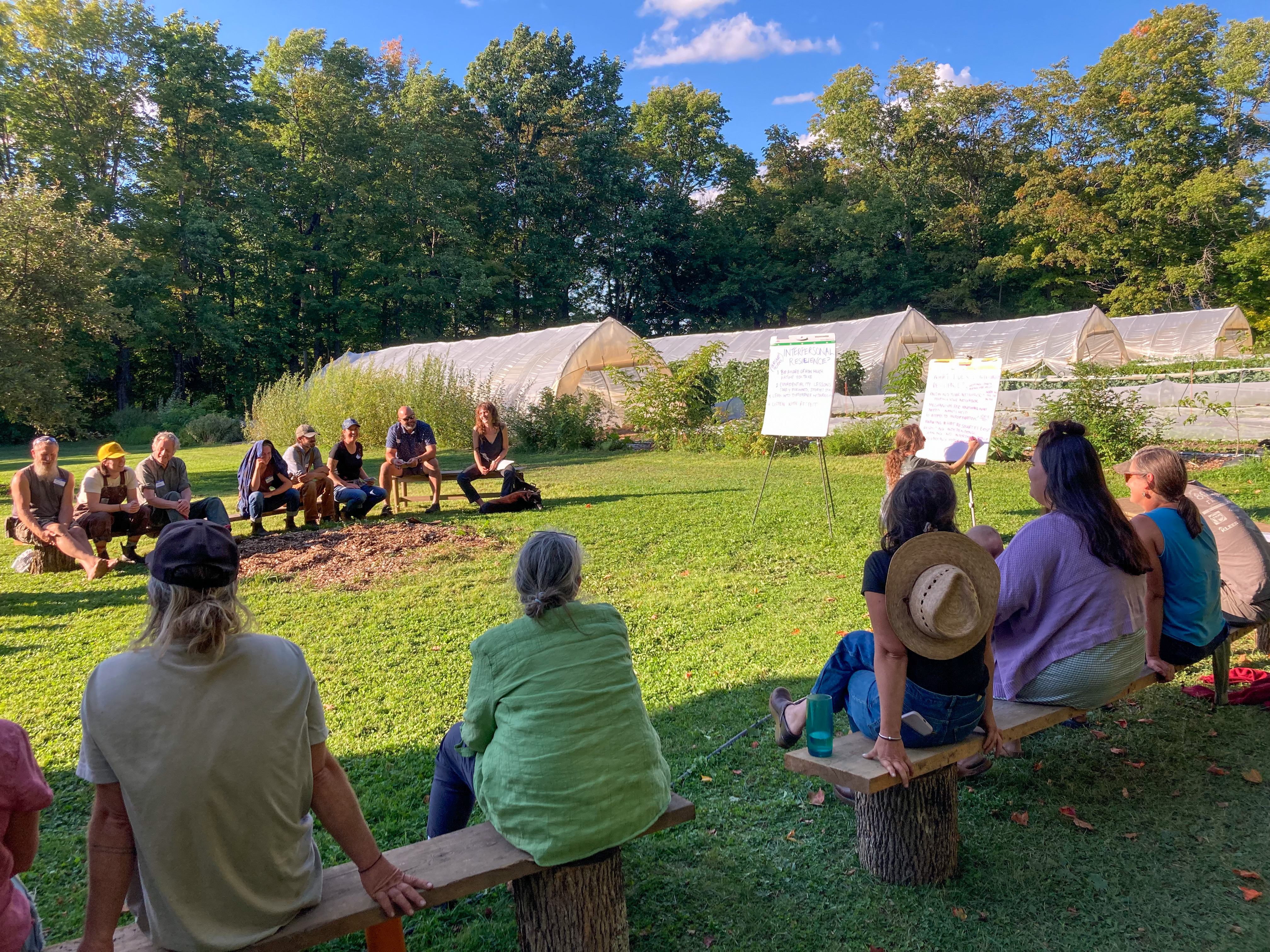
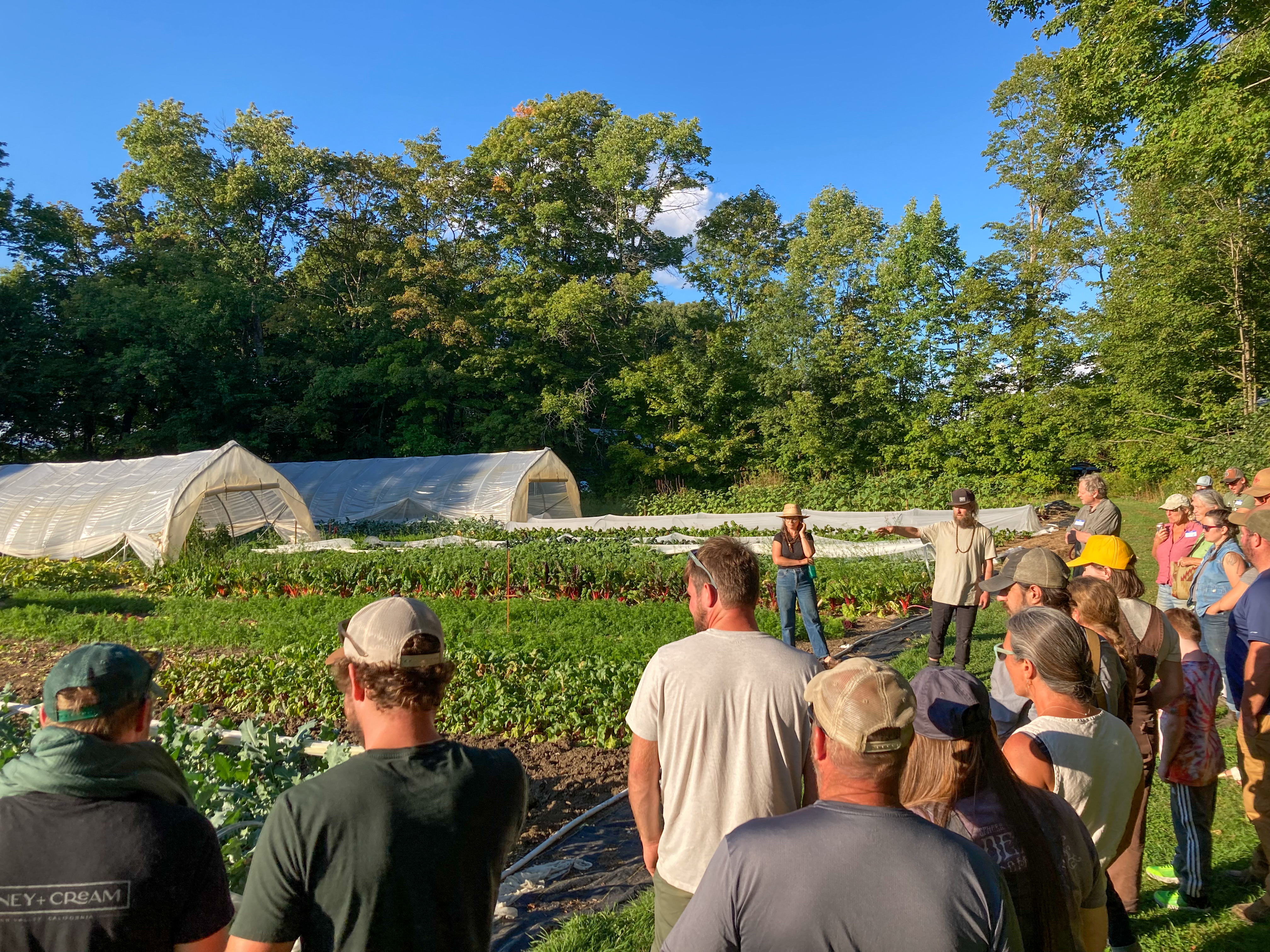
The second and third gatherings carried the same energy. At Breadseed Farm in Craftsbury, cohort members talked late into the evening about the vital role farms and food businesses play in rural communities. They reflected on the loss of third spaces like granges, the isolation felt by many across the NEK, and the need to revitalize rural gathering spaces, strengthen collective organizing, and sustain dialogue around community resilience. At the group’s third gathering at Joe’s Brook Farm in Barnet, the cohort focused on building resilience into production systems, exploring how to protect, adapt, and transform farms in the face of our changing climate. Conversations emphasized that navigating disasters has always been a part of farming, yet participants openly addressed the mental and emotional toll of these more frequent disasters and how addressing these impacts is essential to sustaining Vermont’s resilient agricultural landscape.
The final meeting wrapped up with a discussion on sustaining the group’s momentum. Cohort members outlined both short- and long-term objectives to address key social and economic gaps in the NEK food system and agreed to continue meeting together to define the structure, goals, and governance of an ongoing NEK farmer resilience group.
Looking ahead to future community resilience planning in Vermont
As the pilot of Iowa State’s Resilient Food Systems planning program wraps up in the Northeast Kingdom, NOFA-VT is excited to continue supporting community-scale efforts to strengthen Vermont’s food system resilience. Looking ahead to the next growing season, the OPP team will continue to support the NEK farmer cohort as they self-organize and advance collective actions. Additionally, building on this cohort’s success, NOFA-VT plans to replicate the approach in other regions, perhaps creating a toolkit for others around Vermont and beyond to use with the goal of fostering viable, ecologically sound, socially just agricultural systems for all.