January 6, 2026
In the crook of a hollow in Newfane, VT, tucked along a road that winds beside the Smith Brook, sits By Hand Farm. At first, the brook feels incidental, but when you look out over Laura Xiao’s flower fields, it’s hard to tell where the farm ends, and the lush surrounding ecosystem begins.
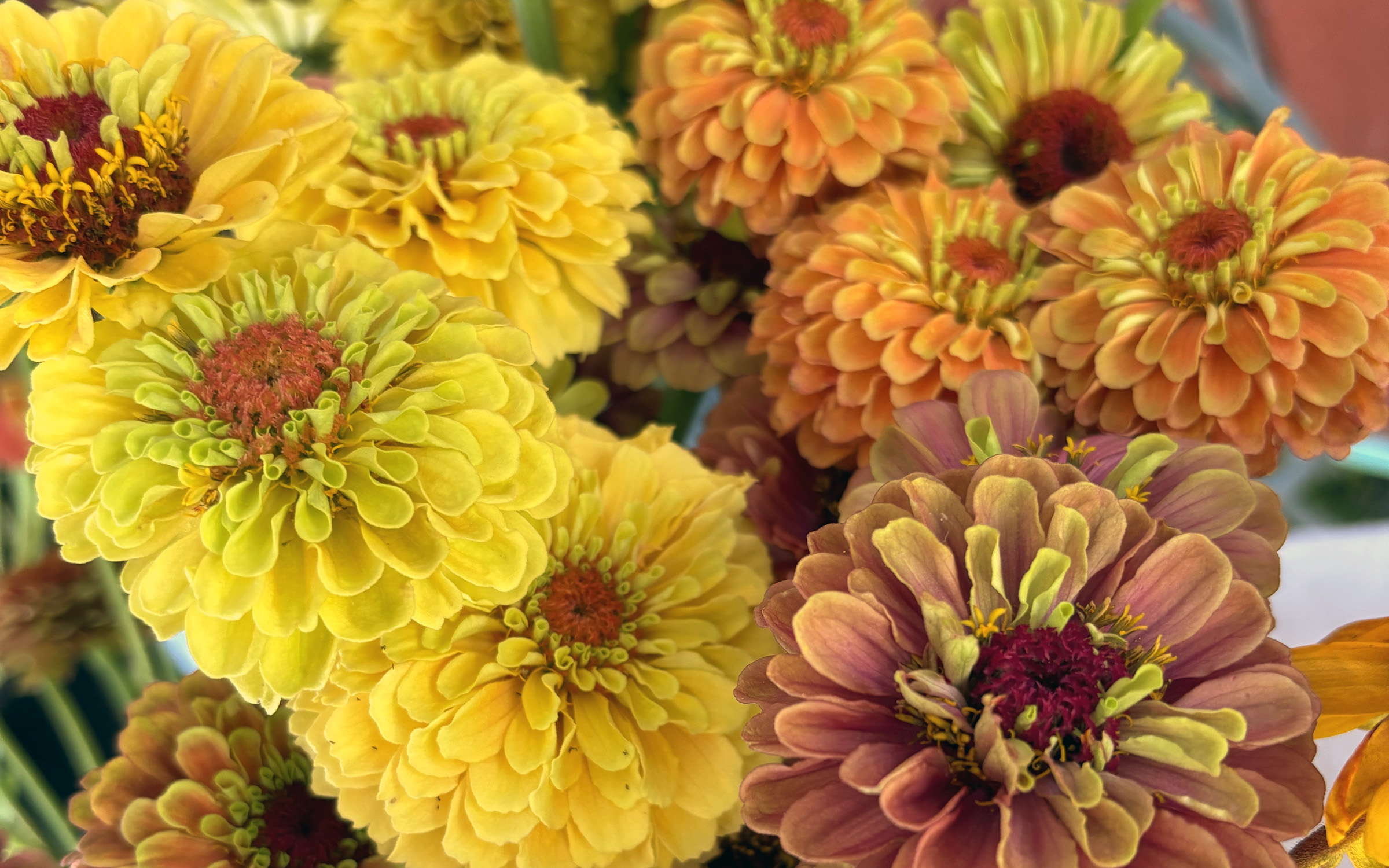
Laura is the owner and sole farmer at By Hand Farm, a 1/4 acre flower farm operating on leased land. Laura’s path to flower farming was circuitous: She has a deep love of cooking and worked as part of a trail crew, which helped reveal her passion for outdoor, physical work. “I started farming,” Laura said, “when I realized working with food is fulfilling… and brings in values around sustainability.” She centers no-till and organic practices in her production, while also considering the broader impacts of her work. Laura shares that her farm’s name honors “all the farmers and landworkers of the world, past and present.” By Hand Farm produces gorgeous blooms for a small CSA, her local farmers market, and weddings. Laura focuses primarily on annuals but is adding perennials that grow quickly and tolerate future transplanting.
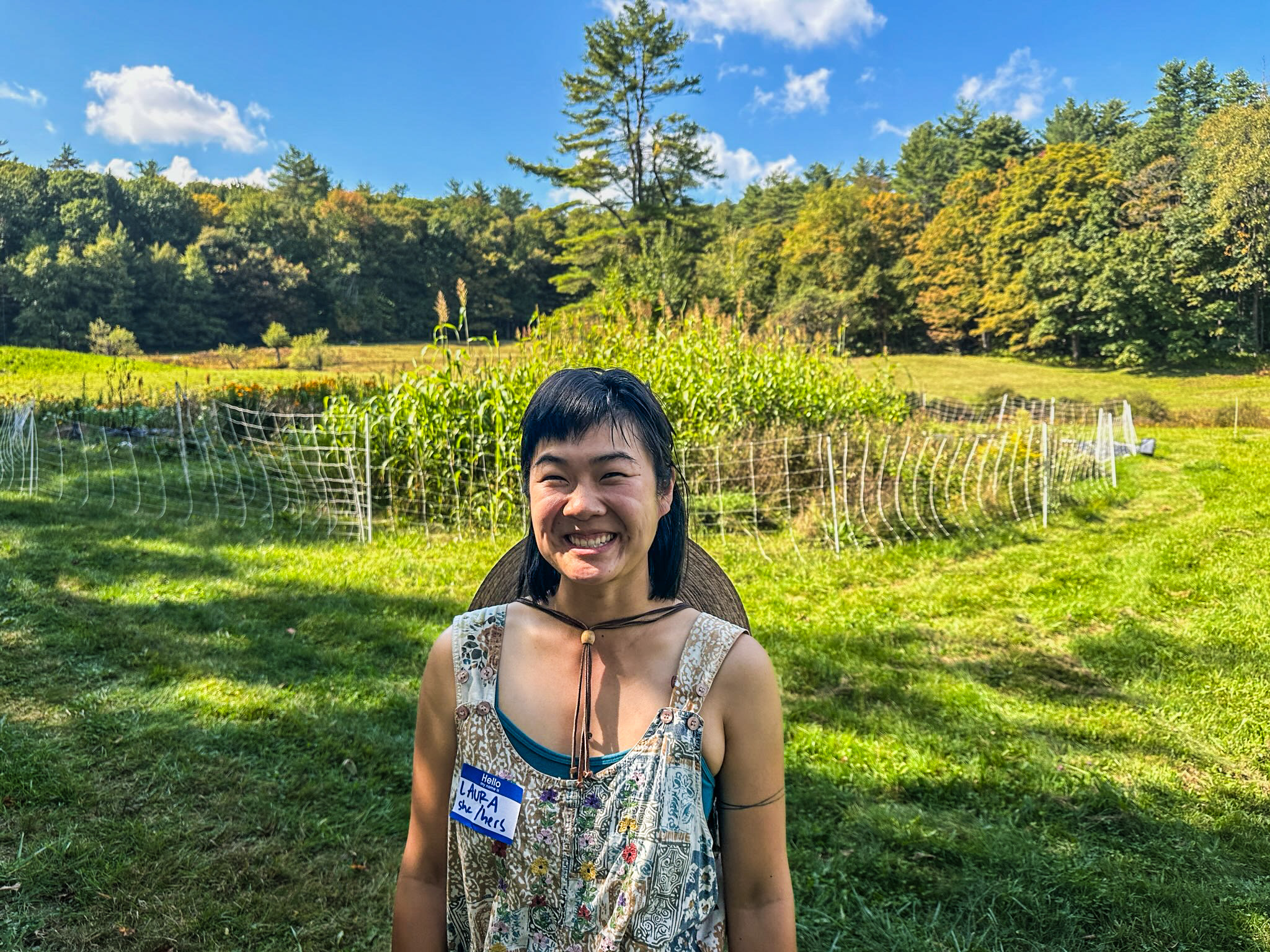
In addition to running By Hand Farm, Laura works part-time growing vegetables at nearby Milkweed Farm in Westminster. During a visit to Milkweed Farm this past summer, co-owner Jonah Mossberg spoke of Laura with obvious reverence, highlighting her can-do nature and deep knowledge of the art and science of farming. The same is evident at her home farm. As she shows visitors around the farm, Laura gestures to the careful planning and thoughtful cultivation she has implemented, insisting she’s just beginning to figure it all out—humbled by and dedicated to the lifelong learning that farming demands.
On a visit to Laura’s farm during a particularly bleak day last March, when there wasn’t a flower in sight to distract us, Laura was focused on the numbers side of her business. She was analyzing the cost of production for her different market channels—CSA, farmers market, and wedding flower enterprises—so that she could price her products accurately, and, ultimately, pay herself a salary. This is one of the goals that led Laura to enroll in NOFA-VT’s Journey Farmer Program, a year-long learning cohort for Vermont farmers and land stewards in the first years of running a farm. The program is shaped by participants’ interests and goals, helping them develop farming skills while learning together in a community of peers and mentors.
For Laura, the program provided tools and structure to identify her production costs and connect with other farmers. “I wanted to meet other people in the same stage of business,” she said, noting that many of the farms in her community are vegetable growers with 5-10 years of experience. In the Journey Farmer program, Laura shared that, “everyone was on the same page about being hungry for information, so people were not shy about asking questions, and that was helpful to be around.” One surprising takeaway for Laura was the opportunities she had to learn from different types of growers: a livestock farmer shared strategies for harvesting and selling all their product at once, which Laura realized mirrored her approach to dried flowers. She now separates her fresh and dried flower enterprises, recognizing each has its own value and timing. The cross-farm collaboration prioritized in the Journey Farmer program fosters dynamic, emergent learning, where participants blend tried-and-true methods with creative solutions developed through shared challenges.
In addition to workshops led by farmer presenters on topics like financial planning, climate risk assessment, and labor management, each Journey Farmer participant is paired with a mentor for one-on-one guidance. This year, Laura worked with Bo Dennis from Dandy Ram Farm in Monroe, ME. Bo, who runs MOFGA’s beginning farmer programs, is no stranger to sharing his knowledge. Like Laura, Bo got his start farming vegetables and has since transitioned to flower production for weddings. “Working with him has been awesome because I feel like he has kind of a similar vegetable-turned-flower farmer story,” Laura shared. Bo helped her think strategically about markets, realizing that weddings opened up a whole new opportunity, and encouraged her to pivot away from a local farmers market that wasn’t aligning with her production and business goals. “He’s awesome, and has been really generous about sharing.”
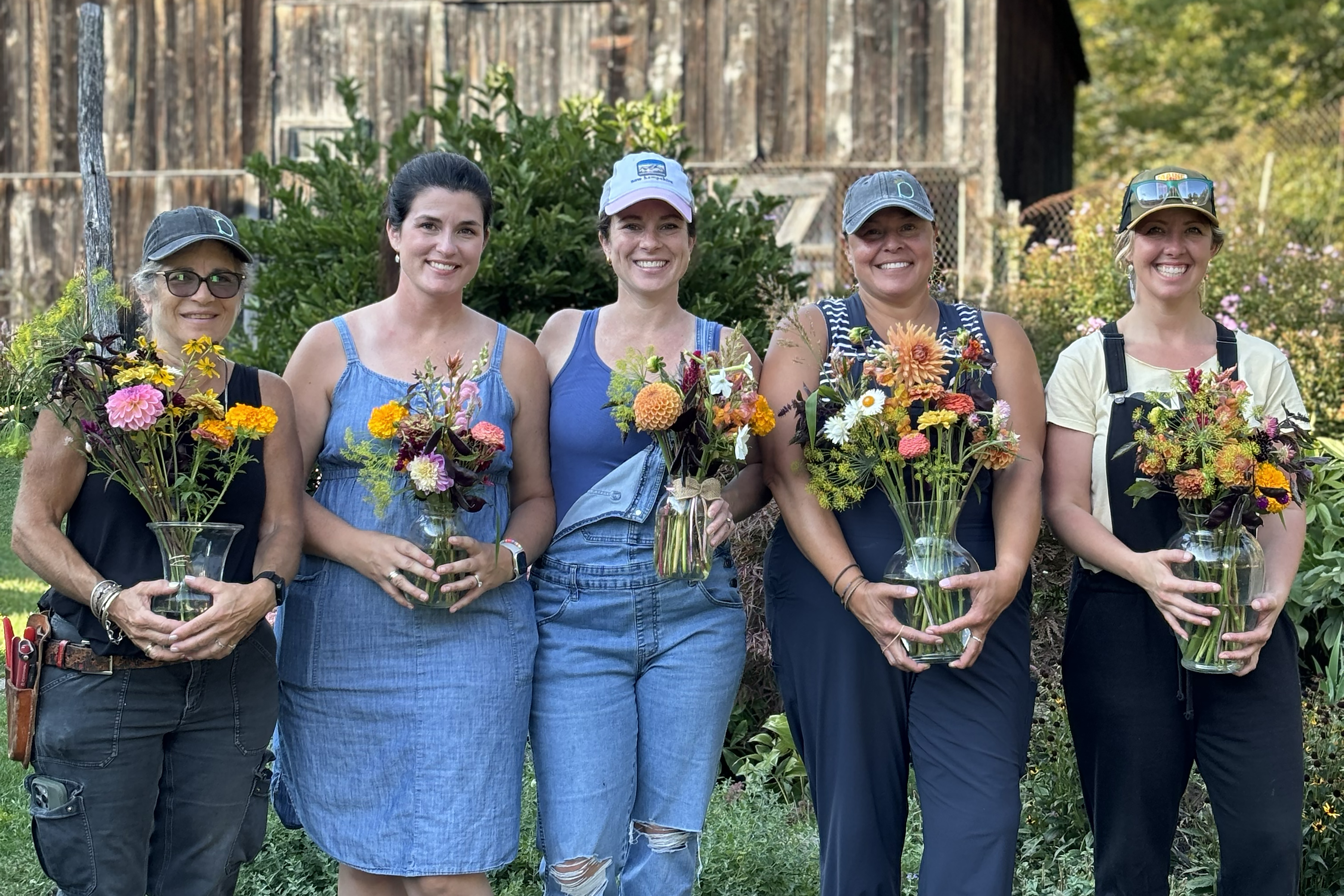
Laura’s biggest takeaway from her participation in the Journey Farmer Program was the structure it provided. She likened her farm business to a body: “Your core is the planning and financial side, your head is what the public sees—the sales and marketing side, and your limbs are the production.” The program’s sessions mirrored this framework, and she “really appreciated the mindset shift.” Laura added that the program “centers you as a person and the income you need to live in the world. Figuring that out first, and then working backward to determine how the farm income fits into that bigger picture wasn’t something I had really thought about before.”
Few of us enter farming careers asking ourselves, “How will I pay for my mortgage, snow tires, children of the future—let alone my retirement?” But with increasing extreme weather, shifting market trends, and a desire for work-life balance, many farmers are reflecting on how to align their businesses with their values in a corporate-dominated food system that doesn’t prioritize those values. The Journey Farmer Program strives to offer the holistic, resilient farm business planning farmers need to explore these questions. Check out more details on our website at nofavt.org/journeyfarmer or reach out to Farmer Services Program Facilitator, Megan Browning, at [email protected] or 802-419-0073.
