January 7, 2026
Elizabeth’s essay Riding Three Horses to Agrarian Justice distills a keynote talk she delivered in 2019 at the Ohio Ecological Food and Farm Association, emphasizing that farmers must balance building their farms and networks with challenging the dominant agricultural system, while joyfully shaping a vision for the future.

At NOFA summer conferences, we held a fair that culminated in a horseback riding demonstration. Dale Perkins rode bareback with his feet first on one, then two, and finally bridging three horses as they leapt through a flaming hoop.
This is a stirring metaphor for the work we need to do!
Horse # 1 – Fighting back: reacting to the endless flood of challenges and threats.
We must protest against the many toxic, endocrine-disrupting inputs that lock farms into corporate-dominated systems. expose misleading food labels like “bioengineered” for GMOs. resist the cynical, greedy billionaires who conspire to gut social services, harm the environment, and widen income inequality, putting democracy at risk.
This also includes protecting and incrementally improving programs that our sustainable agriculture movement has already won: increasing conservation payments to our farms, advancing organic research, maintaining cost-share programs for organic certification, and safeguarding the integrity of the organic label.

Horse # 2—Building: our farms, gardens, co-ops, local food networks, and the alternative solidarity economy—our liberated territory where we practice food sovereignty.
For more than 50 years, through organizations like the NOFAs and MOFGA across the Northeast, we have made tremendous progress learning to grow food without harming the planet while nurturing our communities. We helped create the organic label, the gold standard that has helped build a market that supports our farms and sustains our vision of resilient, community-based agriculture.
I have spent most of my life and energy helping build this alternative framework through organic farming and offering food to my community through a CSA model. The Principle of Fairness from the International Federation of Organic Agriculture Movements (IFOAM) has been a guiding star: “Organic agriculture should build on relationships that ensure fairness with regard to the common environment and life opportunities. Fairness is characterized by equity, respect, justice, and stewardship of the shared world, both among people and in their relations to other living beings.”
Recognizing that the National Organic Program (NOP) never fully encompassed these values, I worked alongside the Farmworker Support Committee (CATA), Rural Advancement Foundation International, and Florida Organic Growers to create the Agricultural Justice Project (AJP), developing Food Justice Certified as an add-on to the organic label.
Farmers operate on two levels—as suppliers and as employers—and AJP addresses both. As suppliers, farmers need the guaranteed right to associate freely without fear of retaliation, especially as buyers consolidate and small farms risk predatory or unfair contracts. As employers, farmers, and other food businesses follow AJP labor standards, ensuring workers can raise concerns about wages, hours, and safety, and resolve disputes fairly. AJP has driven long-term transformation in our food system, fostering a cultural shift toward empowerment, transparency, justice, and fairness. The AJP Toolkit offers resources to help farms strengthen both pricing and labor policies.
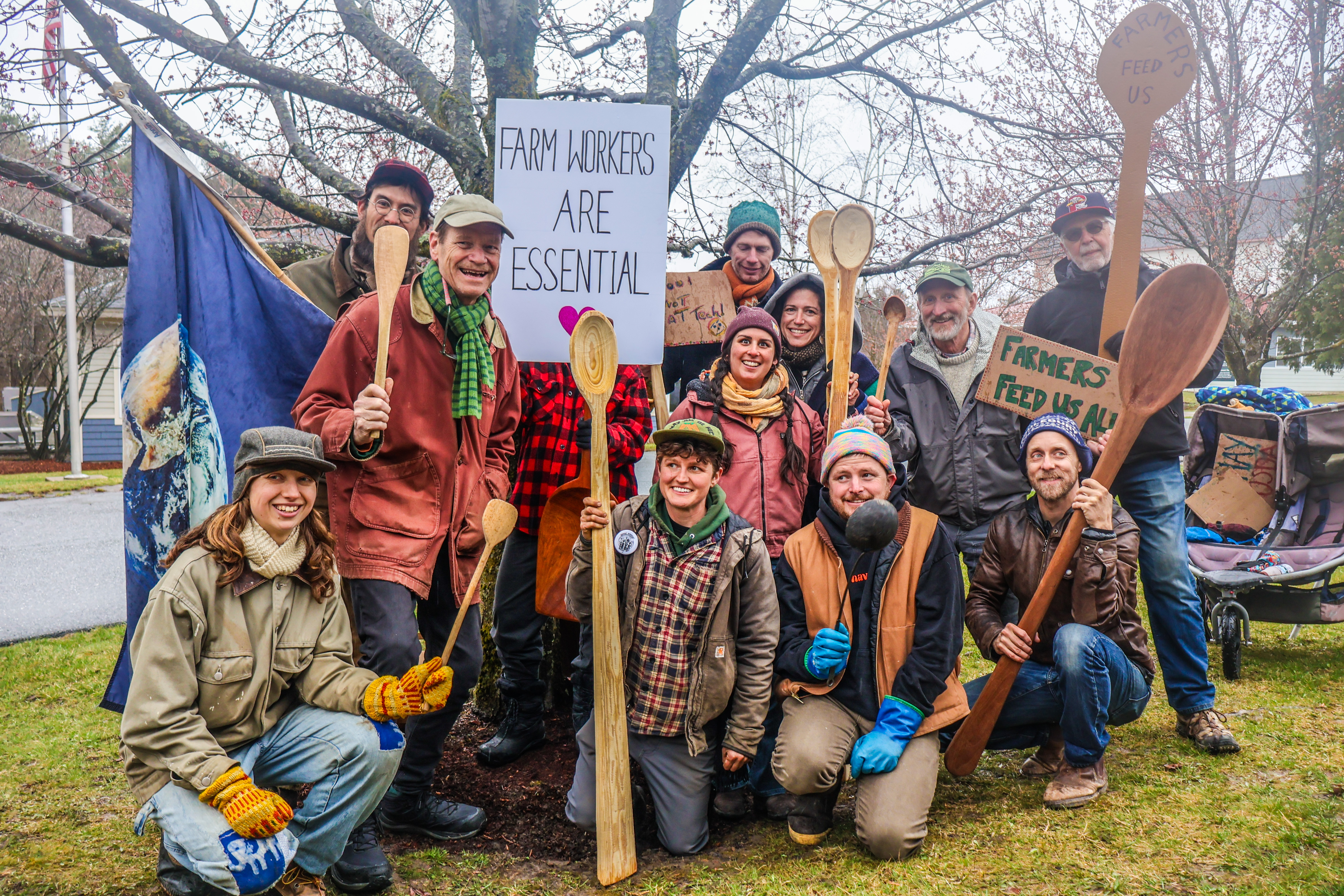
As organic has become more mainstream, pressure has mounted on the National Organic Program (NOP) to accommodate corporate approaches to organic production. NOP auditors have failed to censure certifiers who allow mega-dairies to skirt pasture requirements or certify hydroponic soil-less operations as organic, despite the clear mandate in the organic regulations that organic growing be rooted in the soil, prioritizing the health of the soil. Organic farmers are resisting with new add-on labels such as the Real Organic Project, signifying food grown in soil and animals raised outside of a concentrated animal feeding operation (CAFO) environment, and Regenerative Organic Certified (ROC), which encompasses the same set of values as the Real Organic Project label, while also adding provisions around humane and fair treatment of the humans and animals that are part of the farming ecosystem.
As farmers make choices for our farms, ancestral peasant wisdom counsels us to rely on our own resources and those of our closest cooperators and supporters, harnessing our autonomy from the concentrated wealth and power of agribusiness. The sustainable agriculture and local foods movements have slowed the decline of farm numbers, but losses continue. Most farm products move through brokers, distributors, processors, and retailers— entities dedicated to profiting from the value others produce without any assurance that producers are compensated fairly.
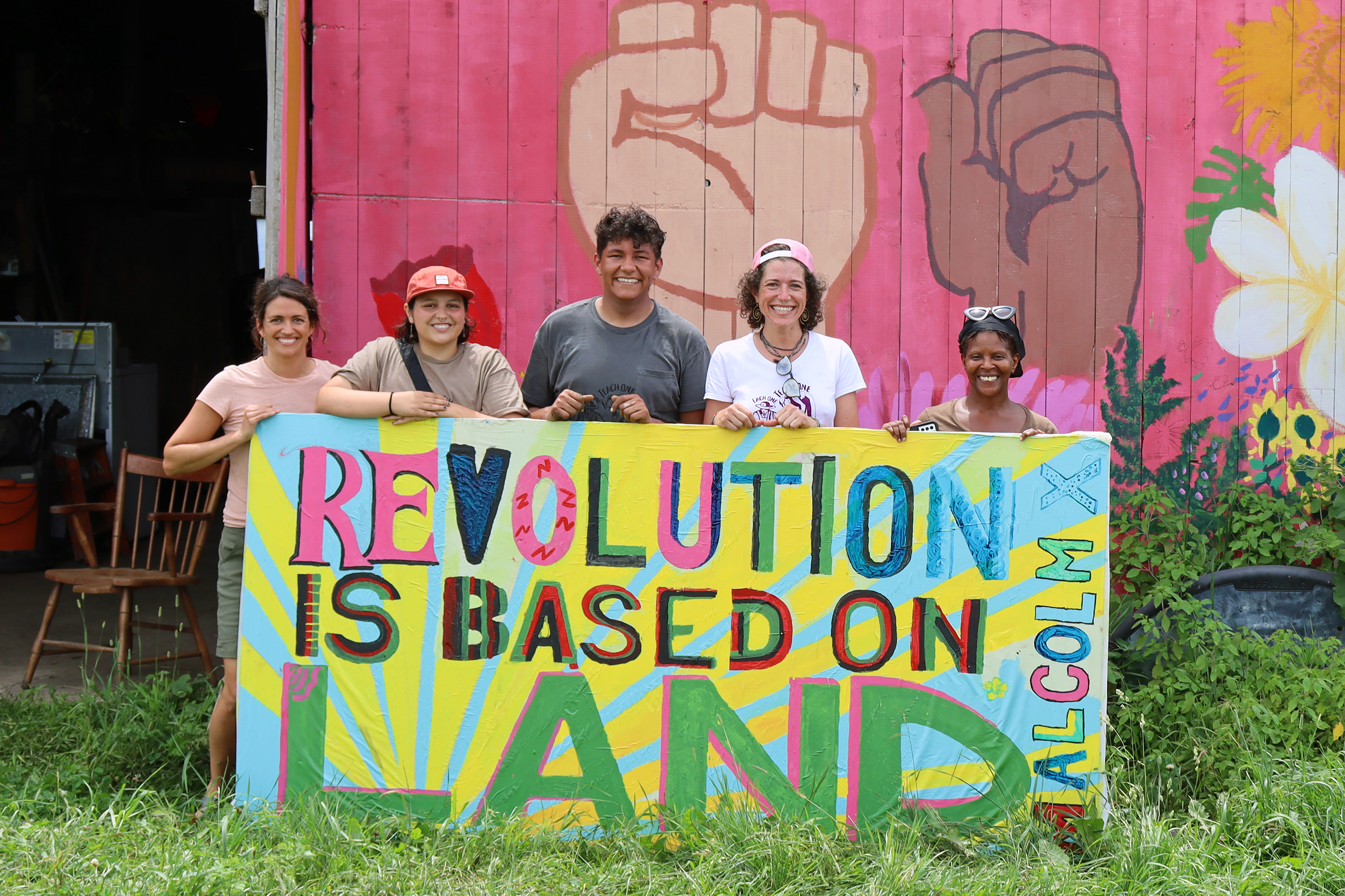
Horse #3— Shaping our vision: our movement for agrarian justice is perhaps one of the most critical social movements of our day. Our capacity to turn sunlight into food may hold the key to transforming the whole system.
To realize our vision of a just, agroecological farming system worth sustaining, we need comprehensive domestic fair trade that balances the interests of farmers, farmworkers, and the land, while expanding access to local, high-quality organic foods for people of all income levels.
A draft program for system transformation begins with replacing subsidies that prop up constantly falling farm prices— subsidies that ultimately benefit large processors and import-exporter operations— with a system of price supports paired with supply management. This is the foundation of parity pricing, which functions much like a minimum wage for farms and has deep roots in policies developed during the Great Depression. Understanding that history is key to understanding how parity can stabilize markets, protect farmers, and rebuild a food system that values producers rather than exploiting them.
In practice, twenty-first-century parity would mean restoring price supports and supply management for the staple commodities such as grains and beans, along with reestablishing farmer-held grain reserves. These would function as buffer stocks in years of poor harvests or climate-driven disruptions, stabilizing both supply and farmgate prices.
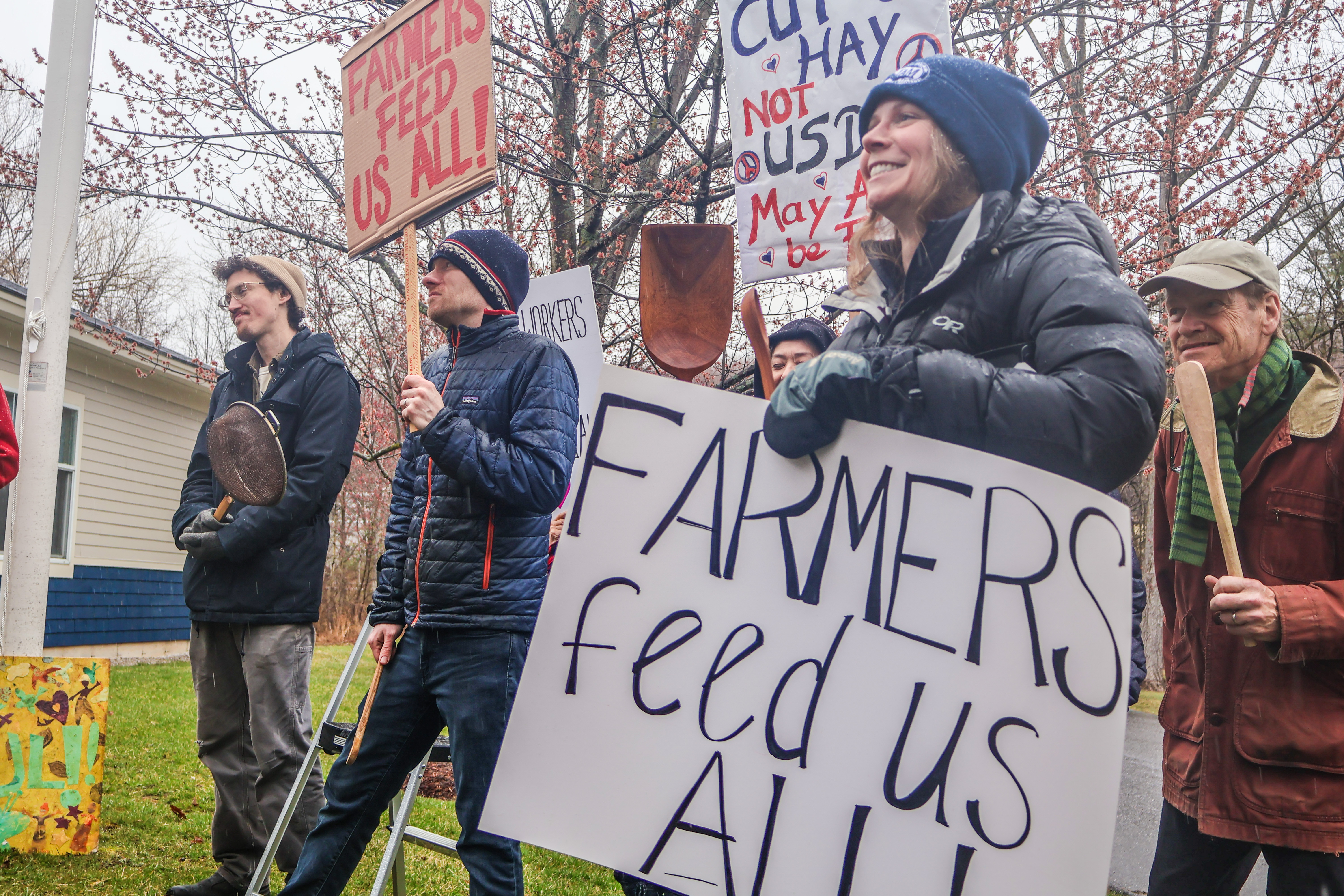
For perishable crops like fruits and vegetables, parity would encourage farmer-, community- or worker-owned cooperatives to invest in value-added processing. When seasonal abundance threatens to depress prices, these co-ops could freeze, can, dry, or otherwise preserve produce for year-round use. By making diverse crop rotations economically viable, a modern parity system would also help return livestock to family farms, strengthening ecological balance and local food sovereignty.
Paying farmers a truly fair price may raise food prices slightly—perhaps by three to five percent—but if we also raise wages for food chain workers, who make up roughly 17% of the entire workforce, they will be able to absorb that increase. Farmworkers must be included in those wage gains; fair prices are only fair if they cover fair wages, and these two priorities must move in lock step.
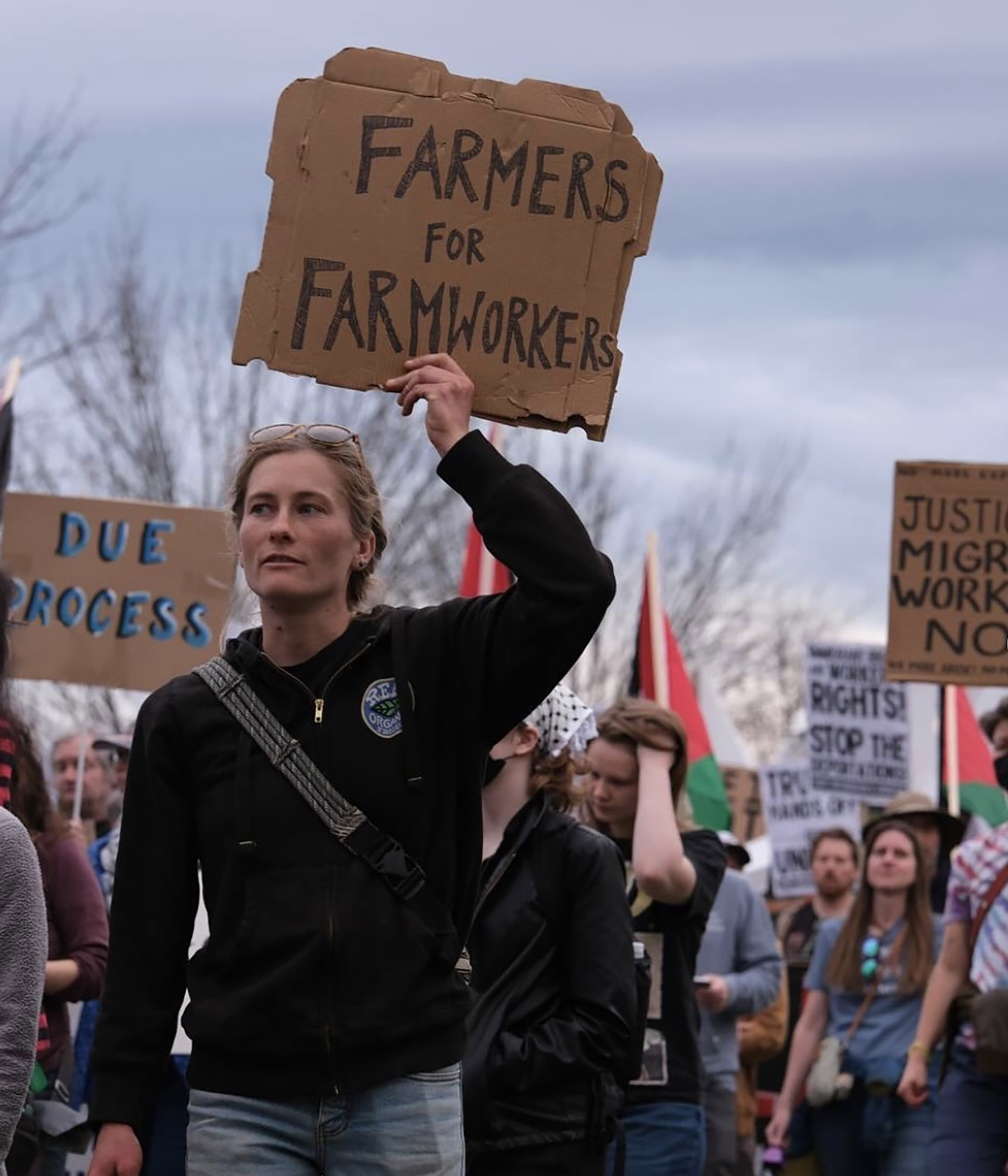
To support this shift, we need the government to enforce existing anti-trust laws and rein in the consolidation that undermines farmers’ livelihoods. We also need meaningful contract reform so that farmers selling to larger entities can secure fair, transparent contracts and exercise their protected right to freely associate without threat of retaliation— allowing them to form hubs or cooperatives that strengthen their bargaining position. Limits must also be placed on how much of the shopper dollar middlemen can capture.
At the same time, we must confront and dismantle the structural racism inherent in our food and farming systems: inequitable access to land, training, capital, and government programs; limited access to healthy, culturally appropriate food; and the persistent hierarchies that relegate people of color and women to the lowest-paid and least empowered roles.
A just food system also requires taxing billionaires and reallocating the billions now funneled into commodity payments and crop insurance subsidies for the largest farms, redirecting those funds toward the Supplemental Nutrition Assistance Program (SNAP) and related nutrition programs so that low-income households can purchase the high-quality food our farms produce.

Farmwork itself must be transformed into a respected, well-compensated profession, with farmworkers granted the same rights and benefits afforded to other sectors: collective bargaining, overtime pay, unemployment insurance, workers’ compensation, and paid sick leave IImmigration reform must be grounded in human rights, offering a clear and attainable path to legal residency and citizenship without punitive measures, prohibitive fees, or bureaucratic barriers. Finally, if we hope to expand the number of community-based, family-scale organic farms, we must invest in farmer training, including pathways for farmworkers to become farmers with access to land and other resources.
Once we stand up for the changes that low-income food workers need, we will find ourselves aligned with some of the most energized social movements of our time and in deep solidarity with the most forward-thinking voices in the labor movement. Without farmworkers and all food chain workers as allies, farmers will never have the collective power required to create the structural changes necessary for our farms to become the radiant centers of well-being we imagine. Our path forward depends on figuring out how to move together—farmers, workers, advocates, and communities—and bringing the entire food movement with us.
The escalating violence of the climate emergency only intensifies the urgency of this moment. Our agrarian movement is rich with ideas, experience, and time-tested practices, and we are increasingly recognizing that good process—how we work, not just what we do—is central to real transformation. Achieving agrarian justice requires a stakeholder-driven approach that respects differences, embraces diversity, honors our ancestors and the Indigenous roots of our practices, and creates space for both bold young innovators and voices from the margins. If we commit to this inclusive path, we can build a broad, powerful coalition rooted in the profound interconnectedness of soil health and social justice, and together bring to life a food system grounded in agroecology, health, justice, and equity.
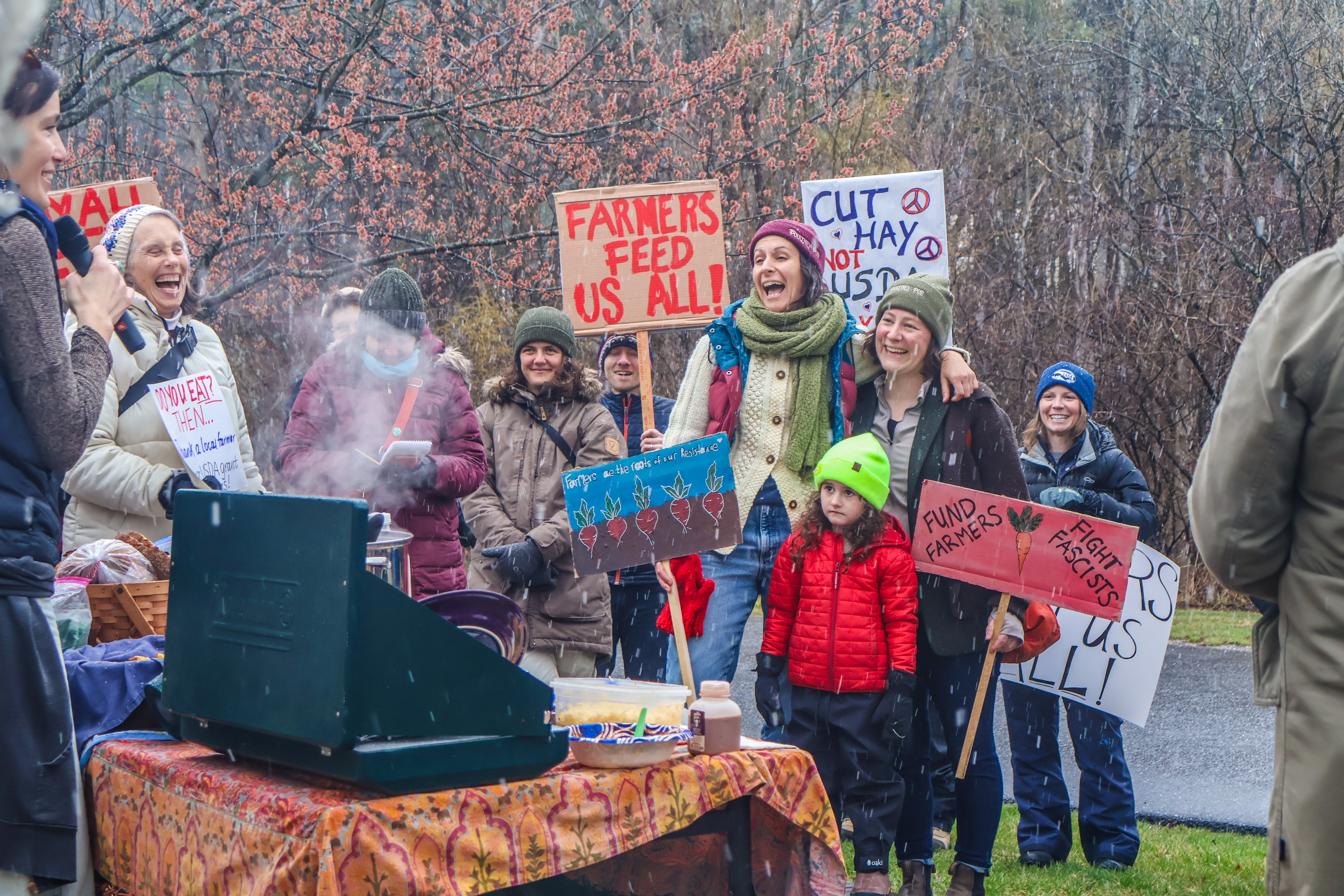
About the Author:
Elizabeth Henderson started farming in 1979, and from the very beginning, she committed to organic practices. She learned from books like Farmers of 40 Centuries and hands-on visits with French peasant market farmers. In 1986, she was asked to share her perspective on U.S. agriculture—a daunting opportunity at a time when few women spoke publicly on sustainable farming. Nervous but focused, she discovered that intensity sharpened her message. Over the next two decades, she delivered keynote presentations at organic farming conferences nationwide.
Elizabeth’s essay Riding Three Horses distills a keynote talk she delivered in 2019 at the Ohio Ecological Food and Farm Association, emphasizing that farmers must balance building their farms and networks with challenging the dominant agricultural system, while joyfully shaping a vision for the future.
As one of the first organic CSA farmers, Elizabeth spent over 30 years farming in Wayne County, NY. Today, she mentors new farmers, gardens, and works to influence agricultural policy with NOFA and its partners. She co-authored Sharing the Harvest (Chelsea Green, 2007), serves on the Board of the Agricultural Justice Project, and is Honorary President of URGENCI, the international CSA and solidarity economies network. Her decades of experience continue to inspire and guide the next generation of farmers.