March 4, 2026
Farming community input is needed for Vermont’s Community Resilience and Biodiversity Protection Act (Act 59)
The Vermont Conservation Plan — also known as 30x30, Act 59, or Vermont’s Community Resilience and Biodiversity Protection Act — calls for a statewide conservation plan, developed by the Vermont Housing & Conservation Board (VHCB) in consultation with the Agency of Natural Resources (ANR), that solicits input from communities, landowners, and partners across Vermont. After 18 months of inventorying, studying, and community input, VHCB has developed an expanded draft Conservation Plan Framework and is seeking public input before it is finalized and sent to the state legislature in June 2026.
To ensure that farmer and farmworker feedback is included in this final round of community input, we are hosting a virtual listening session to collect input on the draft pathways and actions that most directly relate to our working lands.
Please join us for this lunchtime virtual session on Wednesday, March 25, 12-1 pm, with Q&A to follow.
This virtual conversation is intended for farmers, landowners, and others concerned about ensuring our working lands are included in and benefit from the State’s conservation plans. Please come prepared to dig in - your specific insights, ideas, and critiques regarding the impacts of the framework on our working landscapes will be used to inform the final draft of this legislation by VHCB.
The Act 59 Framework is based on the implementation of Vermont Conservation Design (VCD) and building connectivity across high-priority habitats and landscapes. These are broken down into a framework that will be applied through pathways and actions, with ACTIONS having yet to receive public input, and potentially having the greatest impact from your participation.
Areas of the framework specifically worth noting are:
- Objective 1→ Pathway 3: Improve Forest Structure
- Objective 2 → Pathway 1: Increase Equitable Access
- Objective 2→ Pathway 2: Promote Sustainable Working Lands
- Objective 2→ Pathway 3: Strengthen Climate Resilience
- Objective 3→ Pathway 1: Increase and Optimize Funding and Financing
- Objective 3→ Pathway 3: Innovate new Programs & Practices
Bring your lunch, insights, and critiques to this virtual listening session. This is an opportunity to advocate for the State to recognize working lands and farmers as critical partners in stewardship and conservation.
Additional background resources to prepare for the conversation (please note, these will also be emailed to all registered participants):
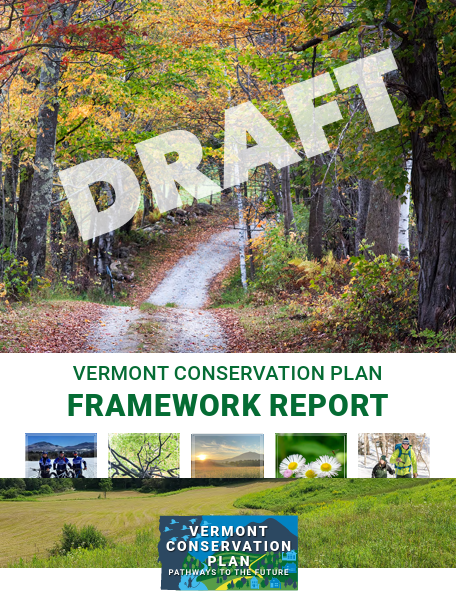
The Vermont Conservation Plan Framework Report provides background information on the scope of Act 59 legislation, an explanation on Vermont Conservation Design (VCD), as well as an outline of the objectives of Act 59.
The Framework is broken down into Objectives, from which we pulled out agricultural and working land specific pathways above. Here is more info on the Objectives, generally:
- Objective 1: Center VT Conservation Design
- Objective 2: Conservation for Communities
- Objective 3: Strengthen Conservation Capacity
As you review, feedback can be given directly to VHCB by selecting the objectives linked above, and then selecting the blue “Provide Feedback On Draft XYZ” at the top of the page.
Initial questions to consider:
- What are the priority Actions within the Framework? (these are found within each Objective, under each Pathway)
- Which should be recommended or prioritized? (e.g., protect prime ag soils, create new farmland affordability tools, make working lands models of ecological management, etc).
- How do we balance ecological function, agricultural, and community needs? Especially long-term, considering climate impacts, economy, food sovereignty, etc.
- If the goal of Act 59 is conservation and protection of land, are there types of working land activities that can be explicitly approved of? (e.g., no-till production, Organic cert, cover cropping, species diversity, mix of annual and perennial production, etc).
- Where/how should conservation investments be prioritized? (e.g., land use type, critical ecosystems/habitats, regions within the state, etc).
- What are alternatives to conservation easements? What agricultural or stewardship practices could be included within the states defined (pg 5) “conserved and protected” requirements?