July 24, 2026
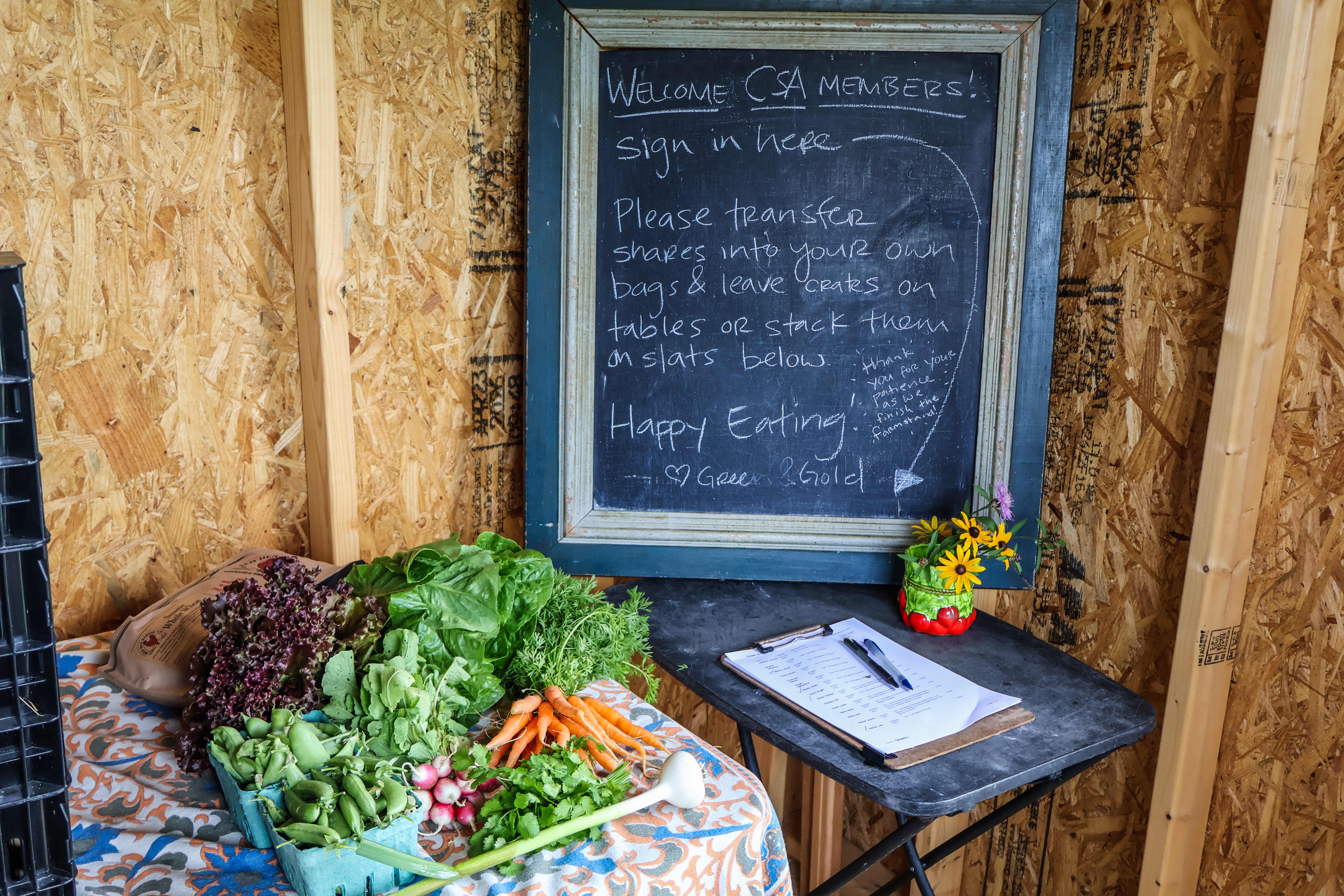
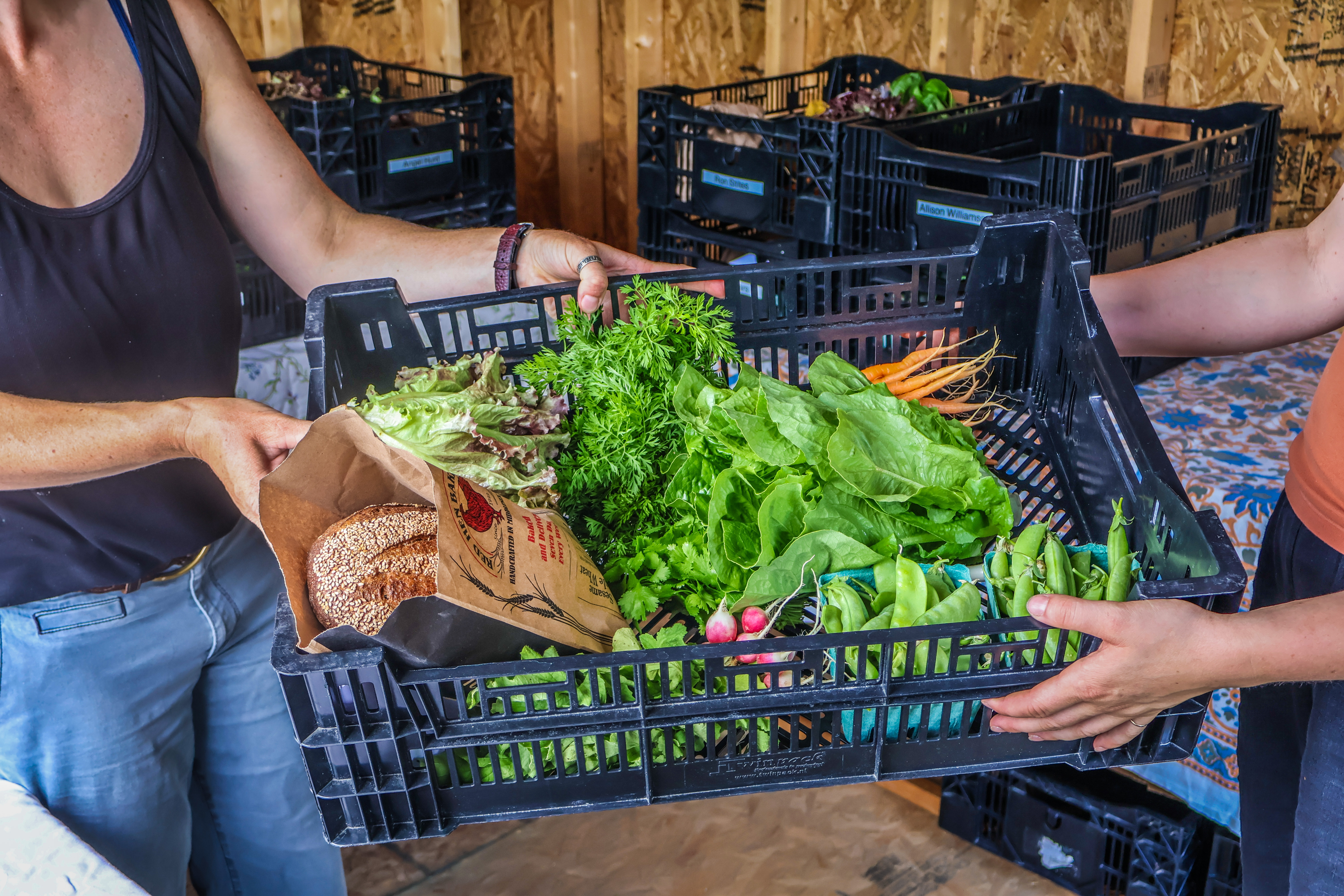
NOFA-VT’s Farm Share Program helps make local food more affordable by covering 25–75% of the cost of a Community Supported Agriculture (CSA) share or farm stand credit for Vermonters who need financial assistance, while ensuring farmers receive full payment. A CSA is a subscription, typically weekly, that provides a steady supply of farm-fresh vegetables, dairy, meats, bread, and other products directly from a local farm.
NOFA-VT’s Farm Share Program was started over 30 years ago by farmers committed to ensuring that no one would be excluded from accessing a CSA due to an inability to pay. Since the start of the COVID-19 pandemic, demand for the program has grown dramatically. By 2025, NOFA-VT had grown the program’s capacity to support nearly three times as many participants as were supported pre-pandemic. As application numbers have continued to rise, however, it has become clear that the first-come, first-served system for applying to Farm Share needed to be revisited in order to provide more equitable access to the program.
Identifying the Need for Change
To better serve community members with limited access to local food, we restructured our application review process through a collaborative, participatory approach. The goal was to create a more equitable and transparent system for reviewing applications—one that could continue to evolve iteratively as the program continues to grow.
Before beginning the restructuring process, NOFA-VT’s Farm Share team—the Local Food Access Director and Assistant—spent the summer of 2024 researching various models of participatory decision-making, including community review committees, advisory boards, and other shared governance structures. The goals guiding the participatory process included:
Change the structure of the Farm Share Program to serve community members and farmers more equitably:
- Gain a comprehensive understanding of people’s experiences with the program, as well as their ability to access local food in general.
- Co-design a program that reflects and is responsive to people’s needs in accessing and producing locally grown food, ensuring that those most impacted by food insecurity are core participants in the redesign of the program.
- Build relationships with and among community members, farmers, and service providers.
Developing the Advisory Committee
In early 2025, we began the first stage of redesigning the Farm Share application process. This included two initial informational sessions with community members, farmers, and service providers to share what inspired the plan to revisit the application process, gather early feedback on the existing application process, and outline the proposed role of an advisory committee. To ensure a broad range of perspectives were included, we conducted extensive outreach and also extended personal invitations to individuals across our networks. The intention was to bring a diversity of voices to the table from the outset and create a more inclusive foundation for the redesign process.
After the initial meetings, we circulated an interest form for participation in a compensated advisory committee. From the pool of applicants, we selected fourteen committee members representing a range of perspectives, including past and current Farm Share program participants, farmers who participate in the program, service providers working with people who access the program, and food-insecure individuals who had never previously participated. Committee members brought a diversity of lived experiences, including individuals with disabilities, BIPOC identity, immigrant or refugee status, and geographic representation across the state. The goal of this intentional selection process was to include voices both from those most directly involved in the Farm Share Program and those experiencing the most significant barriers to accessing local food.
We convened the advisory committee for two working sessions in the summer of 2025. After orienting members to the barriers to accessing the Farm Share Program identified by NOFA-VT staff, outlining the parameters of the redesign process, and dedicating time to building relationships and trust among participants, we moved into a deeper analysis of potential application structures.
We presented a range of possible applications and review models, along with different factors that could be considered in assessing need. Committee members had time to discuss the options, ask questions, and reflect before ultimately selecting a preferred approach through ranked-choice voting. The committee determined that the best structure to move forward with was a needs-based rubric designed to assess applicants’ level of food access need so that those with the greatest need could be prioritized for the program. In addition, the committee provided guidance on how barriers to food access could be grouped, scored, and evaluated within a trauma-informed framework.
Putting Recommendations into Practice
Next, NOFA-VT staff took the committee’s comprehensive feedback and transformed it into an implementable application process. We created a rubric to assess Farm Share Program applications, assigning points across four categories—financial, demographic, household details, and other factors—for a total possible score of 25 points. Applicants are not required to answer demographic questions, and choosing not to respond does not affect their overall score. All demographic information is kept confidential and is not shared outside of the Farm Share Program. Application responses are automatically assessed by the application software to streamline and standardize the process, and NOFA-VT staff review any additional information applicants wish to share.
A few additional structural changes were made to the application process to increase equity, transparency, and better align with administrative capacity.
- Applicants now have one month to submit their application, after which all applications are reviewed. This represents a shift from previous years, when applications often had to close after just a few weeks due to high demand.
- Application review is no longer first-come, first-served. Applications are evaluated simultaneously by NOFA-VT staff after the submission period closes, with each application scored using the rubric described above.
- The application includes new questions to assess financial need. Applicants are asked to self-report income and financial status; NOFA-VT still does not require any documentation or proof of income.
The application contains optional questions about demographics, added to help identify applicants who may face additional barriers to accessing local food.
Assessing the Results
This new review process was first implemented this spring for the 2026 spring/summer program cycle. During this season, NOFA-VT was able to offer funding to 376 of the 575 household applications received. Participating farms were able to extend discounted shares to an additional 91 applicants through private donations.
Of the NOFA-VT-funded applications:
- All 14 counties were represented
- 50% of households receive 3SquaresVT benefits
- 41 are New American Households
- 97 households have BIPOC individuals
- 179 households have disabled individuals
- 17 households have veterans
- 71 households have seniors
- 140 households have single parents
Participant Feedback
We are continually working to improve the Farm Share Program and will keep evaluating and refining the program as farmer and community needs evolve. Feedback is encouraged both within the application and through a post-season participant survey. There may also be future opportunities to join a committee to help assess and shape the program. If you’re interested in being kept in the loop about these opportunities or if you have questions or suggestions about the Farm Share Program, please email us at [email protected].
“I appreciate the thoughtful work that went into the changes that have been implemented in this new application review process. It has not made more work for me as an applicant, and though it may lead to less support for my family, I believe it will ensure that the limited available funds will be equitably distributed amongst the growing numbers of people who are suffering food insecurity. Thank you for all of your work pivoting to meet the needs of our agricultural community and all who depend upon it.”
-2026 Farm Share Program Participant