
August 12, 2026
NOFA-VT is launching a new adaptation planning program for farmers at significant risk of flooding to collaboratively develop adaptation plans that strengthen whole farm climate resilience. This program combines NOFA-VT’s existing adaptation planning framework with a farmer mini-cohort model (pods of three farms with similar geography, scale, risk factors, etc). Pods will develop actionable, farm-specific adaptation plans for their respective farms while also creating a space to learn from peers, deepen community connections, and build the skills to support lasting resilience. During this project, participant data will help NOFA develop a method for measuring the costs (financial, environmental, and social) of not implementing risk mitigation strategies that will aid decision-making as they prioritize the implementation of strategies identified in their adaptation action plans. Participants will also receive $5,000 in seed funds to jumpstart one of their priority projects and contribute .
Program Overview
Climate adaptation planning is a facilitated process that provides a structure for understanding your farms’ strengths and vulnerability to the impacts of climate change and then developing a realistic action plan that can guide adaptations and investments to strengthen both short and long term farm resilience. NOFA-VT’s approach to adaptation planning is focused on the whole farm system and is grounded in a farmer’s goals for their business, landscape, and quality of life.
This pilot program will facilitate planning with small peer groups (pods of three farms with similar geography, scale, risk factors, etc) and will focus on farms located in floodplains, along river corridors, and/or are at significant risk of erosion due to steep slopes. We will utilize NOFA-VT’s existing planning process and support shared learning and innovation as the pods visit meet and visit each other’s farms. The resulting action plans will be grounded in the collective knowledge and experiences of the pods bolstered by NOFA provided resources and referrals, with a realistic implementation timeline so farms can prioritize actions and can integrate into business planning.
The result is a co-created plan that prioritizes actionable steps toward your goals while funding a project to increase resilience with a $5000 implementation grant. Participating farms will have access to continued 1-1 technical assistance in areas of interest/need (financial projections,
Adaptation Planning Process
The adaptation planning process utilized in this program includes three steps: Prework, Resilience Assessment, and Strategy Action Planning.
During Pre-work, farmers identify holistic goals, reflect on the farm’s history, and assess their business’s current financial and environmental health. This prework is used as the foundation of adaptation planning.
The resilience assessment is developed following a farm visit where technical service providers and the farmer walk the landscape to identify climate strengths and potential vulnerability considering soil, production, markets, supply chain, and infrastructure. After the visit, the farmer and the planners draft a Resilience Assessment document identifying the climate strengths and vulnerabilities identified during the farm visit and prioritizing the risks. During action planning, pods and planners identify and prioritize strategies to mitigate the risks identified. The result is an implementation plan consisting of short-term and long-term strategies that the farm can use to improve their climate resilience. Climate adaptation planning is an iterative process and farmers are encouraged to evaluate the impact of their adaptation projects and continue to update their climate adaptation plan regularly.
Farmer-to-Farmer Mini Cohort Model
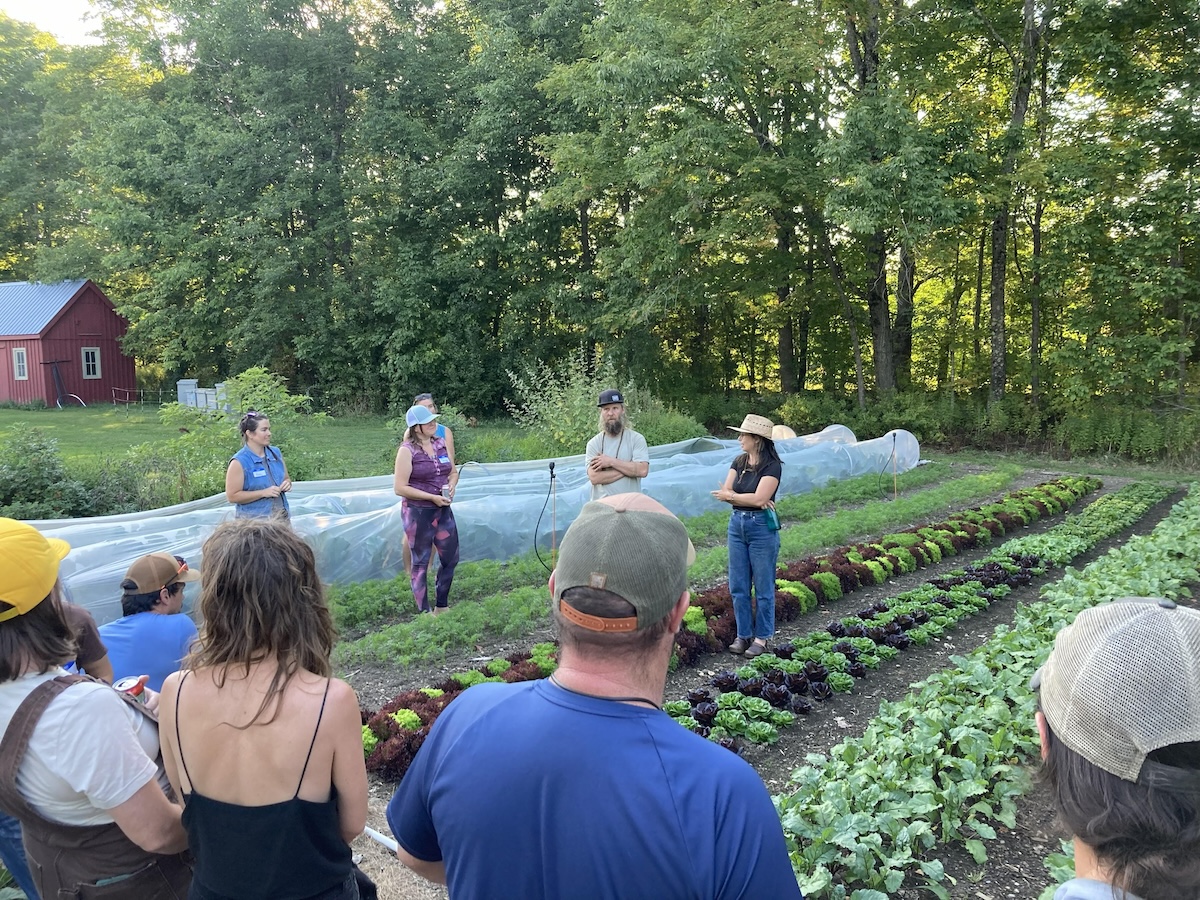
This pilot program will facilitate pods of three farms each who will go through the planning process together. This cohort model is intentionally designed to allow for effective planning, while also creating valuable spaces for farmer-to-farmer learning and community connection.
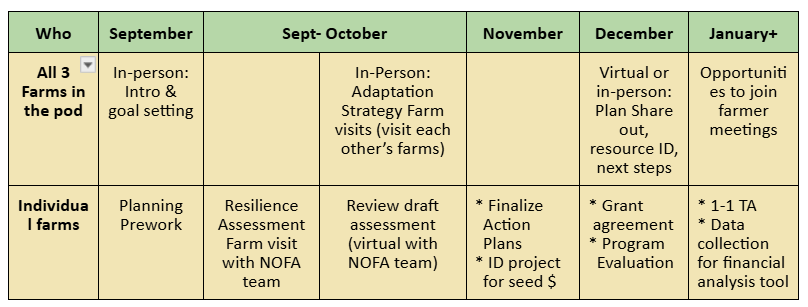
Activity Schedule
Program Schedule- Fall 2026:
Upon completion of the program, farms will receive $5,000 in seed money to fund the resilience enhancing projects identified through the planning program.
Participating farms will provide financial data that will support the development of a decision-making tool that will help understand the cost of not making investments in mitigation strategies.
Additional resources available to support your farm resilience initiatives. This may include: financial analysis, assistance accessing capital, and conservation/organic practice implementation resources with the goal of increasing both climate resilience and profitability.
Program Expectations
Through this program, NOFA-VT will:
- Facilitate a productive and efficient adaptation planning process.
- Work with each farmer to make sure adaptation action plans meet the direct needs and goals of each farmer participating in the program.
- Provide $5,000* at the completion of the program to invest in resilience-building actions.
Participating farms are expected to:
- Participate fully in the program - the estimated time commitment is approximately 10 hours (not including travel time).
- Actively support your fellow cohort members by sharing your ideas, energy, and knowledge during group meetings and farm visits.
- Respond timely to communications :)
- Participate in the data collection for decision-making tool development and program evaluation process.
* Farms that have recently received $1500 grants from NOFA for adaptation planning can participate, but will receive $3500 through this program.
If you have any questions, please feel free to reach out to Nancy LaRowe ([email protected])
This program is funded by the National Institute of Food and Agriculture, U.S. Department of Agriculture, through the Northeast Sustainable Agriculture Research and Education program under subaward number CNE26-029-AWD00001846.