November 13, 2026
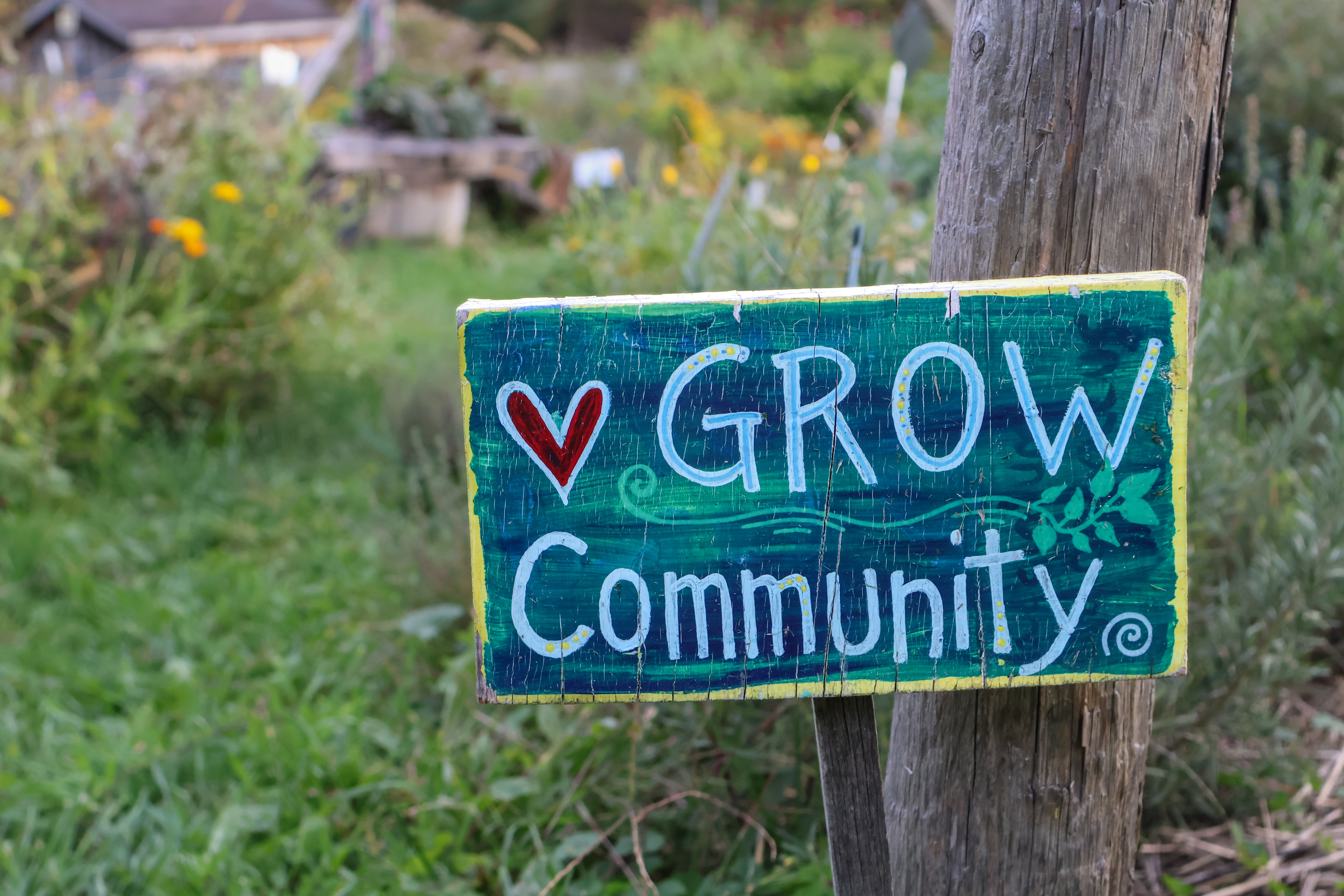
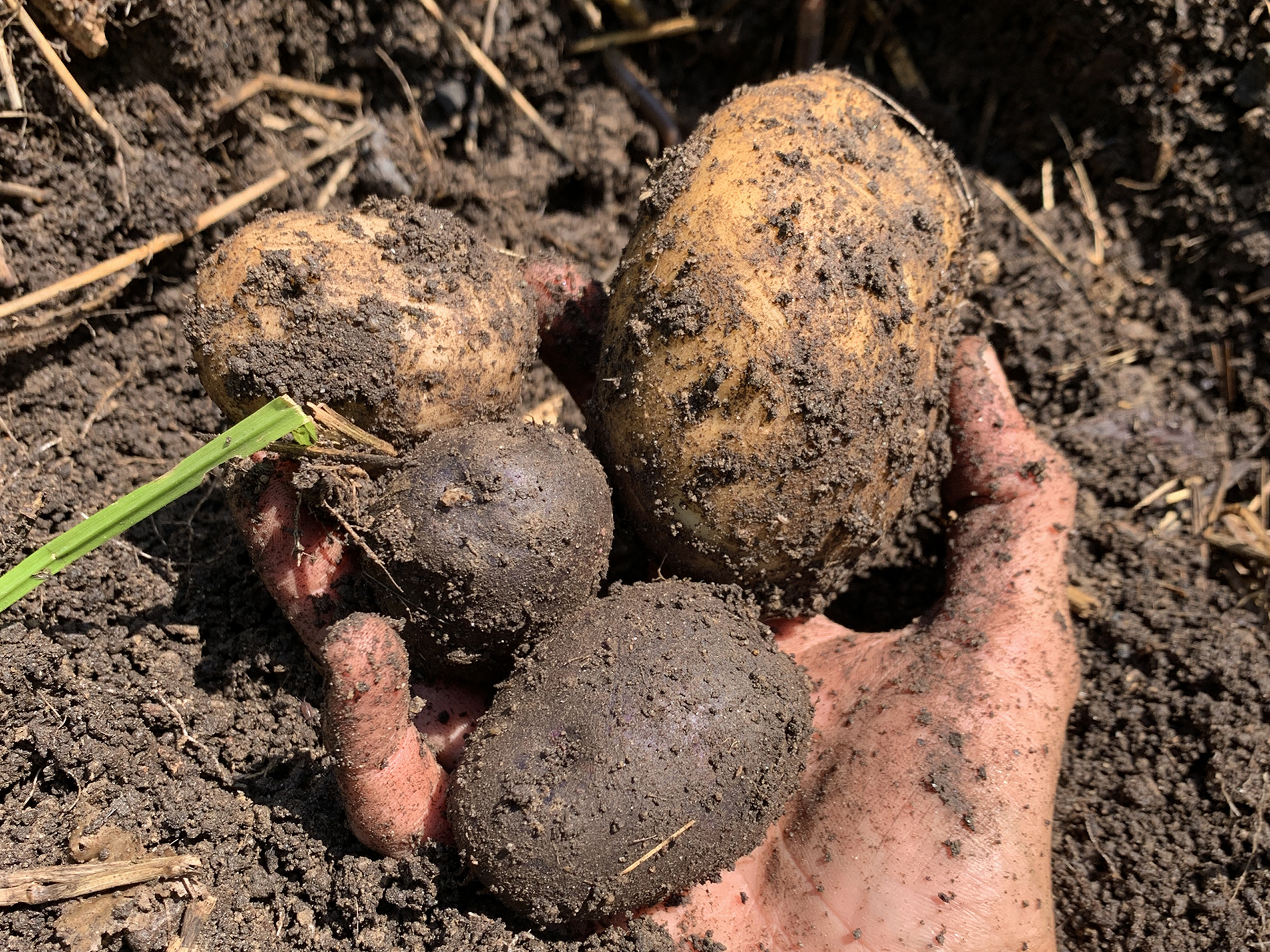
“Grow potatoes. Grow relationships. Grow resilience. Feed each other.” This is the simple guidance from the Spud Club, an autonomous, decentralized, potato-growing mutual aid network with local groups, or “nodes,” across central Vermont.
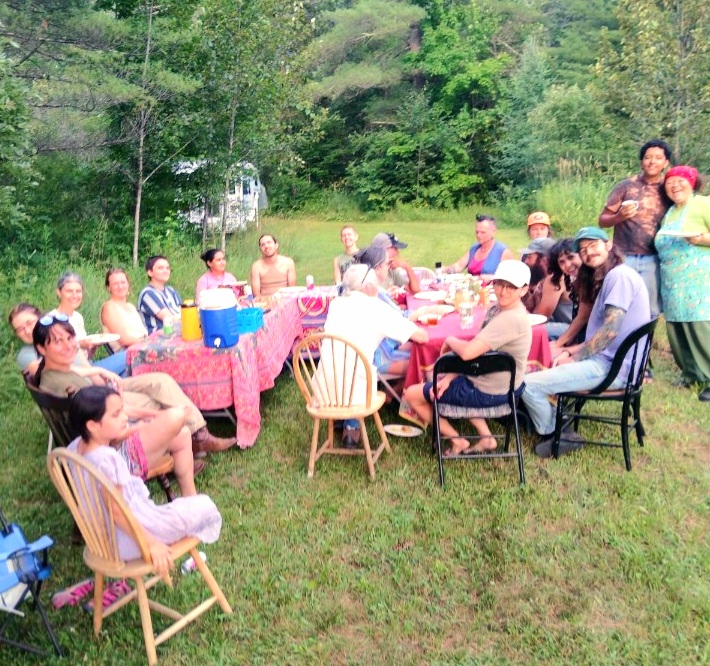
Spud Club participants and NOFA-VT members gathered in July to break bread, mash potatoes, and learn about how to support initiatives with the shared goals of food sovereignty and community resilience. Farmer Ama of Nama Farm prepared a delicious potato-based dinner featuring Spud Club potatoes, locally sourced meat and cheese, and her own veggies, herbs, salts, and seasonings—“indescribably wonderful!”
The gathering was a celebration of potatoes, community, and local food resilience. Farmer Ama grounded the dinner in the potato’s Peruvian roots, adaptability, and significance to ecosystems and movements across the globe. Amanda Franz, founder of the Spud Club, shared how the Spud Club came about: “Food growing is a collective process. It’s intended to be done in togetherness. So I was looking for a way to create systems for more people to grow food.” Potatoes made good sense because they’re adaptable, they’re easy to use, and they’re relatively storable. “I thought, ‘Okay! Potatoes!’”
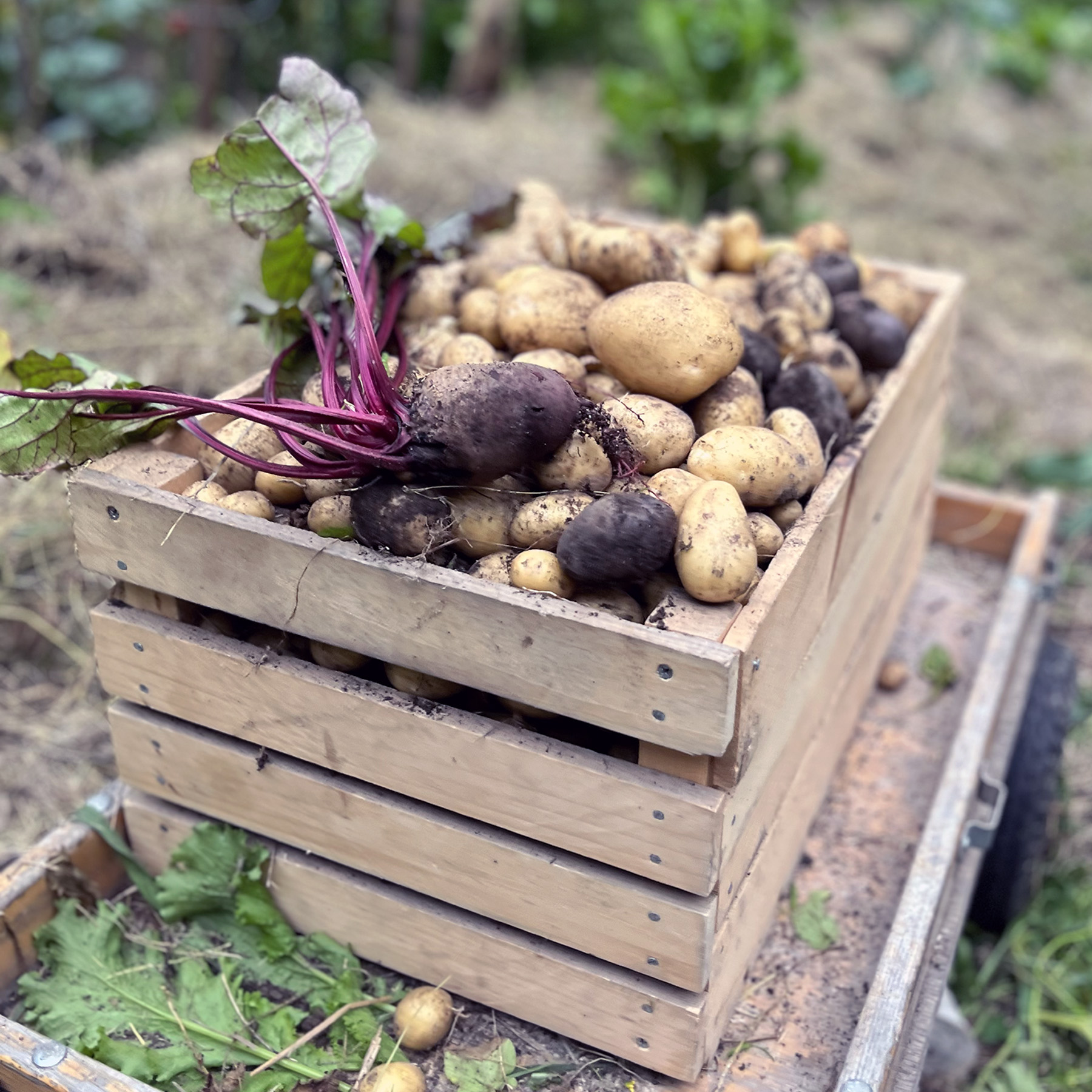 And now, the Spud Club is a growing network with more than a dozen nodes, a mix of public and private. Nodes are autonomous; each node decides what to grow and how to distribute the potatoes. They might work with schools or food shelves, or host community dinners—any way of distributing food through a food justice lens, reaching folks who have less access to food and sharing the values and vision of the Spud Club. The collective Spud Club network is a place of mutual support for things like sharing seed potatoes, troubleshooting, hosting work brigades, distribution, and storage space.
One Spud Club node is the Paij Wadley-Bailey Community Garden, a food sovereignty and reparations project by and for Black, Brown, and Indigenous communities in central Vermont. Kalé Camara shared, “Paij’s Garden does it all. We offer space to grow, seed distribution, gardening support, and a healing space for BIPOC folks in Vermont…If—when—the food system fails, we will have food. We will not leave anyone behind.”
Because of the Spud Club’s growing reach, storage space is an emergent need. The Spud Club is always looking for more space in existing root cellars within its networks. Looking toward creating a more food-resilient future, they’re also exploring creating additional root cellars. That might include small, temporary root storage structures made from repurposed bins and built into the side of a hill, or community root storage space that is larger and longer-term but would take more resources to create. Bill Chidsey, a NOFA-VT member who came down from Greensboro to learn about the Spud Club, said, “It keeps me alive to know that people are doing things like this. My follow-up is to look into some storage options. We’ll find something.”
Throughout dinner, folks underscored the constant work for systemic change. One person was interested in running for local office; another is currently serving and offered support. Yet another shared what they’ve learned from participating in local school board meetings and encouraged everyone to engage in theirs. Another shared stories from working at the State House to pass (and now to fund) the Farm Security Fund. Farmer Ama called this work “the spiritual force of speaking truth to power.”
There was an abundance of power, truth, and potatoes feeding spirits and bodies. Bill reflected, “This was a wonderful opportunity, and I felt so glad to be there. I left with action steps and fire in my belly.” Mutual aid networks like these do more than fill the gaps left by systems that fall short. They are ways to live into the world we’re creating, grounded in community and with the joy of being able to keep each other fed. If you’re looking for networks to support in your community, check out this NOFA-VT resource—a list of mutual aid resources across Vermont, organized by county. If you see a network missing, let us know, and we’ll add it.
Mutual aid steps in when our governmental policies fall short. And too many policies are inadequate, not addressing our root challenges or our fullest possibilities. We want thriving rural communities that are nourished by our delicious and healthy food. We want farmers on land, and earning a decent living, with health care and the ability to care for children and elders. But right now—most notably with the federal Farm Bill—the policies fail our farming community. To that end, we believe that rather than waiting for the federal government to come up with the solutions, we need a Vermont Farm Bill. Our fall Member Meetings will be spaces for NOFA-VT members to shape and inform a Vermont Farm Bill. We’ll also begin to develop a shared analysis of what it will take to make it happen. There’s a seat for everyone at this table—long-time farmers, farmers seeking land, families, new Vermonters, eaters, and producers of all types. We all have a stake in this and important insights to share. Come join in! Reserve your spot, and get in touch with jessica@ nofavt.org if you’d like to host a meeting in your community!