October 7, 2026
“Who is the boss?” asked participant Julie Wolcott at the most recent gathering of NOFA-VT’s Land Together Learning Network, hosted at The Farm Upstream in Jericho. The rest of the group responded with laughs. In a business with five co-owners, this is a question with a complicated answer!
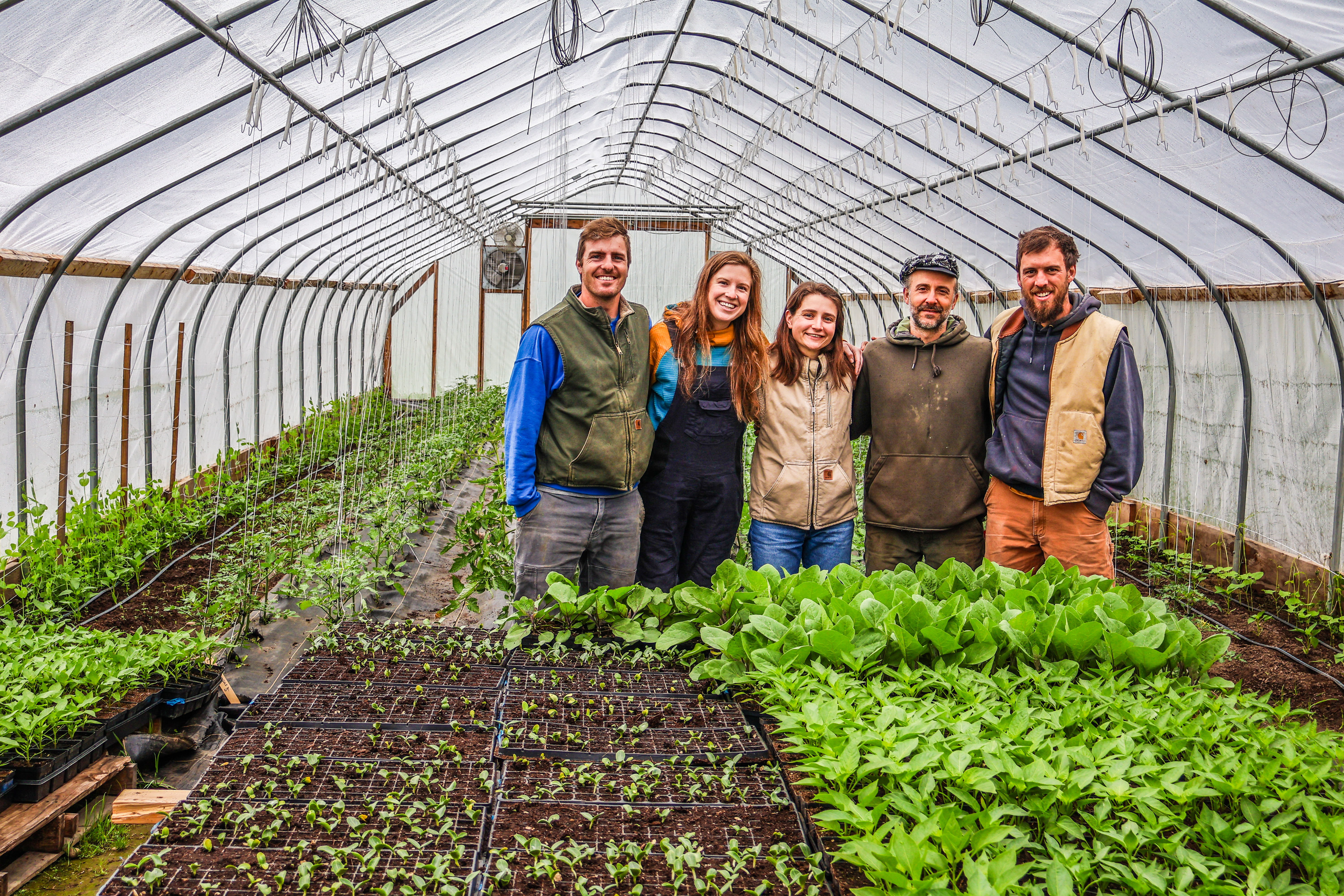
The Farm Upstream is just one of several Vermont-based agricultural businesses founded around collaboration, with a legal structure designed to support that shared vision. With five co-owners of the business, four of whom live on the property, the work, risks, and rewards are all shared. It takes time and intention to build trusting relationships and establish functional structures for operating as a collective, especially when our culture and legal system are centered around the individual and the nuclear family. There is a lot of learning and unlearning to do.
In a time of rapidly increasing land costs and a great deal of farmland transitioning to the next generation, those interested in growing food to feed their communities are approaching shared land access as a way of overcoming the challenges of modern agriculture. NOFA-VT’s membership is asking questions like, “How can we pool our resources to share the cost of getting on the land and keeping it in agriculture?” and “How can we build relationships and a shared vision to function—to grow and live—on this land together?” and “What structures and systems are needed to carry out shared decision-making for mutual benefit?”
With NOFA-VT’s new Land Together Learning Network, we are convening a group of land seekers and landholders who are committed to skilling up in relationship frameworks, communication skills, governance structures, and the financing and legal tools needed to share land successfully. For some, the vision is one of multiple businesses operating on one parcel of land, and for others, the plan is to build a cooperative structure where many people come together to run one farm.
At The Farm Upstream, one major benefit of having multiple owners is that everyone inherently wants everyone else to succeed. Each member-owner brings something to the farm that helps the business as a whole to thrive. There is a lot of trust among the group, along with clear systems for building budgets, making decisions, and running the various enterprises of the farm business. Two separate LLCs—one that owns the land and one for the farm business—make it possible for a new farmer to join the business in the future with a $1,500 buy-in, without also having to take on the risks of land and home ownership. This all took significant time and effort to put in place, and requires regular maintenance and adjustments that all the partners are willing to navigate. Using a system of sociocracy for governance, roles and responsibilities are shared among the owners. While the soil, plants, vegetables, and customers all require tending, so too do the relationships among the owner team and the many collaborative elements of the business.
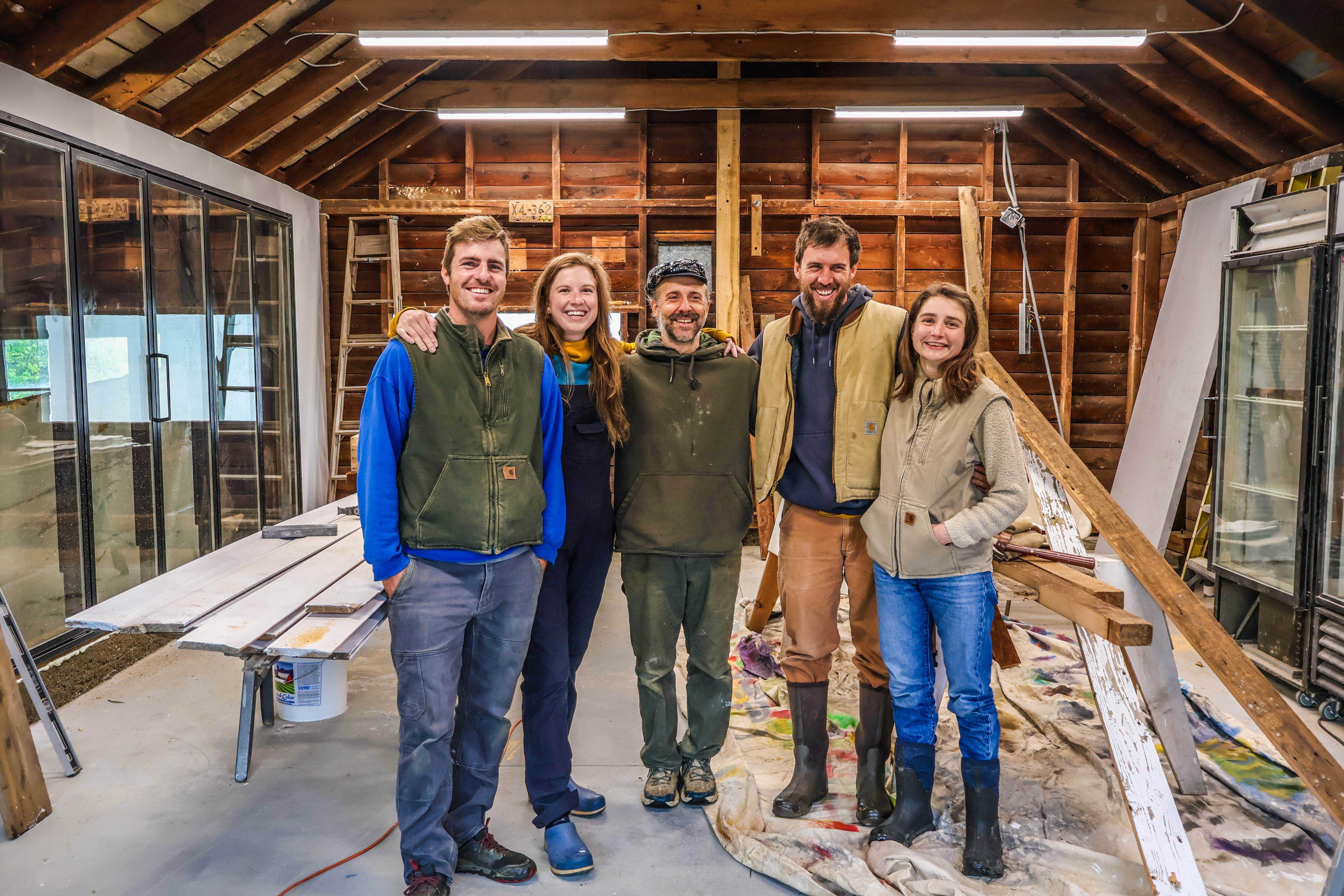
So when it comes to a question like, “Who’s the boss?”, the answer has several parts. Jake and Tucker oversee most of the vegetable side of the business and typically manage day-to-day farm operations, but employees know to turn to Jac with questions about the CSA, Spencer about fruits and perennials, and Cory about flowers. Rather than following a traditional hierarchy, the management structure reflects the farm’s collaborative roots, with different people taking the lead in different areas. Hiring employees who understand and embrace that shared responsibility is key to making the model work.
NOFA-VT launched the Land Together Learning Network in partnership with the Vermont Law School’s Center for Agriculture and Food Systems and UVM’s Institute for Agroecology in response to concerns from our membership about the affordability of land, as well as the challenges of sharing land and building collaborative business structures. Through conversations with farmers and land stewards involved in shared land efforts, we heard a clear need for support in building relationships, developing organizational structures and shared vision, and navigating the legal and financial elements of collaboration. While a shared vision is a valuable first step, the practicalities of working, living, and growing food in community require intention, commitment, and regular practice. Following our shared land webinar series (all recordings are available on NOFA-VT’s YouTube channel), we created the Land Together Learning Network as a space for interested folks to pull back the curtain on both the rewards and challenges of growing food and operating businesses together, learning directly from farmers and land stewards engaged in shared land projects.
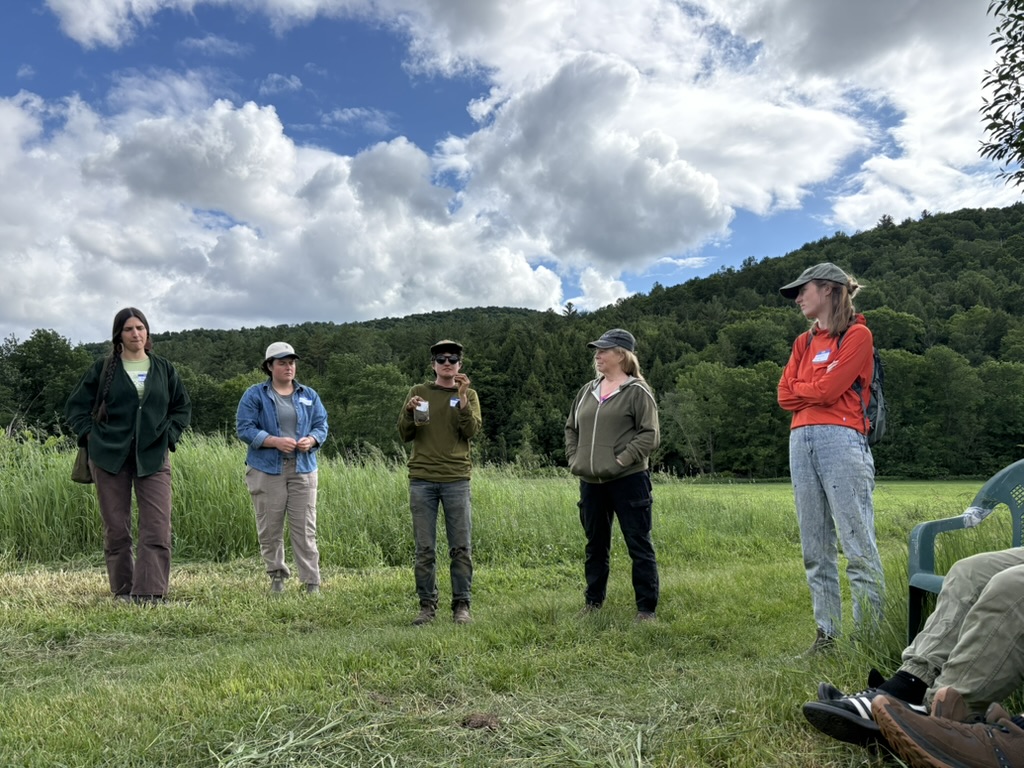
With thirteen participating groups of land stewards, the cohort launched with an in-person training in March focused on relational culture. Together, we learned resonant listening skills with Relational Uprising and began building connections and community among participants. Since then, we have met monthly, each time learning from a different model of shared land, including Rise and Root Farm and the Chester Agricultural Center in Chester, NY; Jubilee Farm in Huntington, VT; Fable Farm in Barnard, VT; and The Farm Upstream in Jericho, VT. Before moving back to virtual gatherings and wrapping up in winter 2027, we will visit Bread and Butter Farm in Shelburne, VT, and Kindred Collective in Fletcher, VT. We hope to launch another cohort this spring.
In addition to learning from a variety of different models, we’re aiming to build skills that will support participants in growing food collaboratively. While many participants are eager to learn about legal structures, all of the farms we have learned from emphasize communication, trust, and shared governance as central to long-term success. To that end, we prioritized resonant listening and Nonviolent Communication training as part of our early learning. We continue to grow our collection of resources to support collaborative groups, and in the fall and winter, we’ll turn our attention to governance structures, financial tools, and legal structures. Participants will also be matched with business planning services and one-on-one mentorship as they move forward in developing their shared land projects.
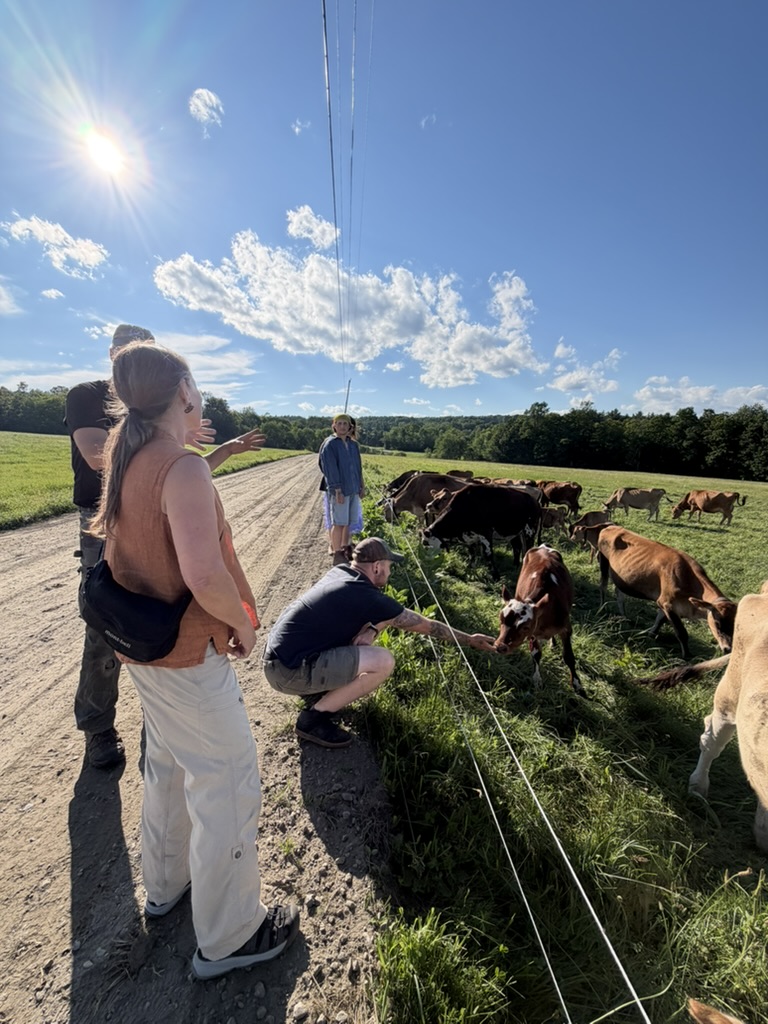
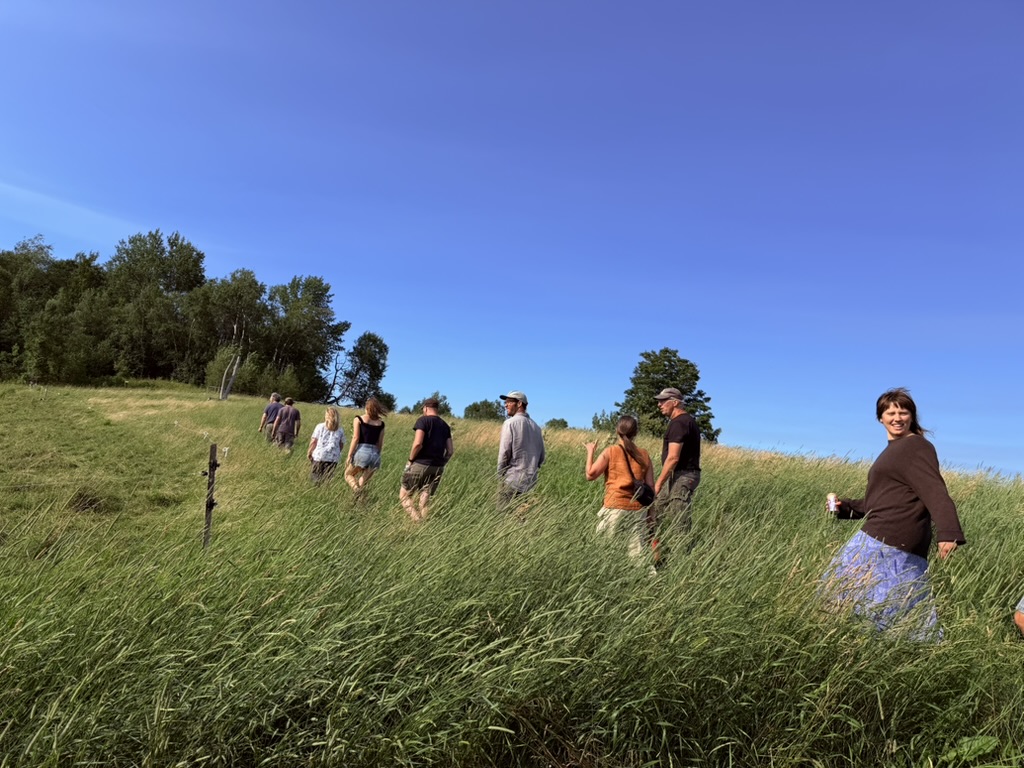
At our recent visit to The Farm Upstream, we spent the first hour connecting and hearing from two cohort participants about the specifics of their shared land projects. Participants had time to reflect, ask questions, and learn from each other’s experiences before touring the farm with Jake Kornfeld, one of the owners. As we explored the farm, we asked questions and discussed lessons learned from this project in its early stages of establishing as a cooperative business. While participants arrive at each visit with background information about the farm and a growing understanding of shared land models, we continue to ask deeper and more interesting questions as our learning evolves. We closed the visit with Grace Oedel, NOFA-VT’s Executive Director, who introduced Nonviolent Communication as one tool for communication and conflict transformation that participants can draw on in their own shared land projects.
“These farm visits have been the highlight of my summer,” shared Ryan Eastman, a participant in the cohort. Ryan recently moved back to their father’s dairy farm and is thinking ahead about creative and collaborative ways to move through the generational transition on the farm. “When we started this group, everything seemed so unclear,” Ryan shared, “but now we’re getting a lot more clarity on what things might look like at our farm in the future.” Our goal is for each gathering to build on the one before and to ask more and better questions as we work to understand the challenges and complexities of sharing land and building potential pathways that can support future collaborative agricultural endeavors.