June 25, 2026
NOFA-VT’s Farm to School team has been working alongside school nutrition professionals, bakers, grain growers, food hubs, and community partners to explore a big question: What would it take to build stronger regional grain supply chains for Vermont schools?
That question sparked On the Rise—a multi-year collaborative initiative focused on developing school-ready bakery products made with Vermont-grown grains. The project supports local bakeries with equipment, recipe development, and connections to school markets, with the goal of creating new opportunities for local producers while increasing student access to nutritious, locally-made foods.
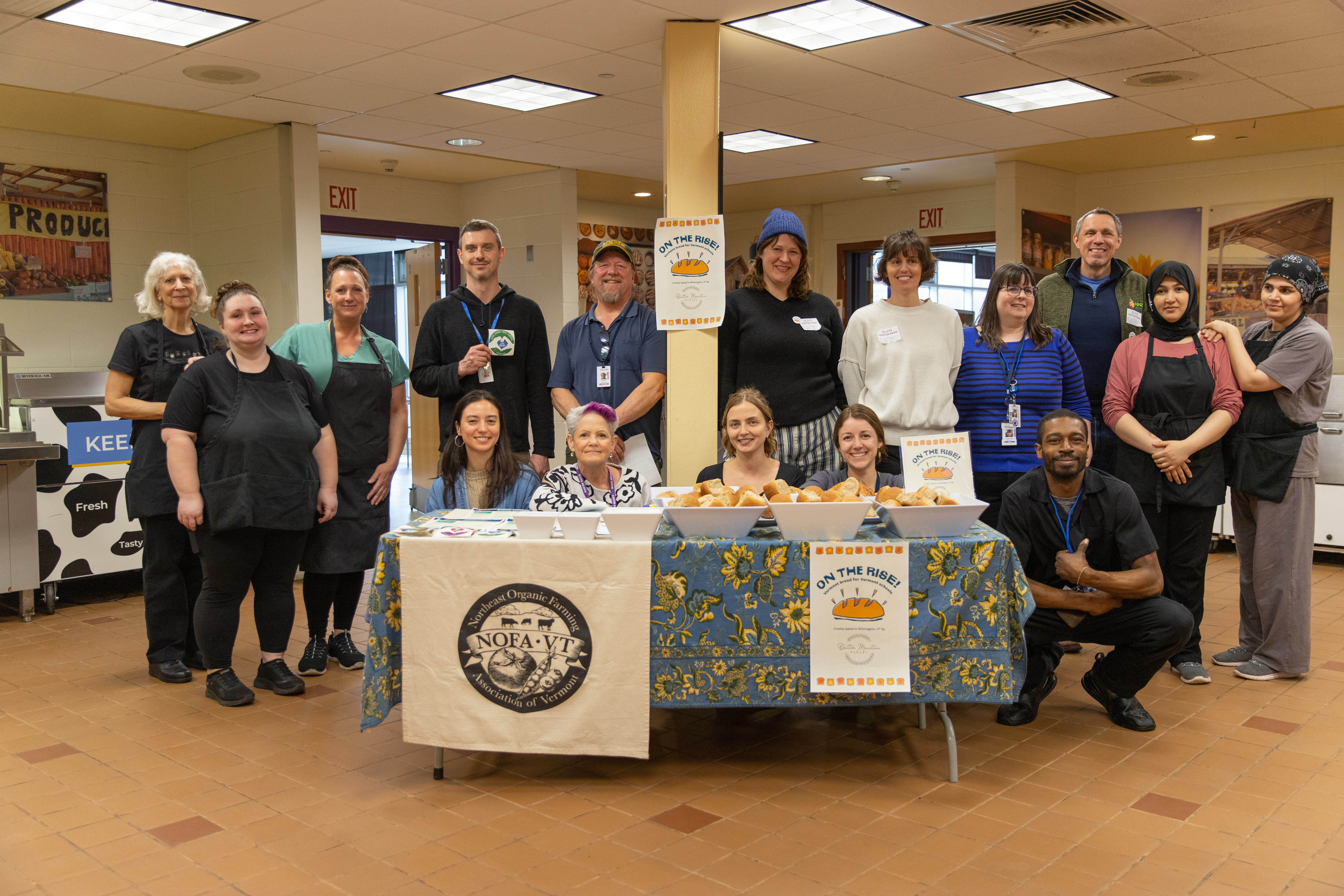
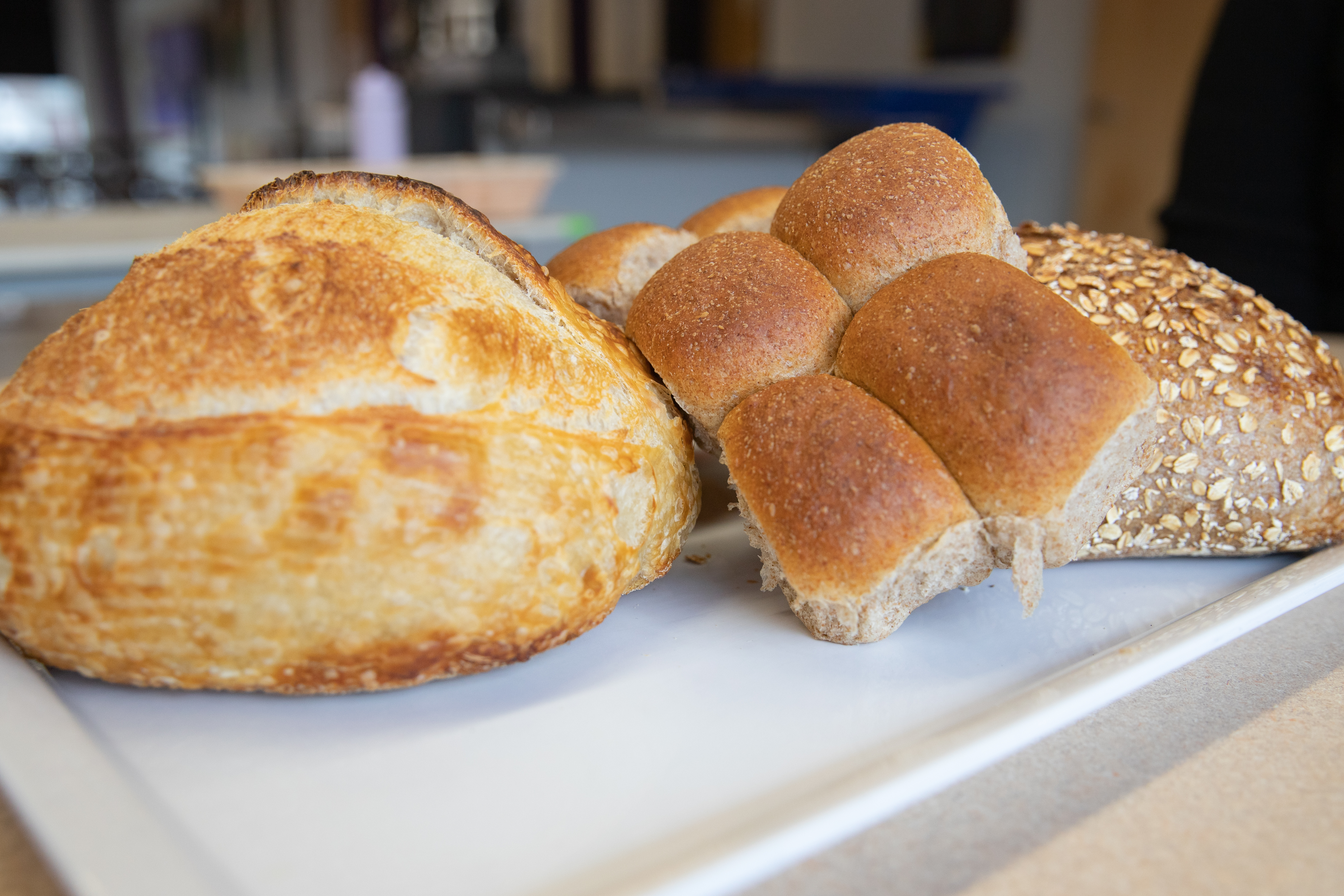
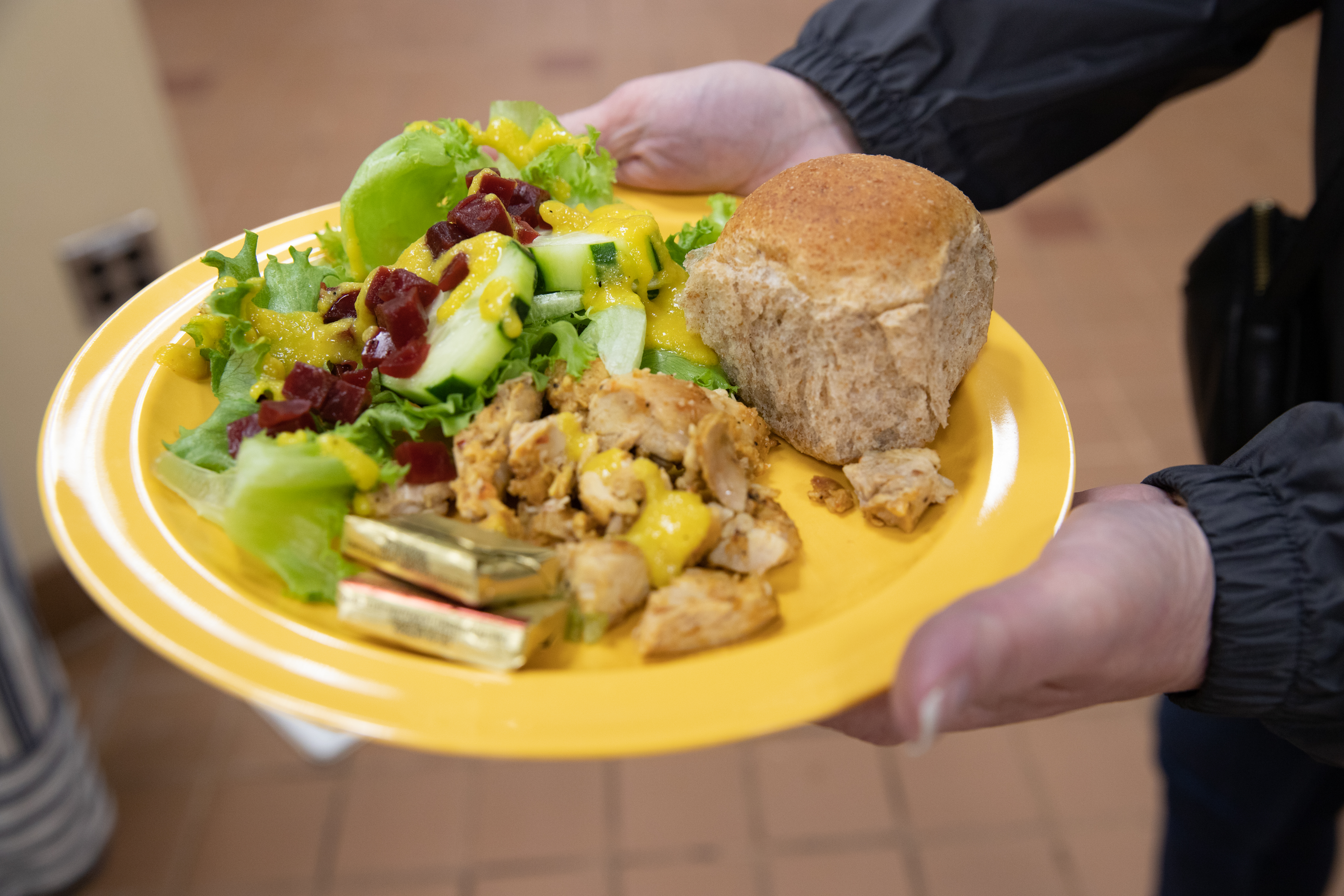
This spring, one of the project’s first major successes arrived in Brattleboro in the form of whole wheat sourdough rolls—the result of a partnership between Butter Mountain Bakery and Brattleboro Schools.
On the day they launched, a cheer erupted through the cafeteria, “A new record!” Chef Noah Gillard leaped through the swinging kitchen doors, beaming, “Brunch for lunch! 708!”
This year, the Brattleboro school meals team started a tradition. Every time they break their previous record for the number of school lunches served in a day, they add a panel to a growing banner. This lunch was one of those celebrations.
“I wish I had a recording of everyone cheering when they found out the record had been broken. It was like a wave of sound moving toward us,” Kayla Strom, NOFA-VT’s Farm to Institution Program Director, remembers. “The excitement was amazing.”
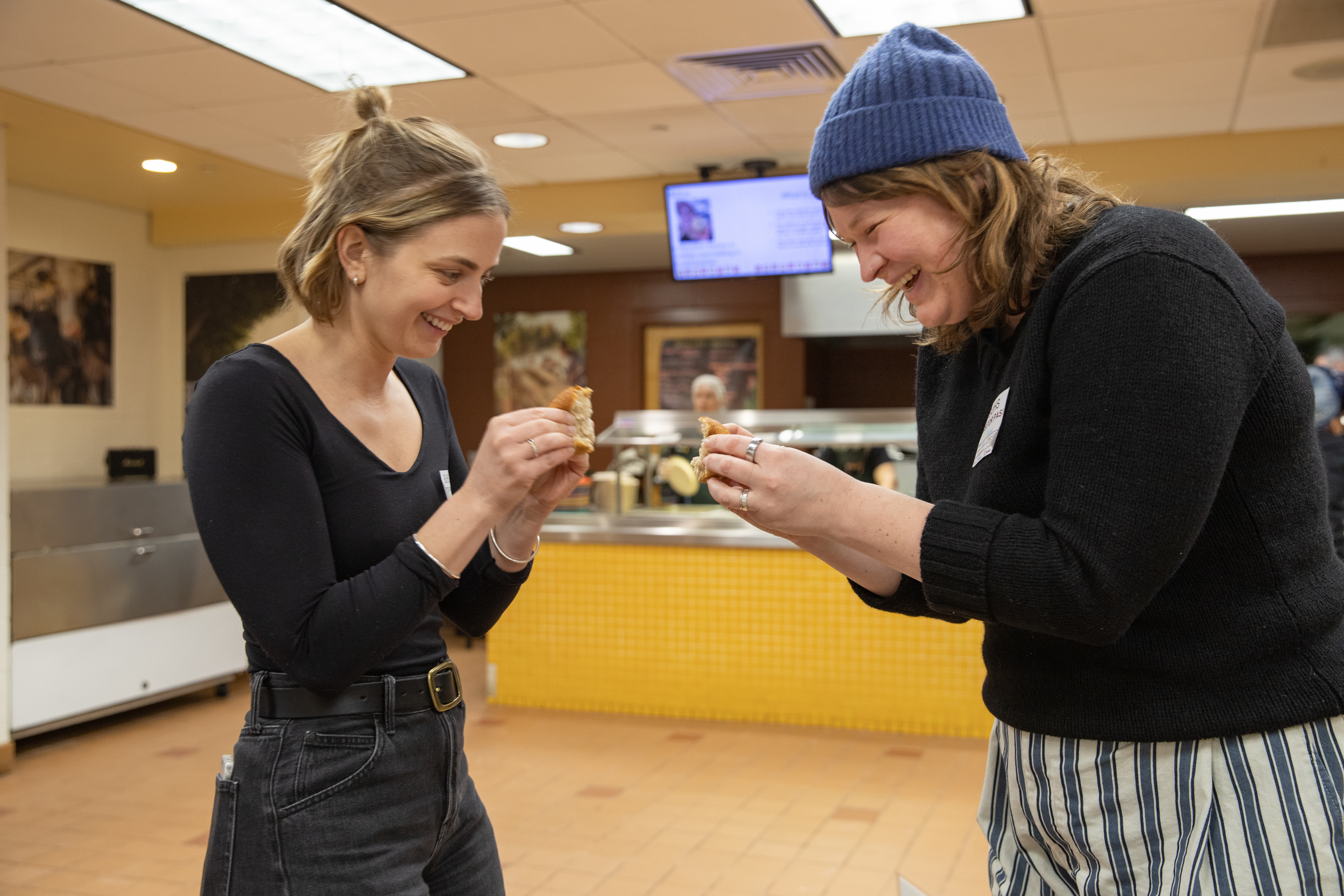
Baker and owner Hannah Small of Butter Mountain Bakery had delivered 1,200 rolls for the lunch service, and every single one was eaten. For everyone involved, it felt like a breakthrough moment after months of dreaming and planning with the district’s School Nutrition Director, Harley Sterling, and the local procurement team at NOFA-VT.
In 2024, 14.5 million school meals were served in Vermont. This particular kitchen puts out 1,600 meals every day, including breakfast, lunch, and some after-school offerings. And like many schools across the state, they work hard to incorporate local foods into the menus. While items like fresh vegetables or maple syrup are often available locally, it’s much more challenging to source everyday staples, like bread, that meet the nutritional specifications and volume schools require.
And schools serve a lot of bread in the form of rolls, sandwich bread, and burger buns. To meet their unique needs, schools typically get their inventory from large, consolidated corporate food companies. “There is a huge untapped market for local bakeries to fill if they can unravel all the intricacies of school foods,” Kayla explains. “We're building demand for local grains, while working with Vermont growers and bakeries to make sure that there is enough to supply the school market."
In 2024, NOFA-VT began deliberately examining what it would take to get more local grains and breads into school meals. “We were dreaming up crazy ideas,” explains Harley, “and grain seemed to be this dark horse that was really unaddressed. So we polled school nutrition directors across Vermont on which products there's the most enthusiasm for.”
This feedback propelled NOFA-VT to lead the charge on the collaborative project known as On The Rise (part of the larger Bridging the Gap: Supply Chain Transformation for Vermont School Meals), to secure financial support for local bakeries so they could access needed infrastructure improvements—things like larger ovens, dough formers and rollers, and cold storage capacity—to make those sought-after products for schools.
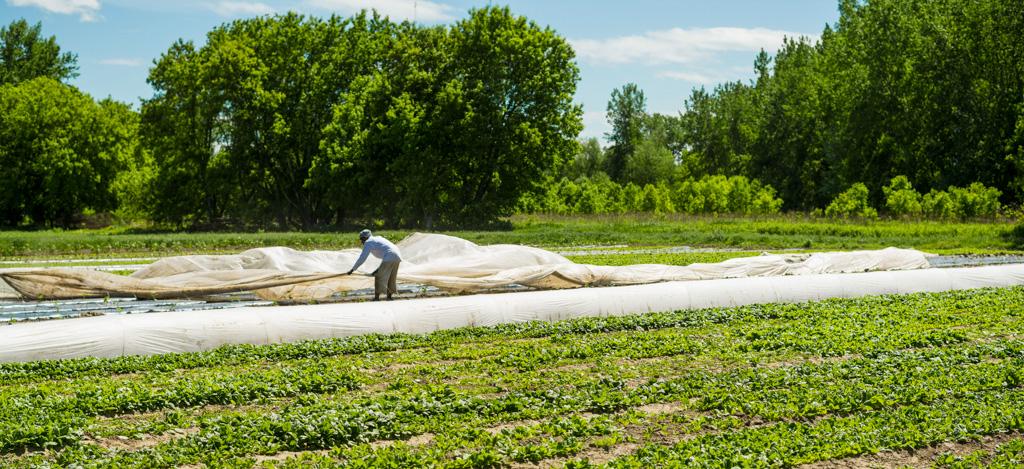
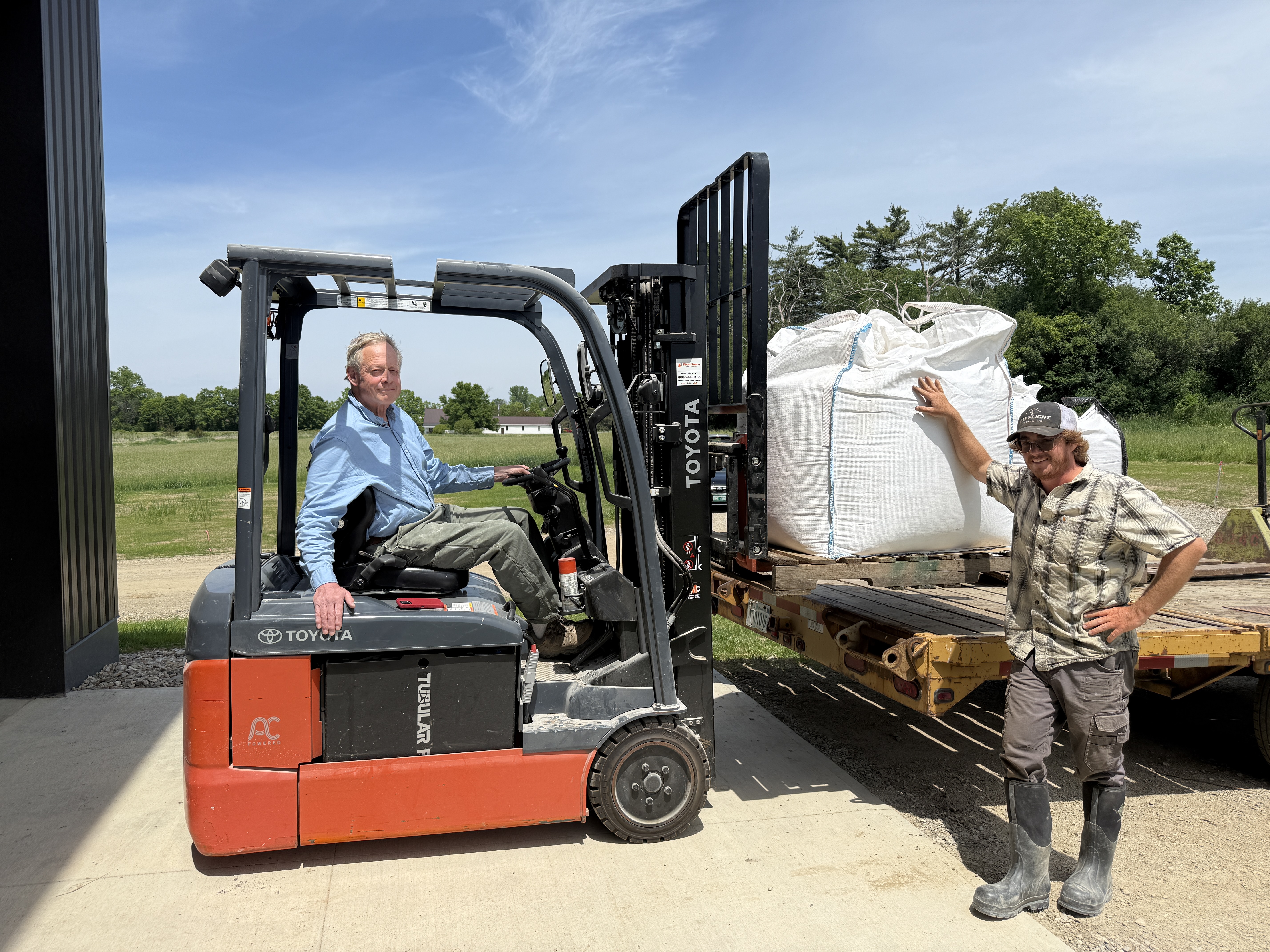
Bakery equipment is just one piece of the puzzle,” Kayla adds. “We’re also working with partners like the Champlain Valley Grain Center in Ferrisburg and neighboring farms to incorporate as many Vermont-grown grains as possible. This work takes creativity, persistence, and strong partnerships, and these collaborators are helping demonstrate what’s possible when communities invest in regional grain supply chains.”
It was through her connections with Harley that Hannah found her way into this opportunity with NOFA-VT. An infrastructure-focused grant that NOFA-VT received from the Henry P. Kendall Foundation allowed her to invest in the equipment she needed and move into a large operating space where she could reliably supply the school with bread. “Two years ago, selling to schools felt totally out of the question. It was just me doing everything.”
“A wholesale market, like schools, provides stability. My bakery is in Wilmington, which is a tourist town, so there's so much ebb and flow throughout the year. The school system is a consistent market.” With the grant funding, Hannah was able to purchase more equipment, move into a larger space, and begin to expand her staff.
“I care about what kids are eating. I know my kids are very fortunate to get sourdough and treats and amazing locally produced things all the time, but most of their friends don't have that option. So it just was like such an amazing opportunity, not only for the business, but personally, to be able to give back.”
As the school district and Hannah continue to work together, her bakery will be able to offer more products and determine where and when it makes sense to scale up. “We landed on a whole wheat sourdough roll to start. But we have lots of ideas going forward for other items.”
But make no mistake, Hannah didn’t cut corners in her baking to please a student palate—this is a premium artisan product. “We looked at a bunch of different approaches for getting Vermont grains into schools,” explains Harley. “Mass scalability and a low price point are one approach. This approach was kind of on the crazier end; we got a premium product into the meals.”
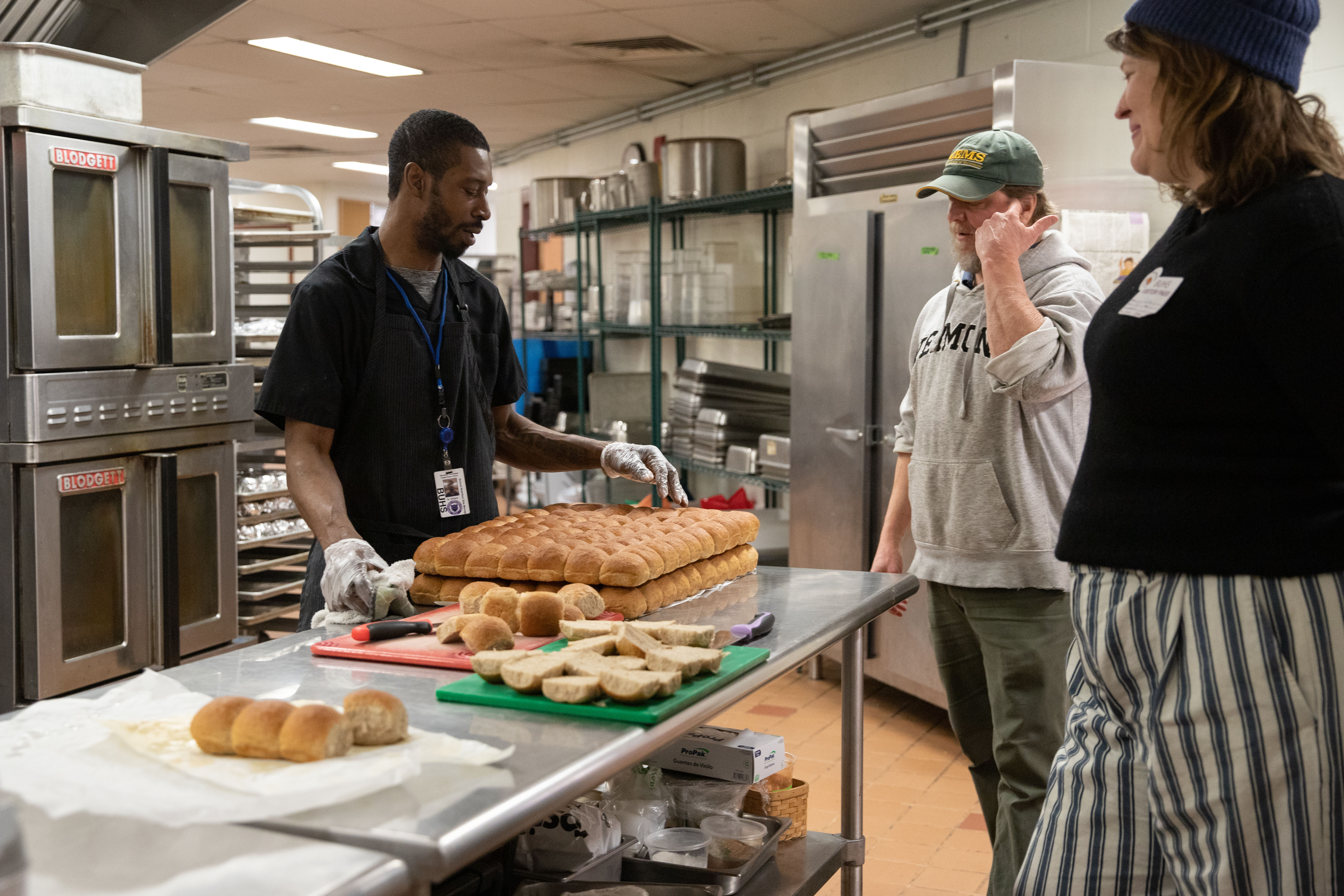
They plan to feature the rolls on the menu monthly, with the potential for more as the relationship grows. Butter Mountain Bakery isn’t the main source of bread in the cafeteria, “But if we purchase 1,000 rolls a week, and then Hannah sells 1,000 rolls a week at another school district, that makes a big difference for her business,” Harley shared.
“I know how impactful it is when you get an order that big as a baker or farmer,” adds Kelsey Baumgarten, Assistant Director of Nutrition for the Windham Southeast Supervisory Union (WSESU) in southern Vermont. “It’s a relief to know all this food you created has a home, and you don't have to go to a market and stand there for six hours. That takes so much more effort than just having a partnership like this.”
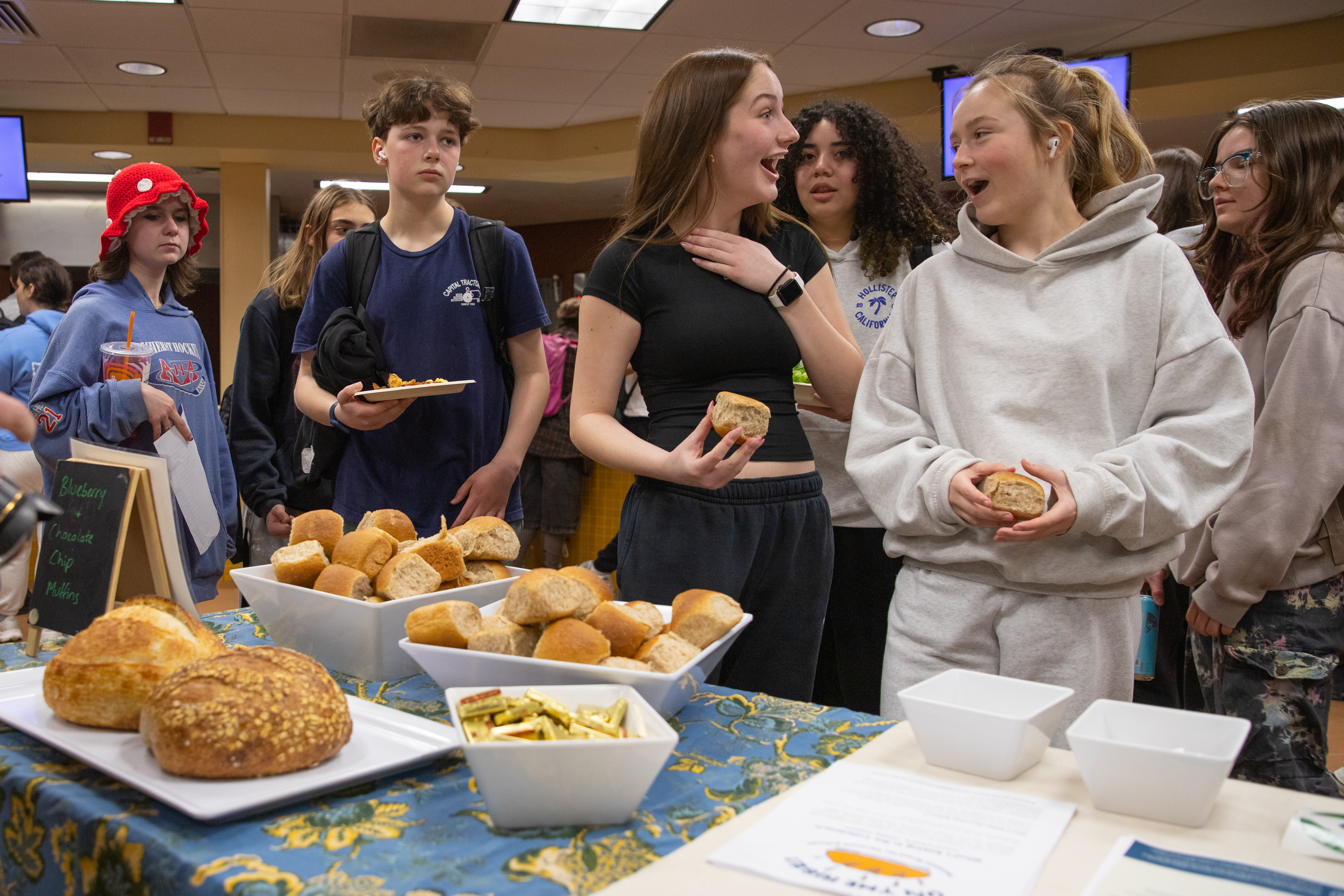
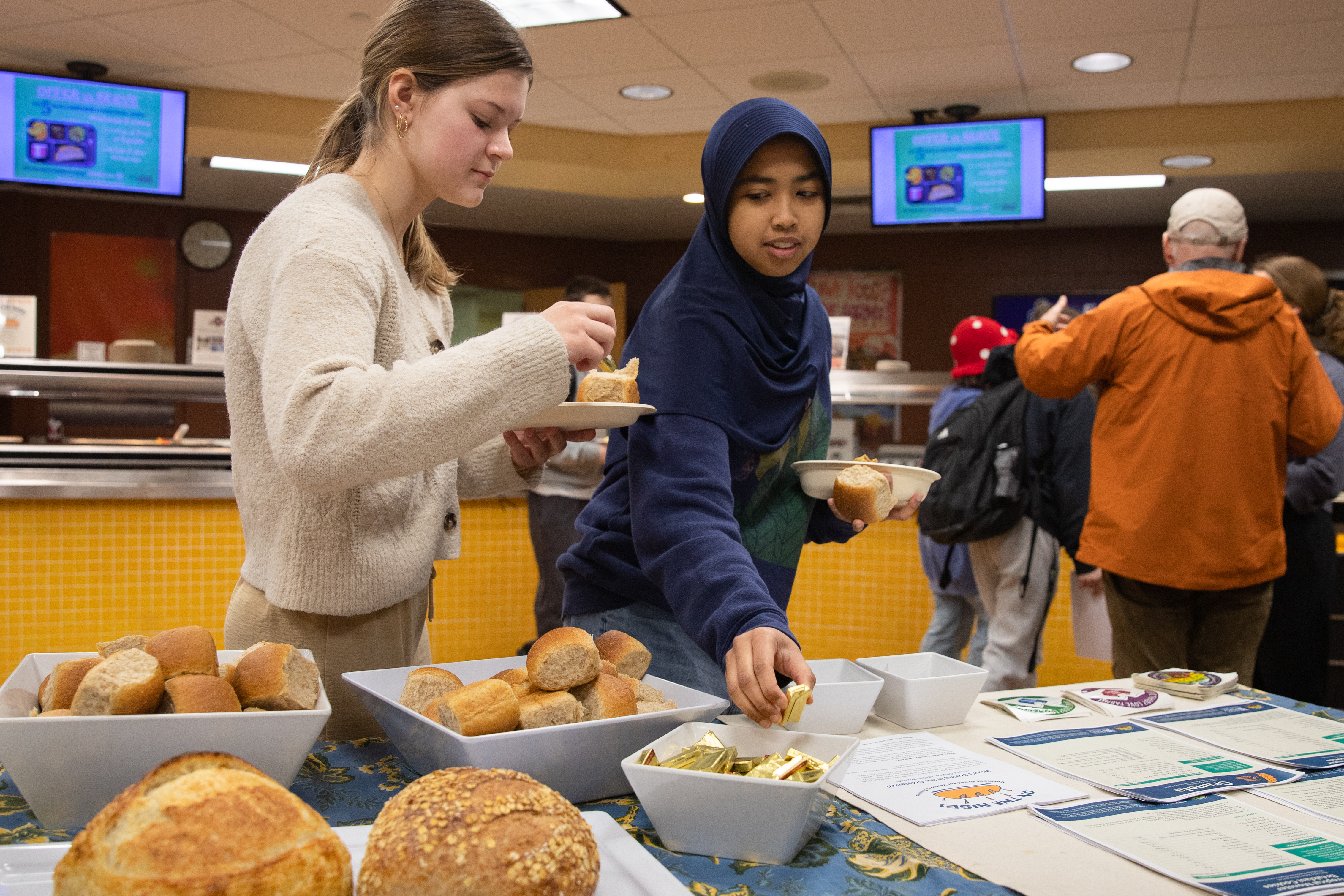
But, for enduring success, buy-in is needed from the most important customers, the students. Every month, Steve Hed, Food Systems Coordinator for the Brattleboro School district, offers a taste test highlighting the Vermont Harvest of the Month (HOTM) during the lunch periods. April’s harvest was grains, the perfect time to launch Butter Mountain Bakery rolls in the cafeteria.
Taste tests are one way to prove that students will eat these dishes, and efforts won't (literally) go to waste. “Their approval shows our district, the state, and the grain growers that there is a market here. And that’s exactly what we want to do, grow Vermont’s local food market, keep all those tax dollars in the state, and increase employment,” Steve shared.
Steve’s work in the schools is to connect the classroom, cafeteria, and community. He’s helping build farmer-school relationships and bring food systems education into the classroom, all of which support the local purchasing ethos of the school meal program. “I'm a former teacher, and I've seen a lot of the disconnect. I'm trying to find ways that we could really bridge the cafeteria to the curriculum without asking for more work.”
Steve’s role is new to the district, and he’s been making inroads. One class assigns students to interview people in the community and create stories. Steve invited them to interview Hannah and NOFA-VT Farm to School Local Procurement Specialist, Becca Perrin, as part of that classwork. Steve shared: “With a lot of their school work, kids are never necessarily told the why behind it. They think, ‘So big deal that we're eating local food. Why? What's important about it?’ When I can help explain that to kids, I think there's a lot more buy-in.”
The school nutrition team sees that buy-in, too. “When kids grow vegetables in farm to school programs, they're more likely to eat them,” shares Kelsey. “And I think the same is true for meeting a producer, because it's not just a piece of anonymous food. Students know who made that and know it's safe.”
The appreciation for all the work in the kitchen makes the difference. Harley shared, “This is why I got into food. I love that transfer of love from what you’re making to someone eating it, someone feeling it.” Harley and Kelsey make sure their team knows how their work is making a difference in the lives of their neighbors: the farmers and local producers they’ve worked so hard to literally bring to the table. “To serve good food every day, you have to build a team, a culture. We’re invested, bringing the love, and giving everyone the space to be their best selves,” Harley said.
While the Brattleboro rolls marked an exciting milestone, project partners say the work is just beginning. On the Rise is designed to build both demand and supply for Vermont-grown grains, helping schools purchase more local products while supporting bakeries and grain producers in developing the infrastructure, relationships, and markets needed to grow over time.
The project now includes collaborations with bakeries, including Red Hen Baking Co. in Montpelier, Krin’s Bakery in Huntington, Blackburn Bakery in Essex Junction, and Butter Mountain Bakery in Wilmington, along with grain partners including the Champlain Valley Grain Center in Ferrisburgh and Granite Grains in West Haven. Through cafeteria partnerships, recipe development, bakery investments, and on-farm learning opportunities, the initiative is working toward a future where Vermont-grown grains become a regular part of school meals across the state. Project partners expressed deep gratitude for the school nutrition professionals, bakers, farmers, food hubs, and community organizations helping bring this vision to life.