September 8, 2026
What do Vermont farmers need from federal policy to build viable farms and a secure food future? And what would it look like for farmers to help shape that policy?
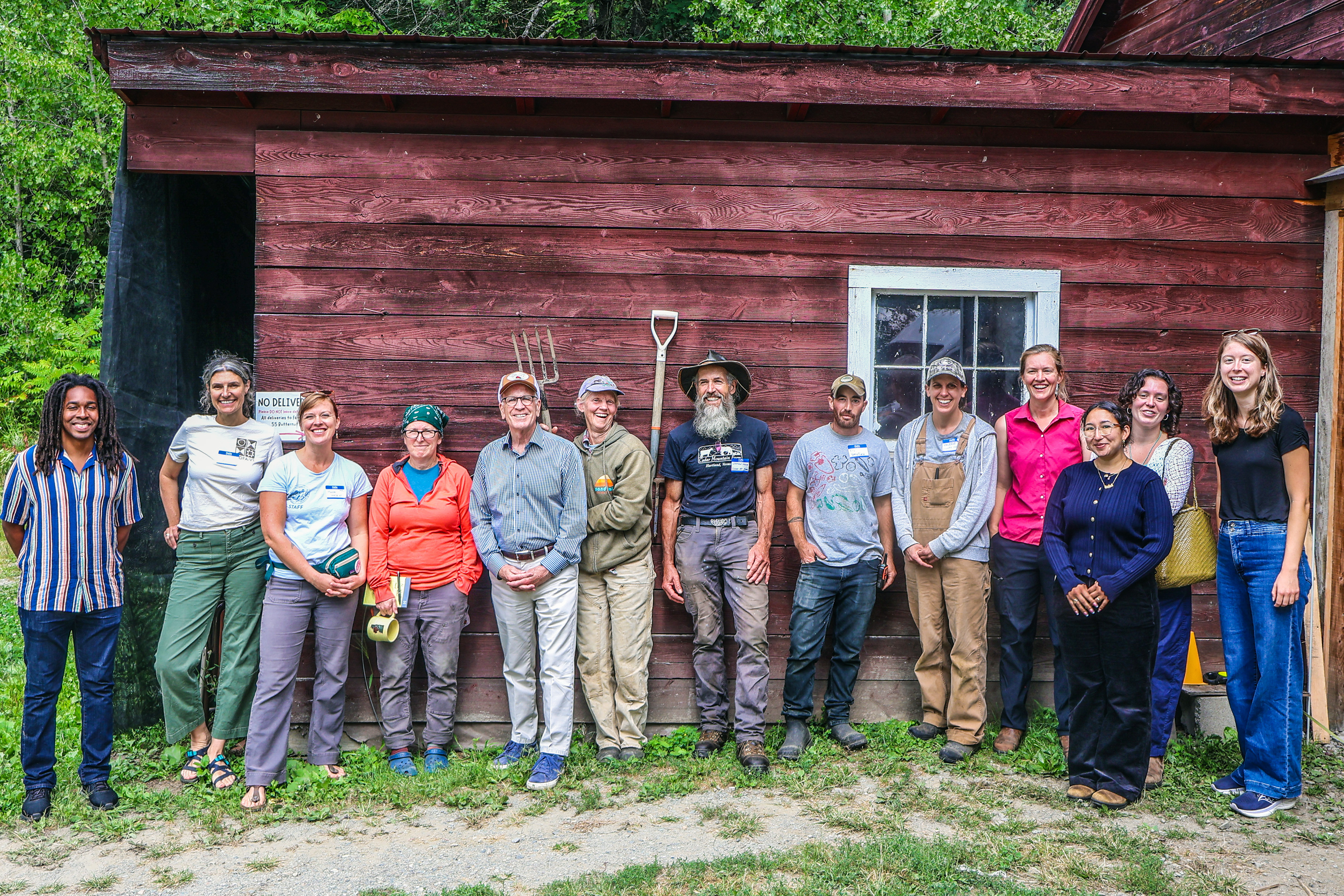
Seven NOFA-VT farmers sat down with Senator Peter Welch in late August at Eli Hersh and Valerie Woodhouse’s Honey Field Farm for a roundtable discussion about the economic challenges facing farmers, the policies that could help address them, and the shifts in thinking needed to secure our shared food future.
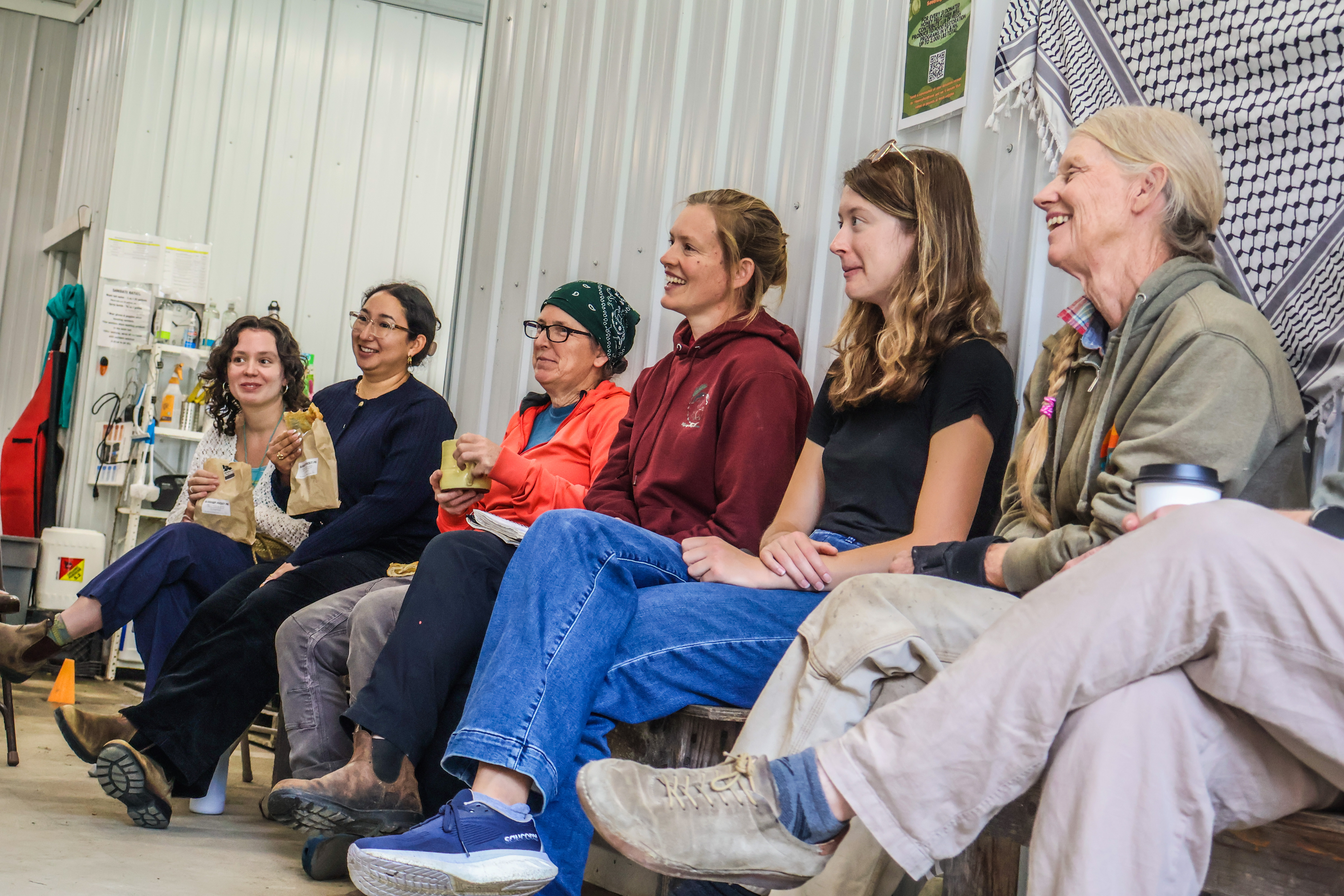
Eli, who serves on NOFA-VT’s Policy and Organizing Committee, opened the conversation by thanking Senator Welch for his work on the Farm Bill in the Senate Agriculture Committee. Welch put forth 42 amendments aimed at transforming the highly problematic bill and ultimately voted against it. Eli then turned the question back to the senator: “We want to know what we can do to help you feel supported in doing even more.”
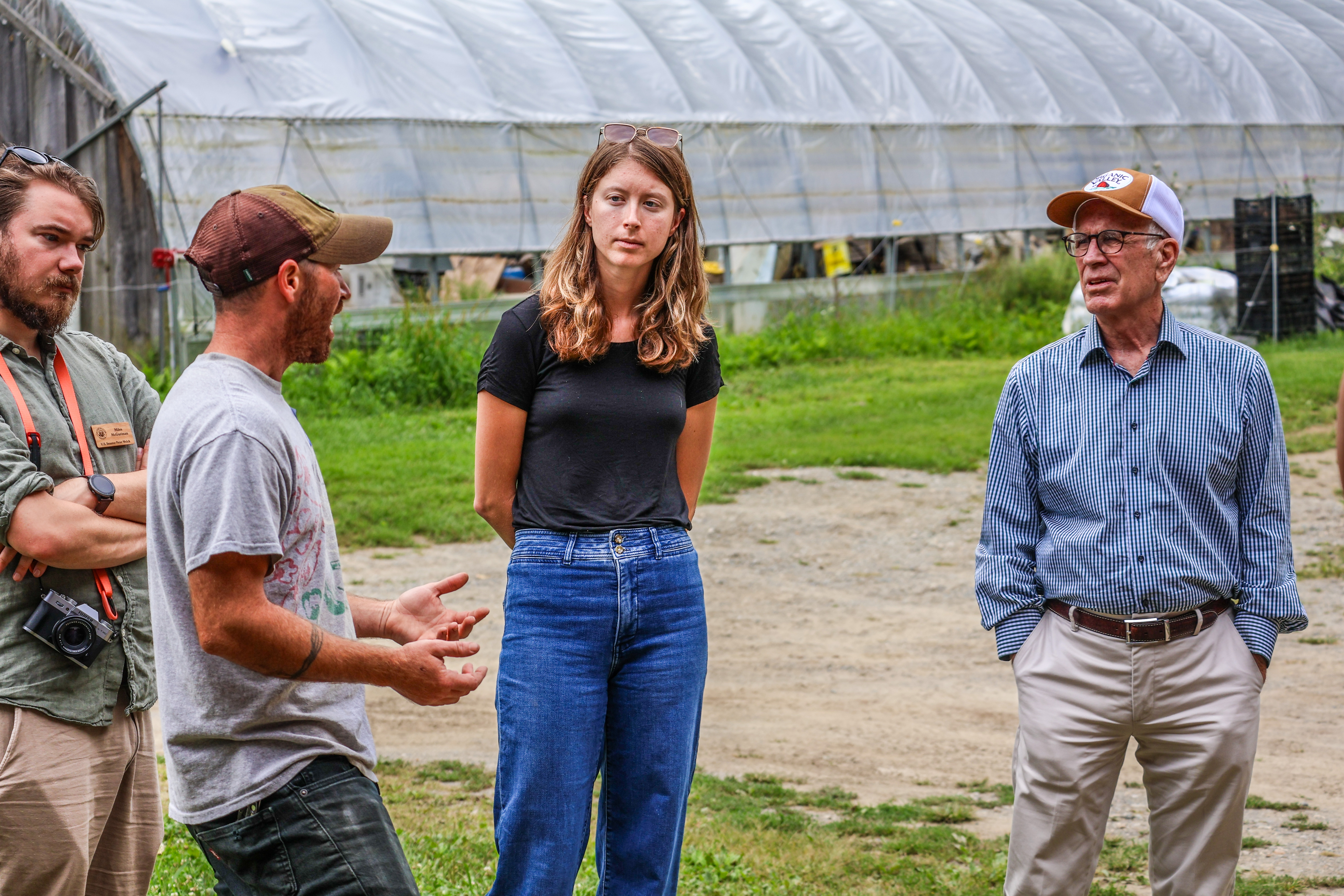
The conversation made clear that there is much more Washington could do to support farmers and build a resilient food system. Amy Huyffer of Strafford Creamery pointed to the need for federal policy to start with a basic question: “Did I eat today, and do I want to eat tomorrow?” She suggested that when policymakers speak of "farms" in crisis, perhaps they should instead say that our "food supply" is in crisis to underscore the essential role our farmers play in feeding our communities.
Suzanne Long of Luna Bleu Farm called for greater support for land access, particularly for the next generation of farmers. Several farmers spoke about the ways federal support for commodity agriculture comes at the expense of policies that support diverse, local food systems that feed our communities.
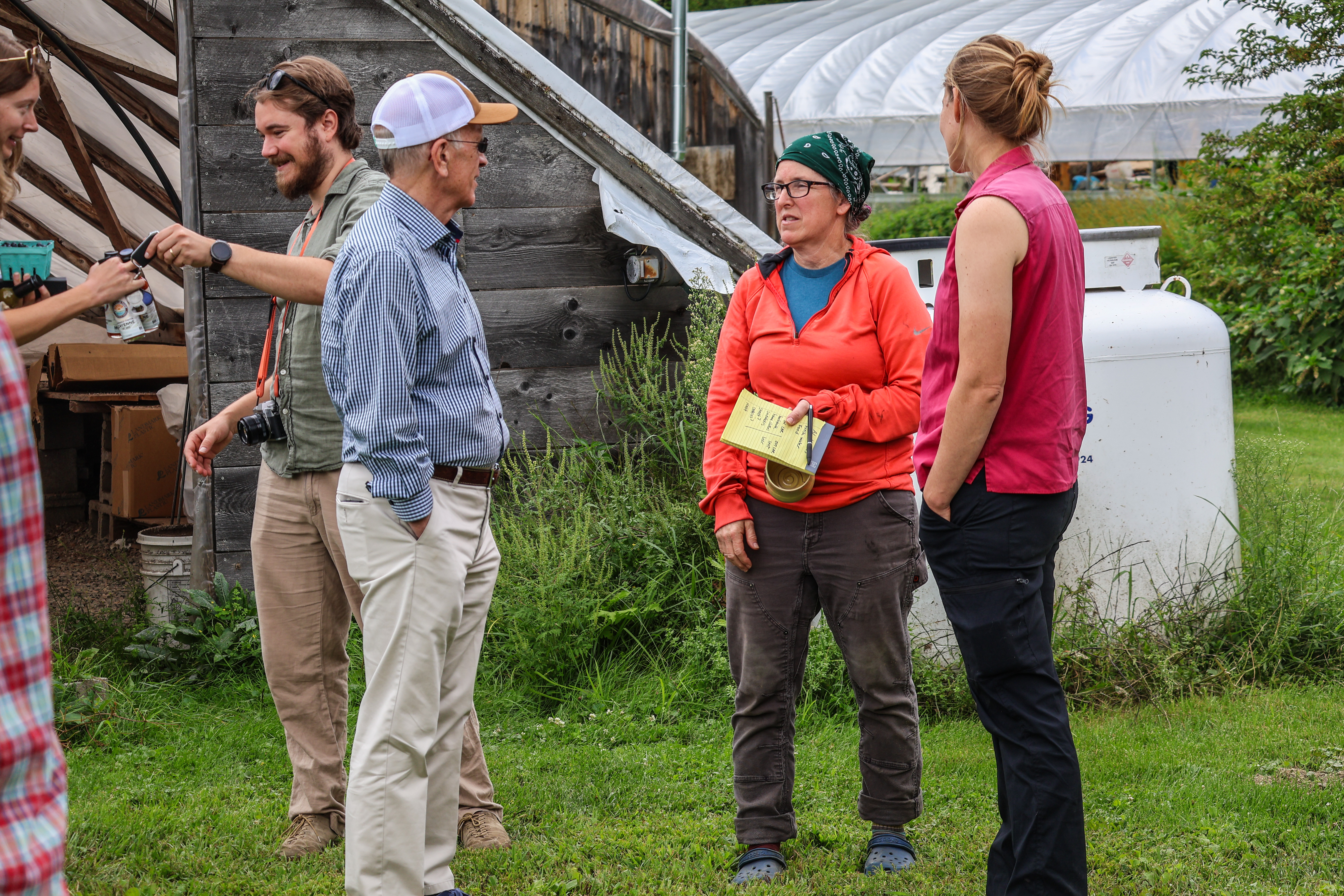
Even through the frustration, farmers pushed for generative paths forward. Shona Sanford-Long of Flying Dog Farm described how clearer, more transparent grant reimbursement deadlines could make federal programs feel more accessible, citing that most farmers don't have the resources on hand to pay up front while awaiting lengthy and unclear reimbursement schedules. Several farmers spoke about the potential of bridge funding to help farms make necessary investments whose returns may be years away. Stephen Leslie of Cedar Mountain Farm and Cobb Hill Cheese raised the possibility of a Universal Basic Income for farmers who are building healthy soil through organic and regenerative practices. Eli and Valerie also highlighted the need for farmworker protections and fair wages, culturally relevant programming, and greater support for farmers’ mental health.
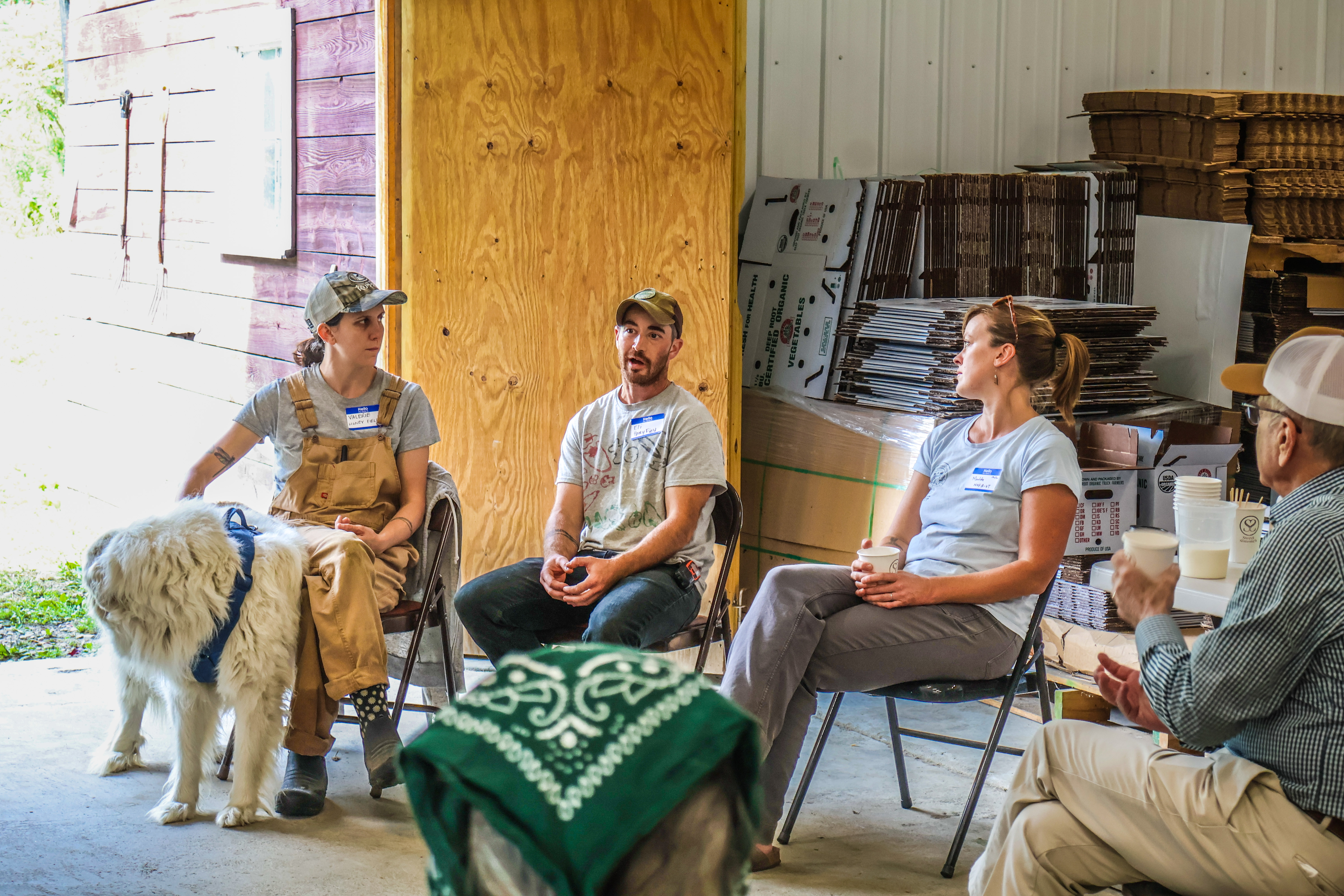
Senator Welch committed to doing all he can to support farmers and food resiliency. “We have to have a system where people are fed. And it’s our job to make sure that all of you have a shot in supporting your families and paying your bills.”
As the farmers and Senator Welch toured the farm, Eli shared a story about working with Canadian farmers through the Deep Root Organic Co-op. In Canada, he explained, public dollars and policies are more intentionally directed toward the public good of farming food. As a result, Canadian farmers who are part of Deep Root can make decisions from a place of greater economic stability.
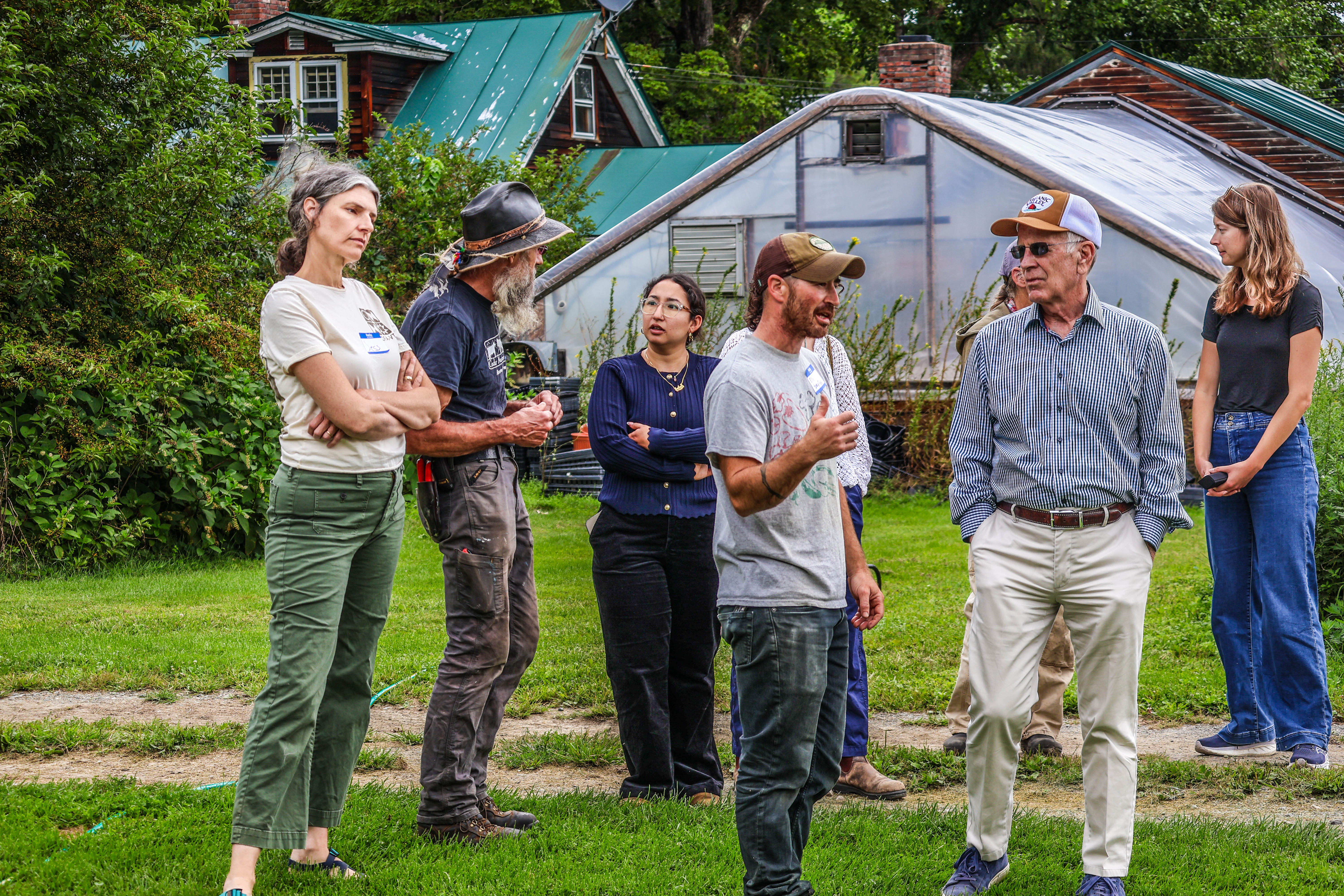
The story offered a useful contrast with the current U.S. agricultural policy landscape—and a glimpse of what could be possible. If we want a Farm Bill that truly meets the needs of farmers and eaters, we can look beyond the systems we have inherited and learn from models that put public investment toward the public good.
In the meantime, the Senate is reconvening on September 15 to once again take up the Farm Bill. We continue to urge Senator Welch to vote no and to use his voice to speak up for Vermont farmers throughout the process.