August 11, 2026
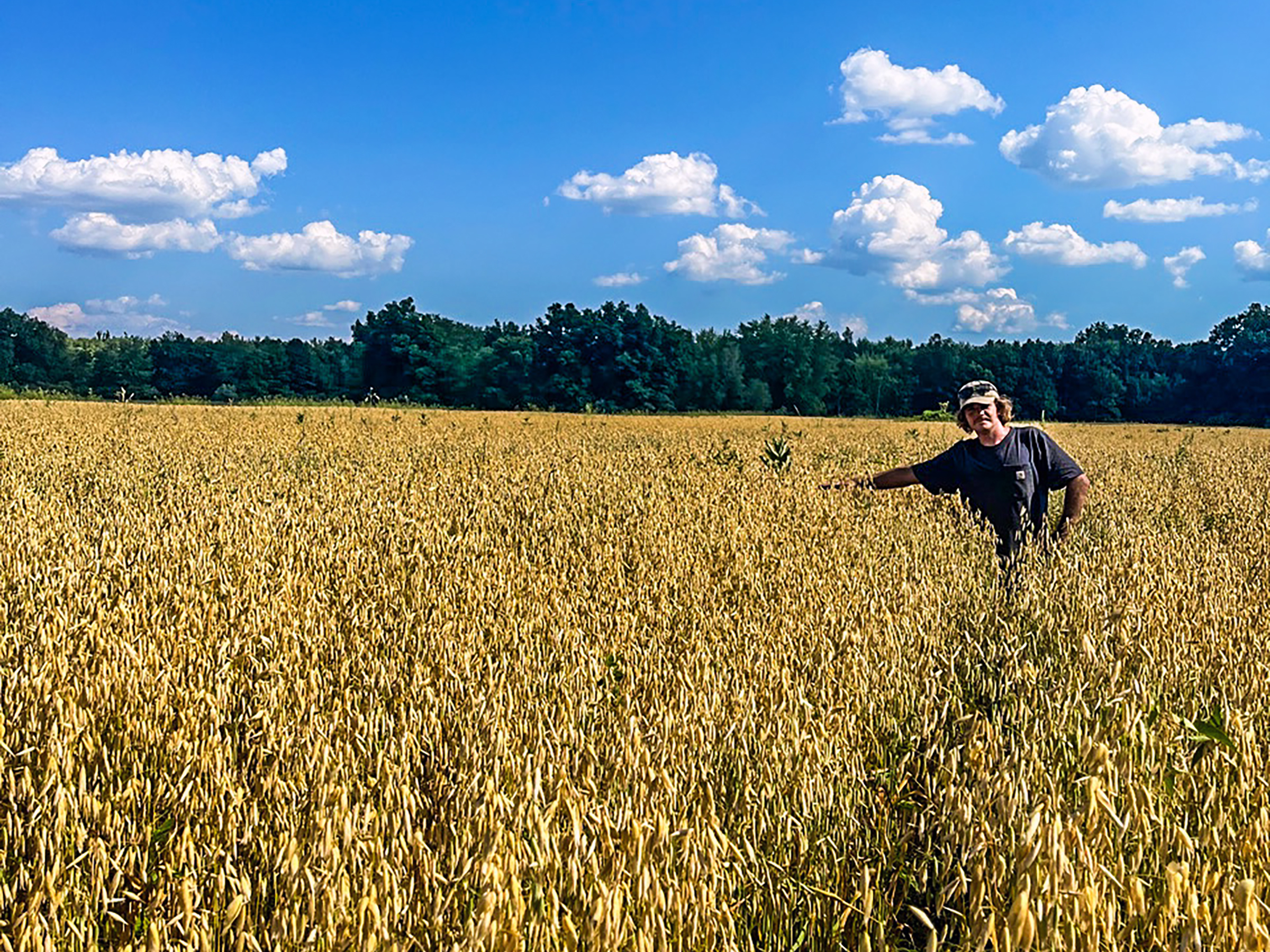
“The rye over there” – Tyler gestures – “will be going to pizza dough at schools thanks to all of the great connections in Vermont and the new grain center!” Tyler Murray, of Granite Grains, is farming on a 308-acre former dairy farm in West Haven and is looking to fill the increasing demand for organic grain and seed. He recently relocated his farm business from leased land in New Hampshire and is excited about the market opportunities in Vermont. Currently, there is more demand than local farmers can supply.
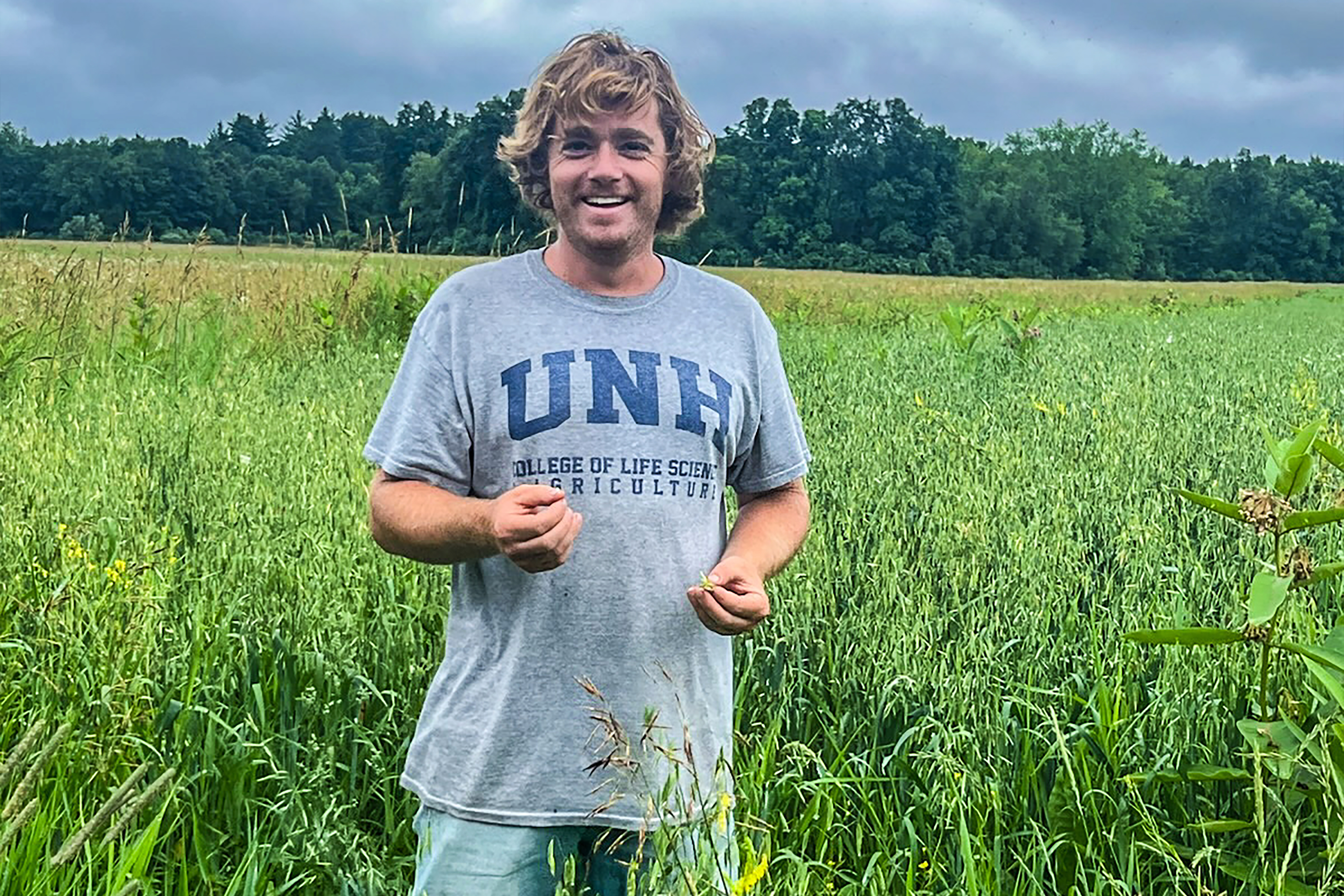
After college at the University of New Hampshire, Tyler started growing vegetables for farmers markets and restaurants. Someone wanted him to grow corn for tortillas, and that set him on a path to grow grain. He soon saw the wisdom in this, given that vegetables are perishable and need to be sold swiftly after harvest, and there is a lot of competition among vegetable growers. With plenty of demand for local, organic grain in the Northeast and the ability to store grain for up to a year, Tyler sees this as a fulfilling endeavor.
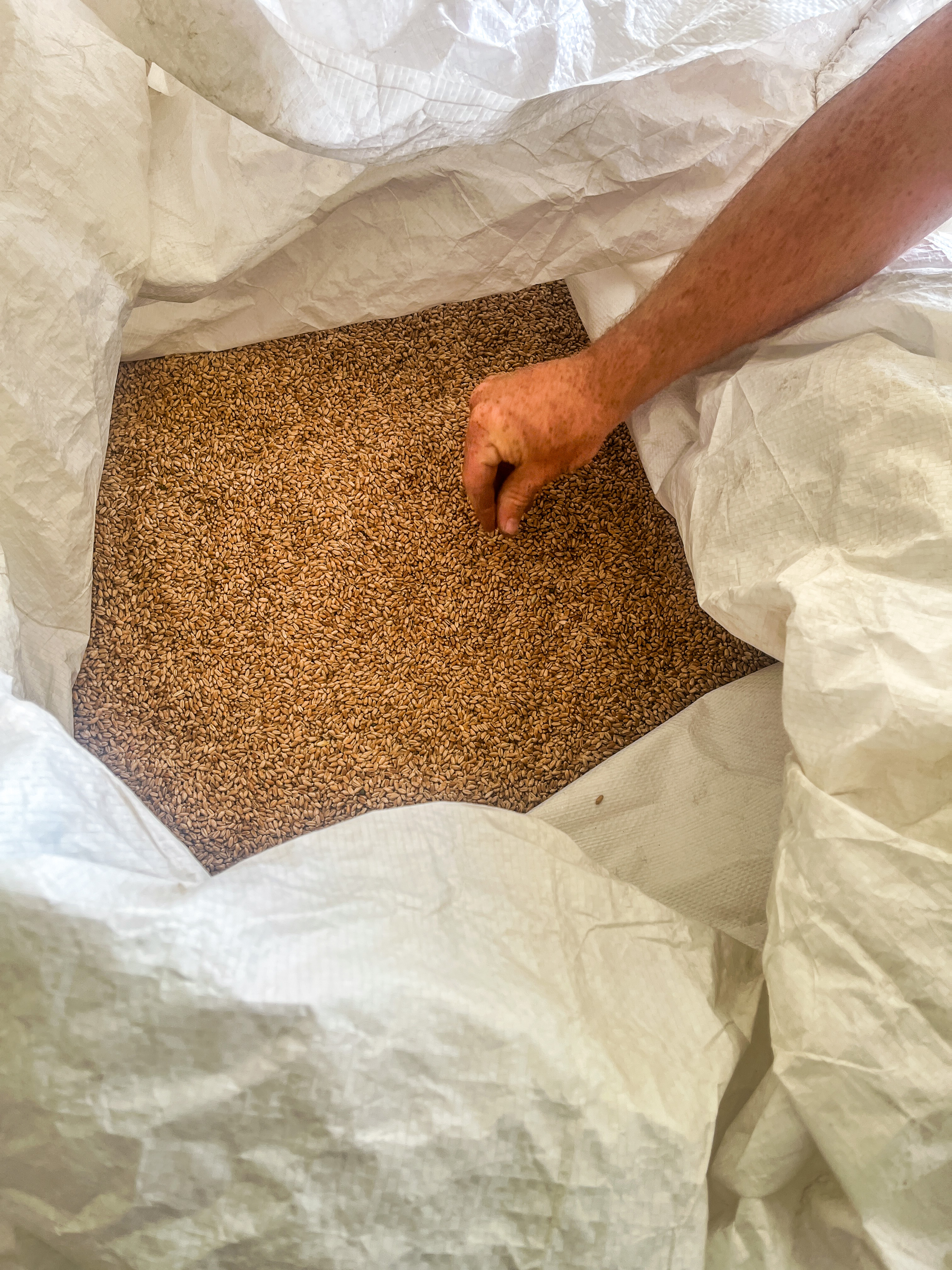
“The market is there for a niche, premium organic product. Farming is a tight-margin business. I’d like to tell a story and make a living at this,” shared Tyler. He is committed to organic practices and has certified his farm with Vermont Organic Farmers. When he entered into farming as a career and lifestyle, he never saw himself using chemicals on his farm and knows a more “natural” approach is doable.
With an interest in continuing to grow the farm, Tyler needed more land than he could lease in NH—with affordability a critical requirement. In 2021, he saw an interesting opportunity listed on New England Farmland Finder as a path to expanding his land base. Skip Pettis, a long-time dairy farmer in West Haven, was looking to transition his farm to the next generation, while still being able to live on the property. In 2024, the Vermont Agricultural Credit Corp (the agricultural and forestry division of Vermont Economic Development Authority) helped set up a life estate deed between Skip and Tyler that is a win-win for all parties. The land stays in productive agriculture, Skip remains on the farm, and Tyler has secure land tenure while benefiting from Skip’s wisdom, experience, and help.
Like all first-generation farmers, Tyler has several folks he considers mentors. Skip is a fourth-generation farmer who has worked the property’s fields for many years. His advice includes slowing down and taking the time necessary for each task, like making sure to clean the edges of fields. While in New Hampshire, Tyler’s first farm boss became a friend, mentor, and business partner, and they remain in touch. For the past two years, as part of the Transition to Organic Partnership Program and while transitioning his farm to Vermont and the former conventional land to organic, Tyler has been working with Todd Hardie. As part of their mentorship, they have covered many topics related to organic grain growing, with quality control being one of the most prominent. Tyler has gained a deeper understanding of what it takes to produce a clean grain product for market.
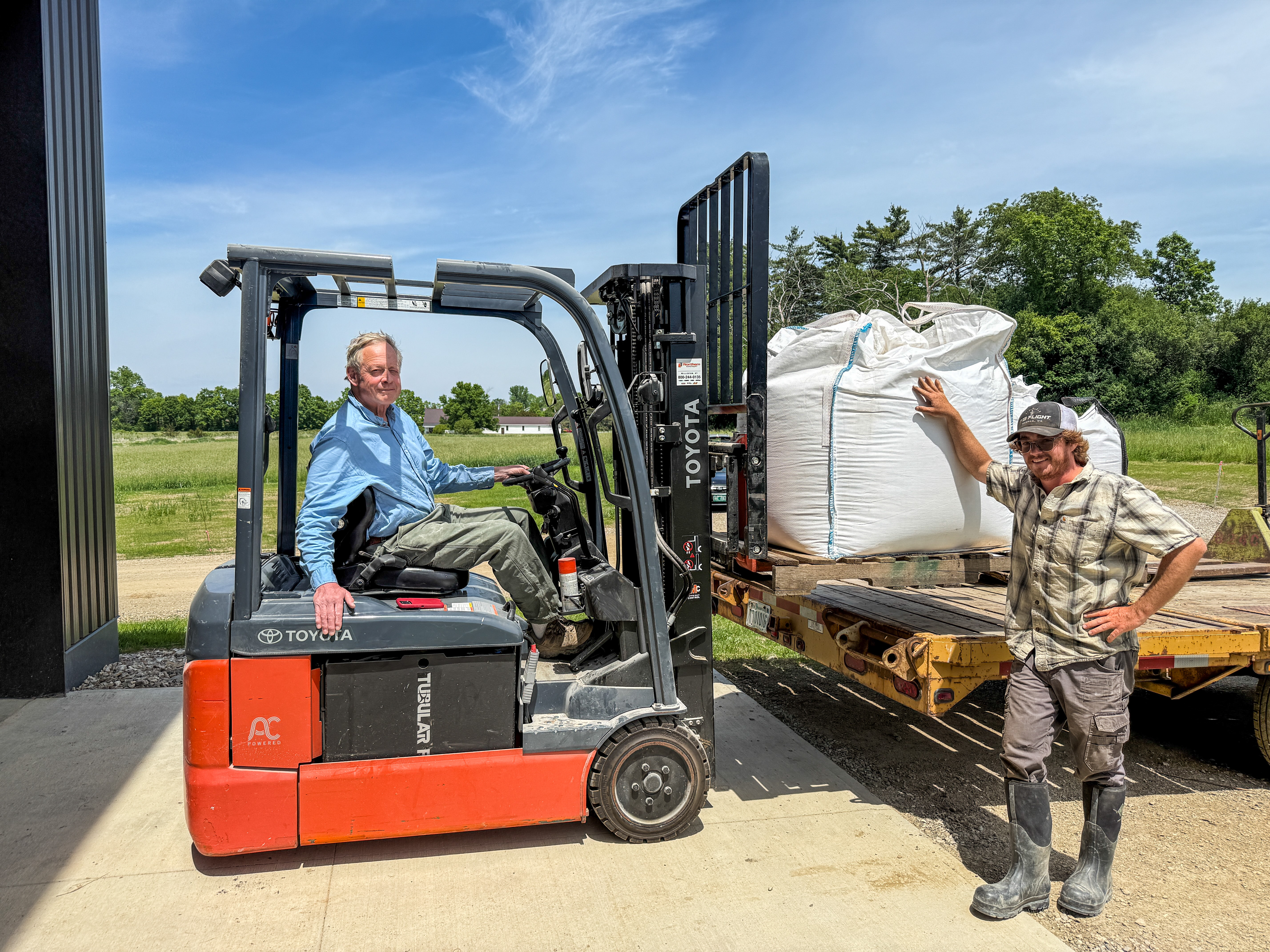
After growing grain himself at Thornhill Farm, Todd recently built the Champlain Valley Grain Center in Ferrisburgh as an important piece of the region’s grain chain. At its launch, the center obtained organic certification as a processing facility, which Todd sees as a crucial way to support the region’s organic growers. The grain center receives and processes grain directly from growers, and its milling room houses a massive New American Stone Mill and sifter. Crops from Granite Grains and Nitty Gritty Grains are milled here into pastry, whole wheat, and all-purpose flour for retail and wholesale accounts. Todd is also baking rye and wheat bread as part of the center’s activities, using a 160-year-old rye bread starter from Bread and Puppet’s Peter Schumann. In addition to offering rye and wheat bread, flour, grain, rye whiskey, and bourbon whiskey to the public, the grain center provides milling services to organic growers.
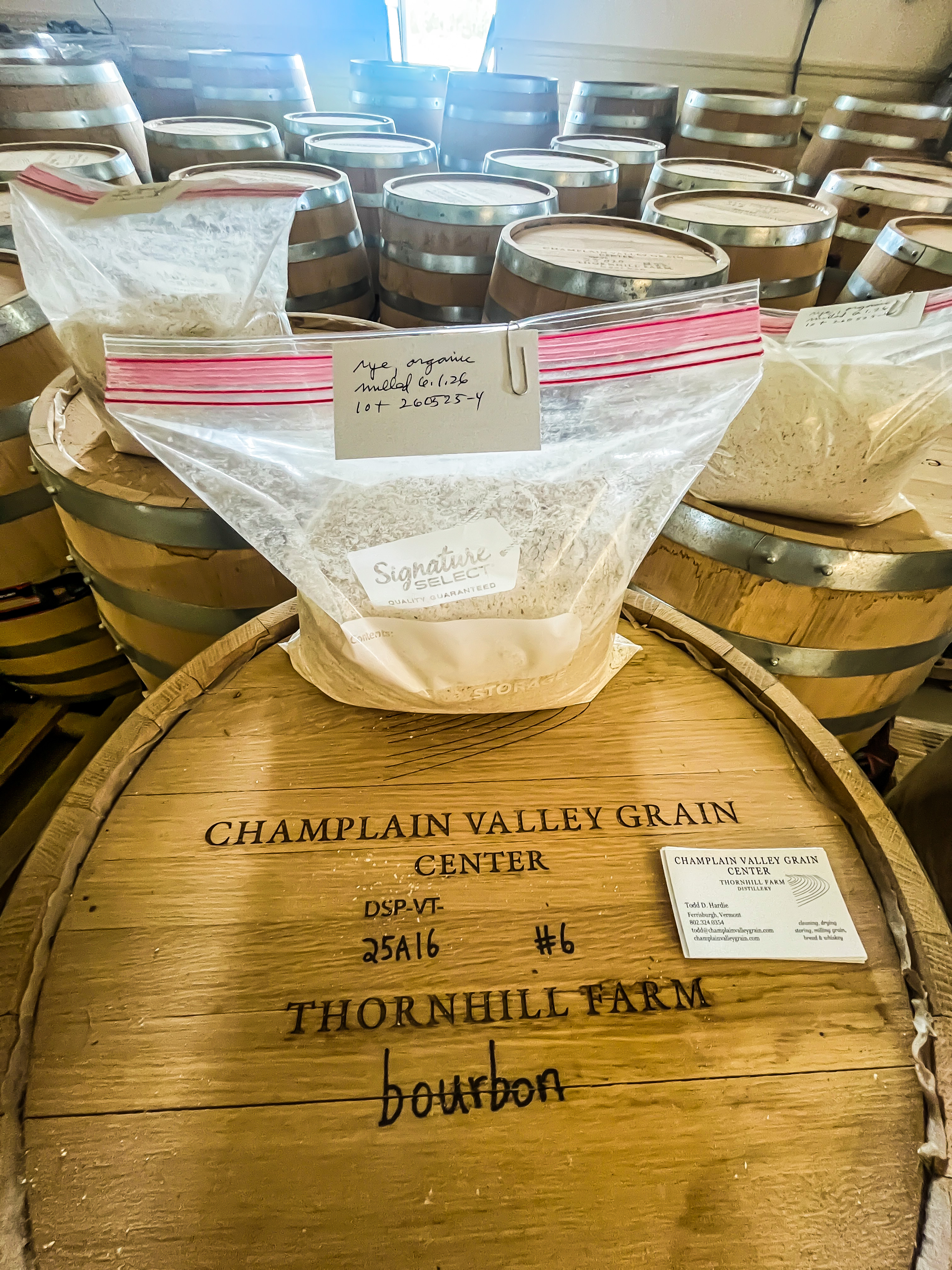
Currently, Tyler grows a dozen different organic crops for wholesale. The grain he produces includes wheat, buckwheat, corn, and rye, and he also saves Wapsie corn, Redeemer wheat, and Danko rye as organic seed. He harvests the rye stalks for straw and makes hay, as well. In addition, he has continued producing some cucurbit vegetables—not for fresh sale, but rather to produce organic seed for contracts with Fedco Seeds and High Mowing Organic Seeds. These include summer and winter squash, cucumber, melon, pumpkins, as well as sweet corn.
Growing vegetables for seed is very different from grain growing and adds some nice diversity to the farm. With the amount of tillable land he now has, Tyler has three isolation spots for the different varieties of cucurbits to ensure they don’t cross-pollinate. To reduce the time and labor needed to harvest the seeds, he received a NOFA-VT Resilience Grant this year to purchase seed-cleaning equipment, including the different screens needed for different-sized seeds. Tyler is always learning and experimenting!
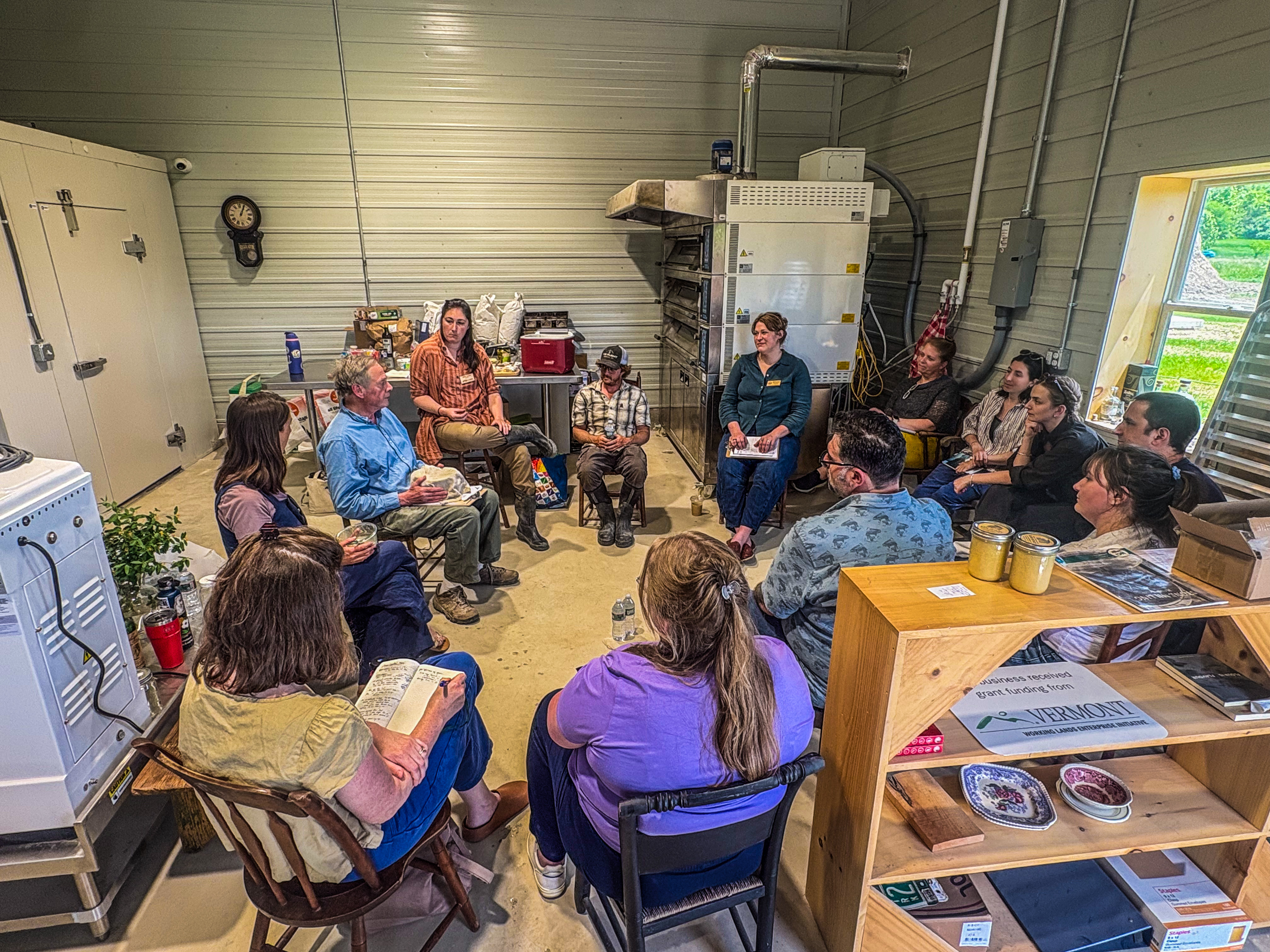
Tyler recently participated in a field trip at the Champlain Valley Grain Center for institutional buyers, highlighting the potential for his grains to be used as ingredients in pizza dough at area schools in the near future. NOFA-VT’s Farm-to-Institution team has been working to develop local sources of grain and baked goods for schools, so they are particularly interested in and excited about the possibilities the center offers. To that end, in early June, they hosted a visit that drew a crowd, including school food service directors.
School kitchens are often looking to incorporate baked goods into their meals—whether they’re scratch-baked in the school kitchen or purchased from a vendor—that are “whole grain rich,” meaning that their ingredients are at least 50% whole grain, with the remaining proportion of grains being enriched. This is an incredible opportunity for local grain growers, millers, and bakers: steady, year-round sales to local customers, with the National School Lunch Program nutrition standards working in favor of less processed local flour.
Paul Fucello, a food service director from the Mount Abraham/Addison Northwest Districts, was present for the visit to the grain center and was excited and motivated to begin purchasing whole wheat and rye flour from the center as soon as this fall. He plans to incorporate the flour into scratch-baked items he serves to his students (like possibly pizza dough!). ACORN Food Hub staff were also present and will begin carrying and distributing the grain center’s flour to their customer base as soon as possible, including schools in Addison County and the Champlain Valley. Many great connections were made that day, helping both the new center and growers like Tyler unlock the potential for institutional sales across the state!